
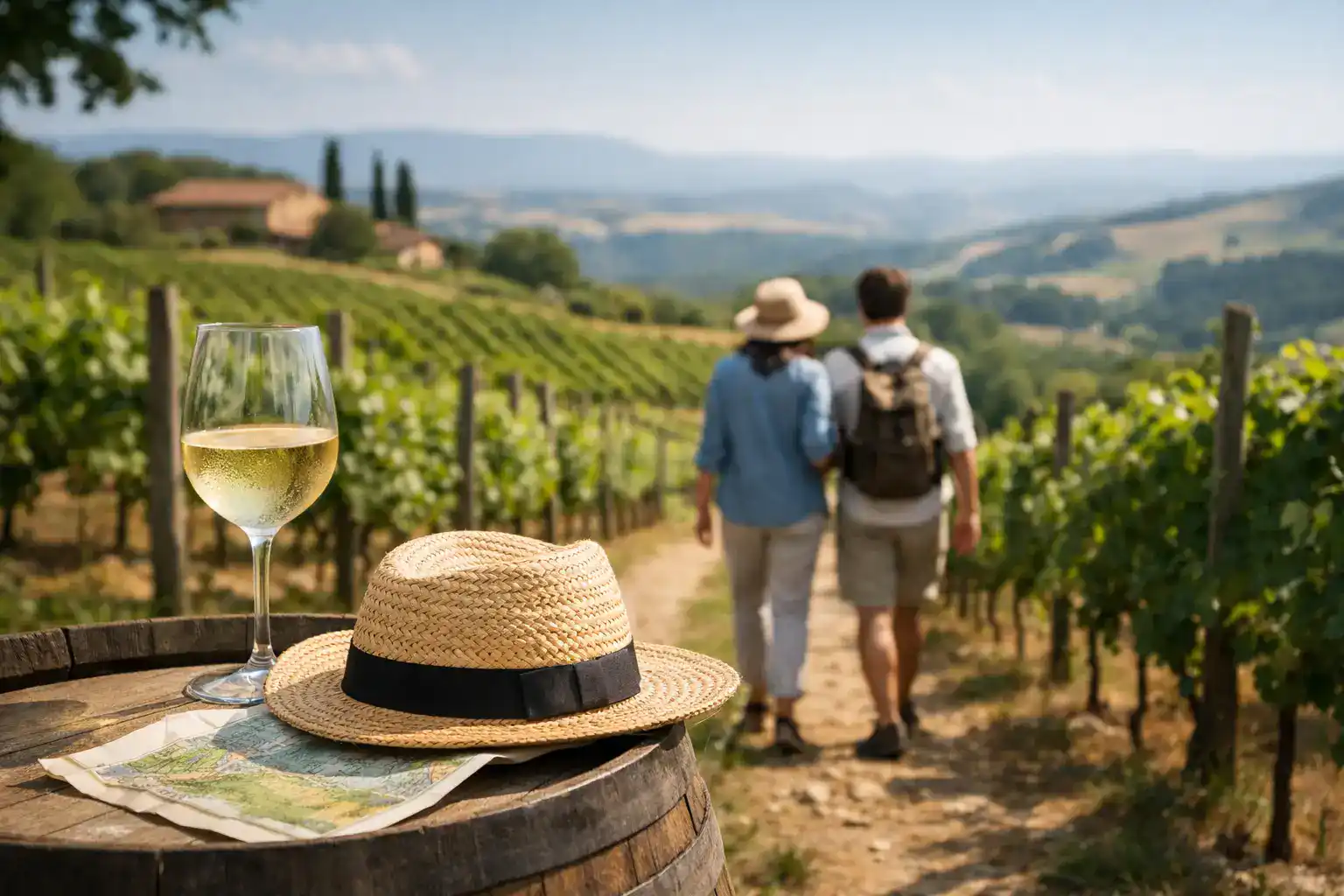
How to Visit Rural Vineyards Without Stress
You know you are in the right place when the sat nav gives up just as the road becomes prettier. The lane narrows, the hedgerows lean in, a church spire appears over a patchwork of vines, and suddenly the whole day feels less like an itinerary and more like a small act of good judgement. That, for me, is the real appeal of learning how to visit rural vineyards – not simply tasting wine, but arriving in places that still feel connected to the soil, the seasons and the people who work them.
Rural vineyards are rarely plug-and-play. That is part of the charm, and also the reason a little forethought goes a long way. The prettiest estates are often outside major towns, public transport can be patchy, and opening hours may follow farming logic rather than tourist logic. If you approach them like city wine bars with better views, you may end up parked beside a tractor with no booking and no lunch. If you approach them as working places in beautiful corners of the world, the whole experience becomes easier and far more memorable.
Ppsst! We use NordVPN for total cybersecurity!
How to visit rural vineyards and enjoy the journey
The first thing to get right is pace. Rural wine travel rewards people who leave room for the unexpected: a village market, a roadside bakery, a viewpoint you had not planned, a family-run cellar door where the owner wants to tell you why last year’s rain changed everything. Trying to cram four vineyards into one afternoon usually sounds more glamorous than it feels.
Two visits in a day is often enough, especially if one includes lunch. That gives you time to drive country roads without rushing, arrive in a civilised mood and actually pay attention to what is in your glass. It also allows for the little delays that define rural travel – a slow-moving farm vehicle, a missed turning, or the irresistible pull of a village square that seems designed for an unplanned coffee.
Booking ahead matters more than many travellers expect. In wine regions with a strong tourism profile, larger estates may offer regular tasting hours. Smaller rural vineyards often do not. They may welcome visitors by appointment only, and sometimes the person pouring your wine is the same person dealing with deliveries, pruning schedules or a burst pipe in the winery. A quick booking request can be the difference between an intimate tasting and peering wistfully through a gate.
It helps, too, to check what kind of visit is actually being offered. A formal guided tasting is very different from a casual drop-in glass on a terrace. Neither is better. It depends on why you are there. If you want to understand the local grapes and vineyard history, book the proper tasting. If you mainly want a slow afternoon with a view and a bottle between two people, look for estates with outdoor seating or food service.
Choose a base, not just a vineyard
One of the nicest mistakes in wine travel is staying too far away. A vineyard may look close on a map, but in rural areas ten miles can mean thirty winding minutes and no street lighting on the way back. I have learnt to choose a village or small town within easy reach of several estates, rather than fixating on one famous name and building the whole trip around it.
This is where the trip becomes richer. A village base gives you morning bakery runs, an easy supper on foot and a sense of local rhythm that you miss if you commute in and out from a city. It also softens the practical side of tasting. If you are staying nearby, you can enjoy the day without clock-watching or facing a long drive after a generous cellar door pour.
For couples and slower travellers, this often means booking two or three nights in one area rather than doing a whistle-stop circuit. For campervan travellers, it means checking in advance where overnight parking is allowed and whether vineyard stays are genuinely possible or merely romantic rumours from the internet. The dream of sleeping among the vines is lovely. The reality depends entirely on local rules.
Driving, transport and the unglamorous bits
The least romantic part of this subject is also the most useful: work out your transport properly. Rural vineyards are often difficult to reach without a car, but tasting and driving need handling with common sense. In some regions, organised drivers or private tours are worth the cost simply because they remove the arithmetic from the day.
If you are self-driving, keep the schedule light and the tasting portions modest. Spitting is normal in wineries, however charming the setting. So is sharing tastings. No one wins a prize for bravely finishing every pour before navigating hairpin bends back to the village.
Signage can be unreliable in rural areas, especially where vineyard entrances are discreet or hidden behind working farm buildings. Download maps in advance, keep your phone charged and do not assume there will be strong signal between villages. It is mildly humbling to realise a hand-painted sign and your own eyes can be more useful than technology.
Parking is another detail worth checking. Some vineyards have ample space; others have a gravel patch, a farmyard and a prayer. If you are travelling in a larger vehicle, particularly a campervan, ask before you arrive. The lane that feels adventurous in a small car can feel like a marital test in anything wider.
What to expect when you arrive
Rural vineyard visits are best when expectations are realistic. These are often working agricultural businesses first and visitor attractions second. You may be welcomed by the owner, the owner’s dog, or both. You may also find that things run a few minutes behind because harvest does not care about your booking confirmation.
That is not poor service. It is part of the texture of the place. The reward is that visits often feel personal rather than polished. You are not just hearing a memorised script. You are getting the version of the story that belongs to that day, that season and whoever is pouring the wine.
Dress for uneven ground, changing weather and cellars that can be cool even in warm months. Rural chic is lovely in photographs, but proper shoes are more useful if you end up walking through vines or across a damp yard. Bring water, have a snack beforehand and avoid turning up ravenous unless food has been clearly arranged. Wine on an empty stomach is the fastest route to an afternoon nap you did not schedule.

How to make the tasting feel less intimidating
Many people worry they do not know enough about wine to visit smaller estates. Happily, rural vineyards are often the best place to shed that anxiety. You do not need a polished vocabulary. You need curiosity, decent manners and a willingness to ask simple questions.
If you like a wine, say what you actually notice. Crisp, floral, earthy, juicy, lighter than expected, perfect with lunch – that is plenty. Producers would usually rather speak to an engaged traveller than someone theatrically hunting for notes of wet stone and existential regret. The point is connection, not performance.
It is worth asking what grows especially well in that patch of land, what local dishes pair naturally with the wines, and whether there is a bottle that locals buy for everyday drinking. Those questions tend to lead to the most interesting answers. You learn not only about the wine but about the life around it.
Buying a bottle or two is a gracious gesture if you have enjoyed a small independent tasting, though of course it depends on luggage space and budget. If you are flying home, ask whether they have smaller formats, sturdy packaging or nearby stockists. No need to pretend your suitcase has infinite capacity. It never does.
Eat where the wine belongs
One of the great pleasures of figuring out how to visit rural vineyards is realising the day should not end at the tasting room. Wine makes far more sense once it appears beside local food in the landscape that shaped both. A chilled white at a village terrace, a simple plate of cheese and tomatoes, roast meat with a peppery red – suddenly the tasting notes acquire a pulse.
This is why I always leave room for a proper local meal, whether at the estate itself or in a nearby village. Vineyard restaurants can be wonderful, but small rural bistros and family-run inns often tell the regional story just as well, sometimes better. They show you which wines are actually being opened with supper rather than merely admired under ideal tasting-room lighting.
In places like these, the best discoveries are often modest. Not every memorable bottle comes from the grand estate with the manicured drive. Sometimes it is the cheerful village producer with a slightly faded sign and an excellent rosé that tastes of sunshine and good timing. Brands such as Vineyards and Villages understand that pleasure perfectly – wine is rarely just in the glass; it is in the road that got you there, the lunch that followed and the view you remember later.
If you treat rural vineyard visits less like a checklist and more like a conversation with a place, they tend to give more back. Leave time, ask questions, stay nearby if you can, and let one good glass lead you gently into the rest of the day.
Affiliate Disclaimer
Some links on this blog may be affiliate links. This means that, at no additional cost to you, we may earn a small commission if you make a purchase through those links. We only recommend products, services, destinations, and experiences that we genuinely use, enjoy, or believe may be useful to fellow travellers and narrowboat enthusiasts. Thank you for supporting Vineyards and Villages and helping to keep our adventures afloat.


7 Comments
Comments are closed.