Is Slow Travel Better for Couples? The Honest Answer
The moment that tends to stay with you is rarely the grand monument or the famous viewpoint. It is the slightly lazy Tuesday morning in a tiny French village, when the bakery queue is moving slowly, the coffee is strong, and you have nowhere more pressing to be than deciding whether that local rosé deserves a second bottle for later. So, is slow travel better for couples? Often, yes – but not because it turns every trip into a sun-drenched postcard.
Slow travel gives a couple something surprisingly scarce on an ordinary holiday: time to notice one another as well as the place. It can also reveal very quickly that one of you considers a two-hour vineyard lunch essential cultural research, while the other is quietly calculating how far away the next scenic hike might be. That is not a flaw. It is part of the story.
Is slow travel better for couples who want connection?
For couples who spend most of the year negotiating calendars, errands and whose turn it is to make supper, a slower holiday can feel like pressing pause on the household admin. Rather than racing through three cities in six days, you choose one region, settle into a village, and allow the days to gather their own shape.
There is a particular pleasure in waking without a packed itinerary. Perhaps you wander through a market and come back with peaches. Maybe a wedge of local cheese and a loaf still warm from the oven. Perhaps a handwritten sign outside a family-run cellar leads to an unplanned tasting. Or, perhaps it rains, so the grand plan becomes a long lunch under a terrace awning. None of it looks especially impressive in a spreadsheet, but it is exactly the stuff couples talk about years later.
Slow travel also leaves room for conversation that is not squeezed between boarding calls and attraction queues. A long drive through the Douro Valley, the Languedoc, Tuscany or the rolling countryside of Slovenia invites the kind of easy chatter that gets lost at home. You can talk about the road ahead, the odd church spire in the distance, or whether the village restaurant really did serve the best potatoes of your life. Small subjects are underrated. They make space for larger ones.
Why a gentler pace suits wine-country escapes
Wine regions make a convincing case for staying put. Vines are not arranged for speed. They follow hillsides, river bends and back roads, with villages tucked between them. To understand a place through its wine, you need more than a hurried tasting and a photograph of a barrel room.
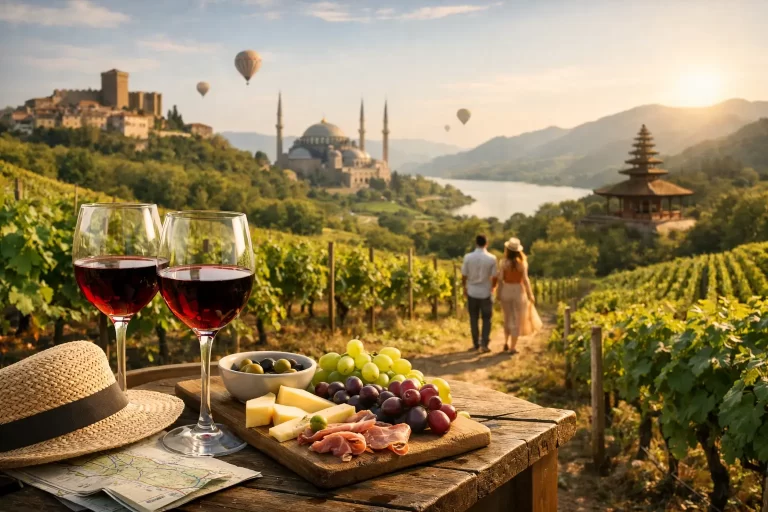
Spend a few nights nearby and the connection begins to make sense. You notice how the morning mist sits over the vines. And you see which local wine appears beside grilled fish, lamb or a plate of simple charcuterie. Then you learn that the bright, peppery red you tried at lunch is made from grapes growing on the stony slope visible from your table. Suddenly, the bottle has a landscape behind it.
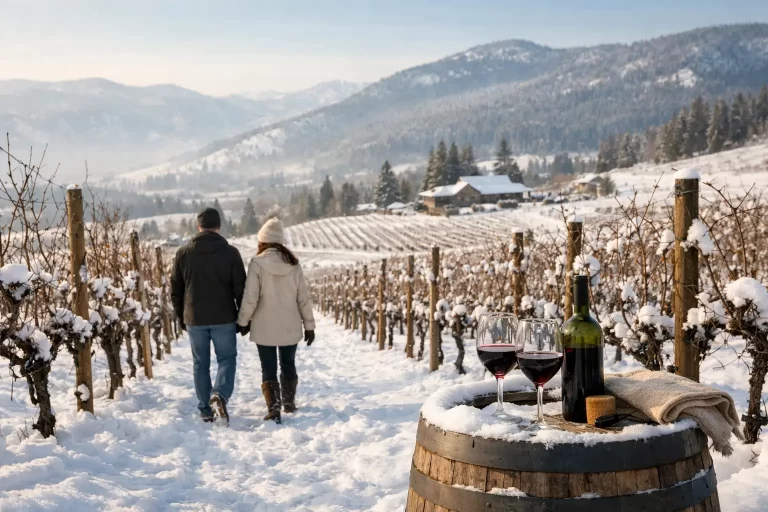
For couples, this rhythm is delightfully indulgent without needing to be extravagant. One of you can drive on a given day, or you can choose a tasting room within walking distance and make an afternoon of it. You can share a flight, disagree amiably over your favourite pour, and order the bottle that both of you keep returning to. Wine has a helpful way of slowing a meal down, and a meal has a helpful way of slowing everything else down.
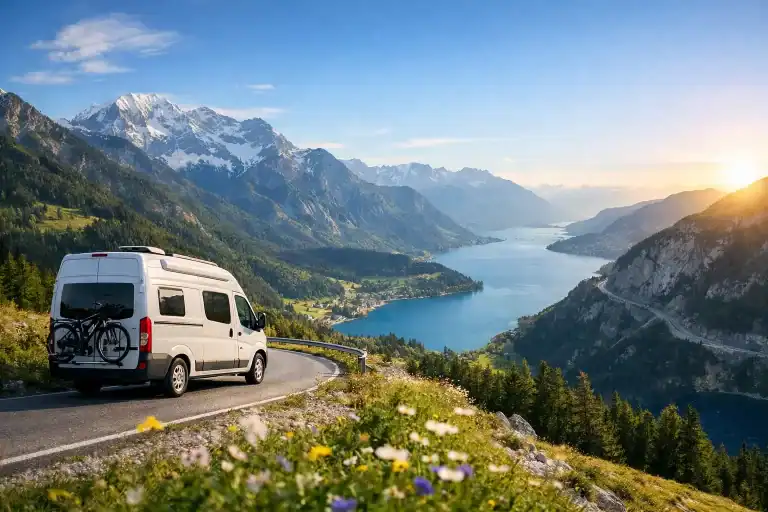
The practical bonus is that a slower itinerary is often kinder to the budget. Fewer one-night stays mean fewer expensive transport decisions, fewer impulse meals near major sights, and less temptation to book every activity simply because you are only there once. A modest village inn or campervan pitch can become a much richer base than a succession of anonymous hotel rooms.
The less romantic bits are useful too
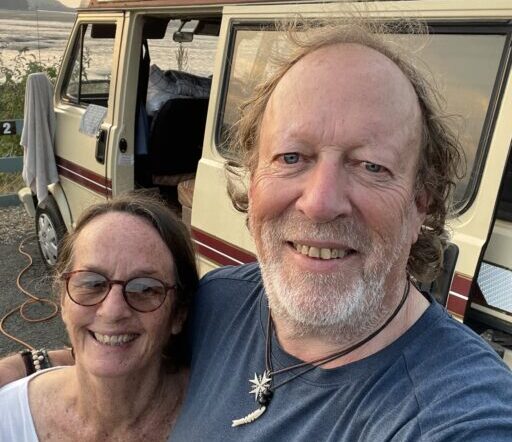
Of course, lingering together is not automatically blissful. If you are used to separate commutes, separate hobbies and the occasional peaceful evening in different rooms, twenty-four hours a day in a compact campervan may test even the most devoted pair. A rainy afternoon, a wrong turning, or a disagreement over whether a Roman ruin is worth another thirty minutes can become rather revealing.
Oddly, that is one reason slow travel can be so good for couples. There is enough time to adjust rather than merely endure. When the plan changes, you are not losing the only chance to see five attractions before dinner. You can pull over for coffee, revisit the map, and decide together what would feel good next.
It helps to be honest before setting off. One person may find joy in wandering without a plan. Other relaxes only after knowing where they will sleep. A little structure is not the enemy of slow travel. Booking a first night, choosing two or three places you genuinely want to visit, and leaving the rest open can prevent the daily question of ‘what now?’ from becoming a holiday tradition nobody asked for.
Similarly, you do not have to share every moment. A slow morning can include one person reading on the terrace while the other explores the village lanes. One can linger at the market while the other takes a longer walk. Reuniting over lunch gives you something fresh to tell each other, even if you have only been apart for an hour.
When fast travel may suit a couple better
Slow travel is not morally superior, and it is not always the right fit. If you have limited annual leave, are visiting a faraway destination for the first time, or have wildly different wish lists, a faster trip may make perfect sense. Sometimes you want the bright rush of a city break, late dinners in different neighbourhoods and the satisfaction of seeing the landmarks you have dreamed about.
The trick is not to confuse fast with fuller. A packed itinerary can be wonderful when it is chosen deliberately by two people with similar energy levels. It becomes less enjoyable when you return home needing a holiday from the holiday, armed with hundreds of photographs and only a vague memory of the meals.
There is also a middle ground. A road trip can include one lively city, followed by four nights in a rural base. You might spend the first half of a week following a plan, then reserve the final days for a farmhouse stay, a coastal village or a vineyard-rich valley. The best pace is the one that gives both of you anticipation before the trip and contentment during it.
How to make slow travel work as a couple
Think in bases, not boxes to tick. Choose a place with enough life to make staying enjoyable: a village square, a food market, walking routes, a good wine bar, or simply a view that makes an unhurried breakfast feel like an event. Three or four nights is often the sweet spot, particularly if you are travelling by car or campervan.
Build each day around one anchor rather than five. It could be a vineyard appointment, a coastal walk, a lunch reservation or a local festival. Once that is in place, let the rest be guided by appetite, weather and curiosity. Some of the best discoveries happen because you had time to stop when you saw a sign for an olive farm, a medieval lane or a café with tables beneath plane trees.
It is worth agreeing on a few simple holiday rules, too. Perhaps neither of you checks work emails before breakfast. Or, perhaps each person gets to choose one non-negotiable experience. Perhaps driving days are kept short enough that the driver can enjoy the destination as much as the passenger. Romance is lovely, but practical kindness is even better.
Slow travel will not make a couple identical, endlessly relaxed, or immune to bickering over sat-nav instructions. What it can do is create the conditions for a shared life to feel spacious again. Choose a village with a good table, a road worth lingering on, and a bottle that tastes of where you are. Then give yourselves enough time to find out what happens when there is nowhere else you need to be.