Village Food Trails for Slow, Delicious Days
The best meal of a countryside holiday is rarely the one you booked weeks ahead. More often, it is a wedge of warm cheese handed over a deli counter, a paper bag of cherries eaten on a stone bench, or a carafe of local red at a table with an uneven leg. That is the quiet pleasure of village food trails: they give a journey a delicious reason to slow down, follow your nose and stay for one more glass.
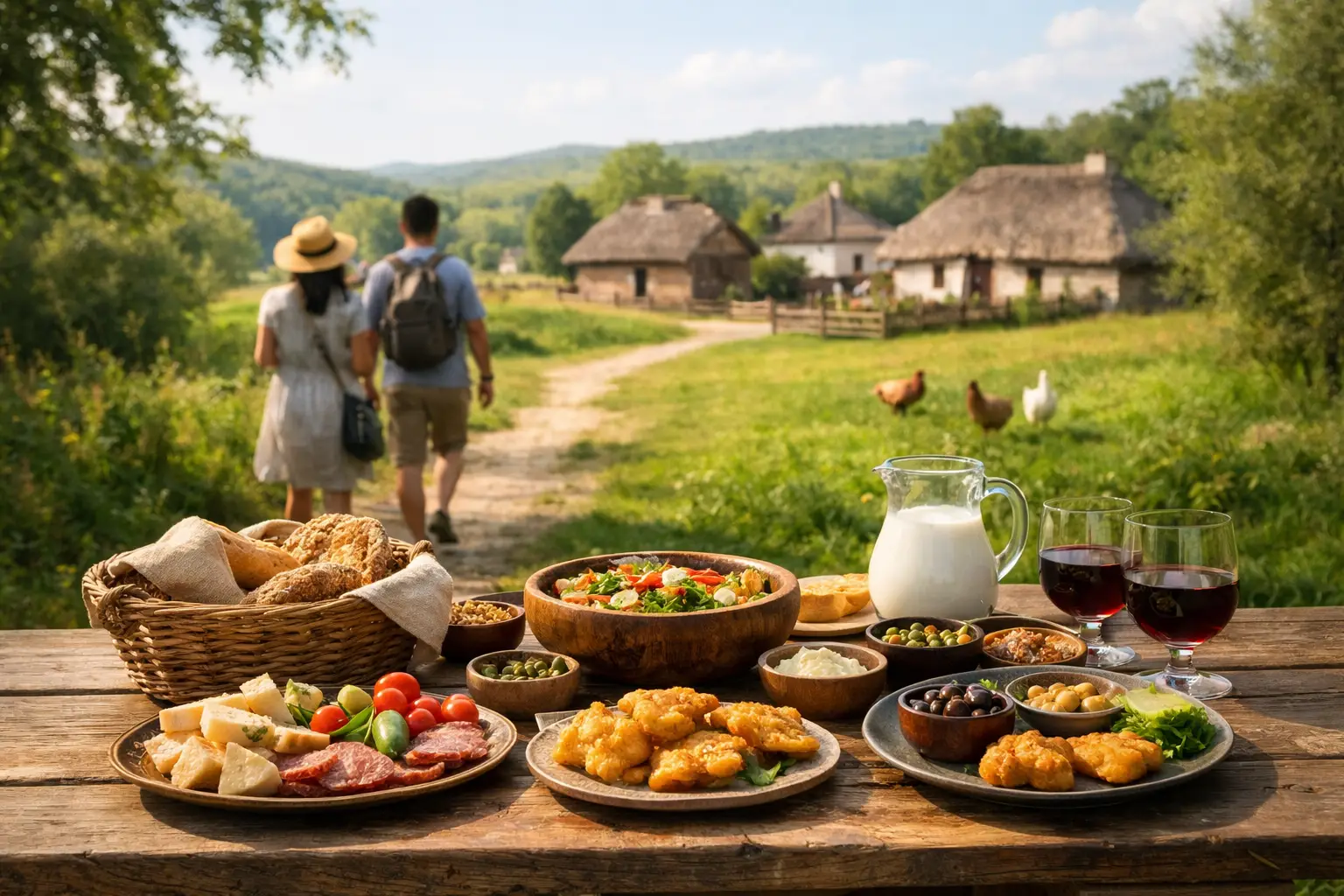
This is not about racing from tasting room to tasting room with a clipboard and a heroic appetite. A good food trail is a loose thread through a region – a bakery in one village, an olive mill in the next, a vineyard just beyond the church tower – with enough empty space between stops to notice the landscape. It is travel with crumbs on the passenger seat, which is usually a promising sign.
Why village food trails make a place feel real
Cities can offer dazzling restaurants and magnificent markets, but villages reveal food at its most rooted. The bread is shaped by local flour, the cheese by nearby pasture and the wine by slopes you may well have driven past that morning. Even a simple plate of cured ham can tell a story about altitude, weather and the patience required to make something properly.
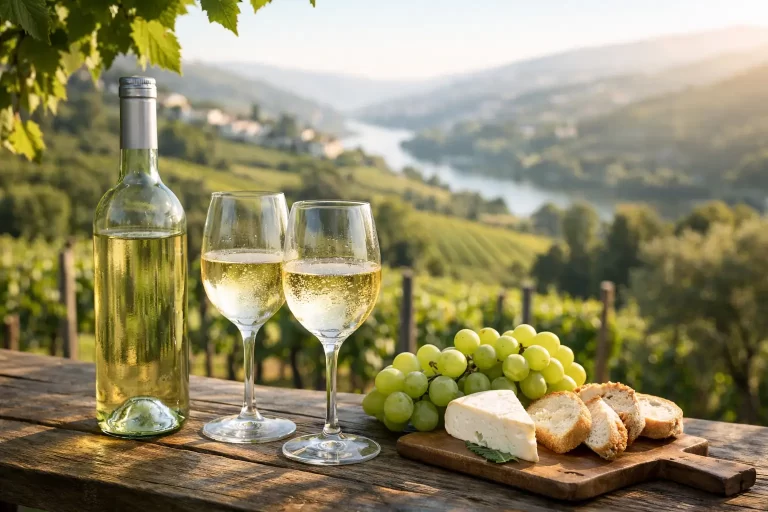
For travellers who enjoy wine but do not wish to turn every holiday into a masterclass, this is the sweet spot. You can taste a regional white beside a lunch of grilled fish, then understand it immediately: the brightness is there for the lemon, the salt and the warm afternoon. No tasting notes involving damp pencil shavings required.
Village food trails also encourage a more generous pace. Instead of ticking off landmarks, you begin to remember the owner of the tiny épicerie who insisted you try the apricot jam, or the woman at a farm gate who explained which goat’s cheese was youngest. These encounters are often brief, occasionally conducted with hand gestures and enormous smiles, and somehow more memorable than an over-curated itinerary.
Build a village food trail around one local speciality
The easiest way to create a satisfying route is to choose a regional ingredient or tradition, rather than trying to taste everything. In Burgundy, that might mean mustard, Charolais beef, escargots and Pinot Noir. Then, in northern Portugal, it could be smoky sausages, mountain honey, pão de centeio and fresh Vinho Verde. In Andalucía, follow olive oil from grove to village bar, with sherry and tapas appearing at extremely convenient intervals.
A single theme gives the day shape, but it should not become a rule. If the roadside sign says fresh figs and you had planned to seek out almonds, please allow the figs to win. The joy of rural travel lies partly in these detours.
Start at the market, bakery or village shop
Begin in the morning, when a village is doing the practical business of feeding itself. Markets are wonderful, but a good bakery or independent grocer can be just as revealing. Watch what local people buy. Is everyone carrying crusty loaves, stopping for a particular sheep’s cheese, or choosing peaches with the focused expression normally reserved for property negotiations?
Buy something modest for later: fruit, a small cheese, a loaf, perhaps a jar of preserves. It makes an impromptu picnic possible when you find a viewpoint, riverbank or vineyard track that asks you to stop. It also prevents the classic food-trail error of arriving at lunch so hungry that every menu decision becomes emotionally complicated.
Let lunch do the heavy lifting
A village lunch is where the route settles into its rhythm. Look for a busy terrace, a short handwritten menu and dishes that sound as though they could only have been made there. A menu full of regional specialities is encouraging; a menu offering twenty-seven international classics may be a sign to keep walking.
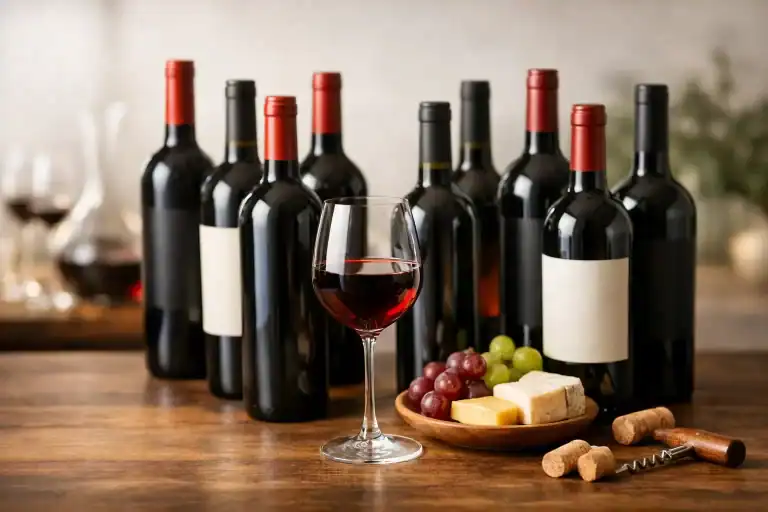
Ask for the local wine by the glass or carafe. This is one of the simplest and most enjoyable ways to understand a region. The house pour is not always profound, but it is often honest, well-priced and made for the food in front of you. If you are driving, share a small carafe, choose a single glass, or make lunch the end point for the day. Slow travel is much more charming when everyone arrives safely.
Leave room for the producer visit
The most rewarding stops are often small producers: a cheesemaker, beekeeper, jam maker, olive mill, family winery or smokehouse. Some welcome drop-ins; others work only by appointment. A little planning helps, particularly outside high season, when opening hours may be more suggestion than contract.
When you do visit, buy only what you can realistically carry, chill or declare at the border. A suitcase full of cheese may sound romantic until it meets a delayed flight. Wines, preserves and olive oil tend to travel more calmly, while memories of a just-made ricotta or still-warm loaf have to be brought home in a different way.
The best village food trails are not overplanned
There is a delicate balance between preparation and leaving space for serendipity. Research the broad route, identify one lunch stop and one producer you would genuinely hate to miss. Then keep the rest flexible. A closed cellar door, a village festival or an unexpected storm can change the day, and not always for the worse.
In fact, weather often improves a food trail. Rain makes a long lunch feel entirely sensible. A cold morning gives hot chocolate, chestnut soup or a glass of red by a fire an extra layer of meaning. On a blazing summer day, the greatest luxury may be a shaded square, a plate of tomatoes and a chilled local rosé.
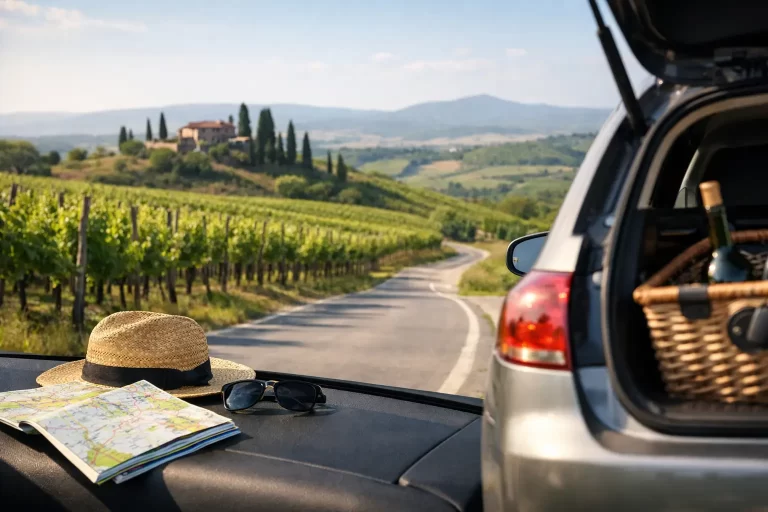
Try not to pack too many villages into one day. Two or three is usually enough, especially on narrow rural roads where a map may suggest twenty minutes and reality, involving tractors, hairpin bends and irresistible views, suggests nearer forty-five. Campervan travellers know this well: the road itself is part of the feast.
How to taste with curiosity, not pressure
Food and wine trails can become expensive quickly, and tasting fatigue is real. You do not need to order the grandest bottle or buy every product offered to have an authentic experience. Often, one thoughtful tasting, one relaxed lunch and one market purchase make a richer day than a frantic procession of samples.
It helps to ask simple questions: What do local families eat this with? When is it made? Is there a harvest festival? Which wine would you open on an ordinary Tuesday? These questions move beyond the sales pitch and invite the kind of answer that brings a place closer.
Be mindful, too, of the fact that villages are homes, not open-air sets for holiday photographs. Park considerately, keep noise down, book where booking is requested and buy directly when you can. A small purchase can matter greatly to an independent producer, particularly in quieter seasons.
A trail worth remembering begins with appetite
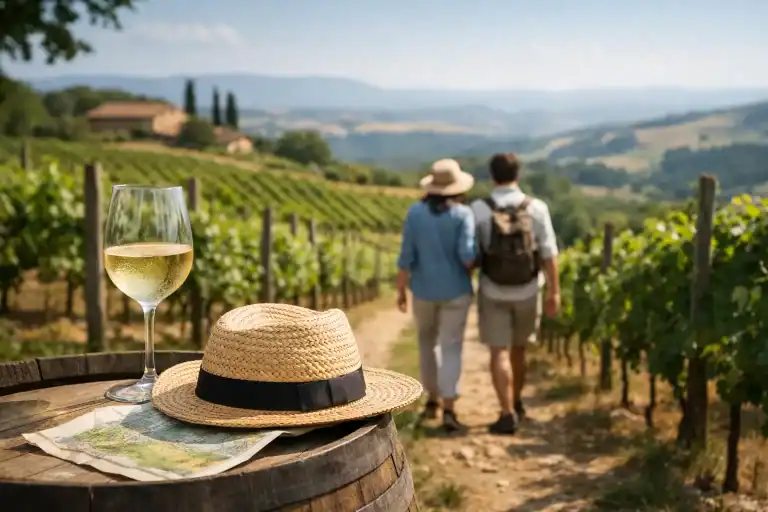
The most beautiful village food trails are not measured by the number of stops. They are measured by the small moments that linger: lavender brushing the car window, the cool hush of a cellar, a waiter recommending a wine with a shrug that says, naturally, this is what we drink here.
Choose a region, leave an afternoon unclaimed and follow the scent of bread, woodsmoke or crushed grapes. The right village will offer the next course when you arrive.
If you’re looking for tours, attractions and experiences across the UK and Europe, you can browse and book here: https://tripadvisor.tpk.ro/D6WNK34w
Affiliate Disclaimer
This article contains affiliate links. If you book tours, attractions or experiences through these links, we may earn a small commission at no additional cost to you. We only recommend services that we genuinely use,