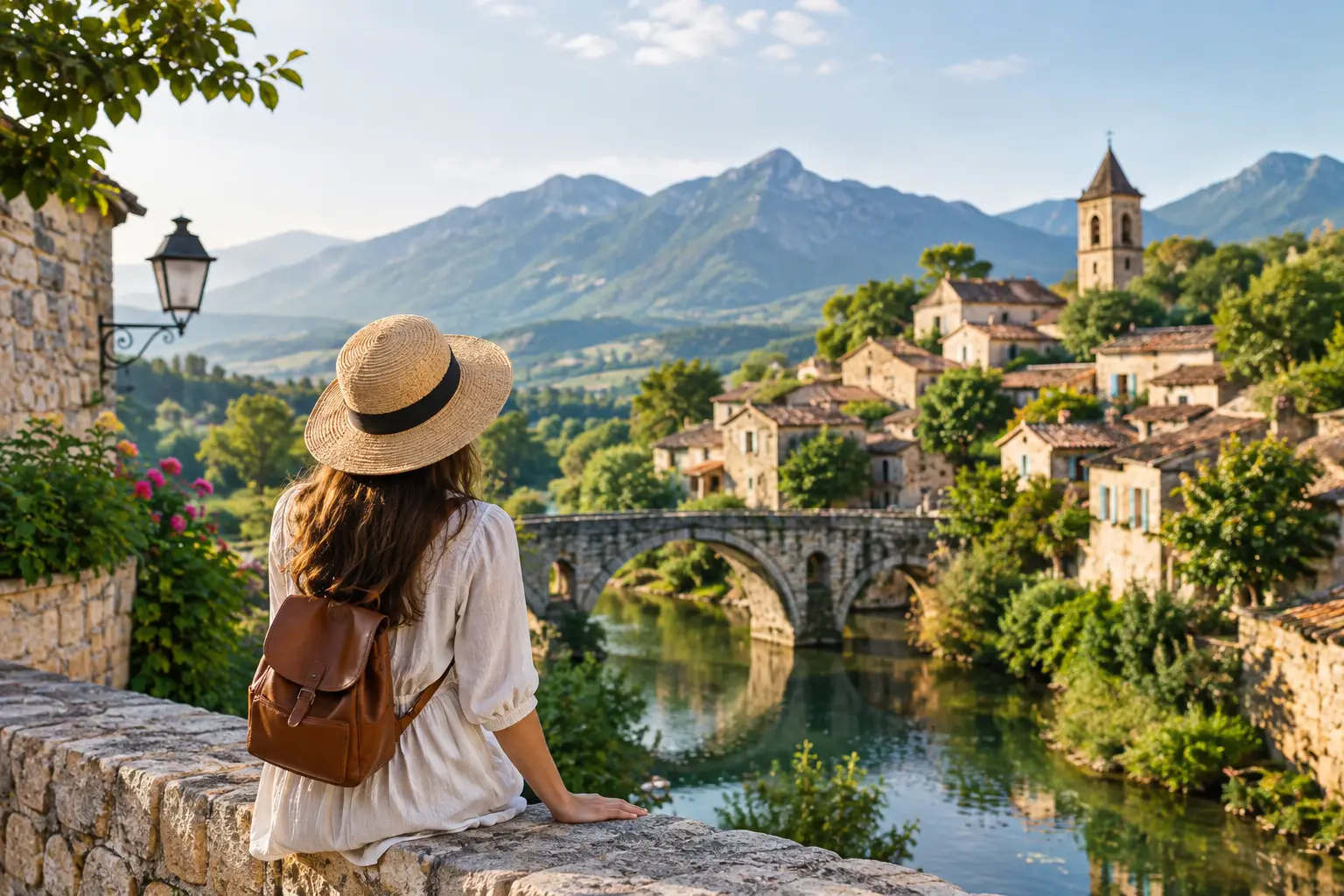
A Slow Guide to European Village Getaways
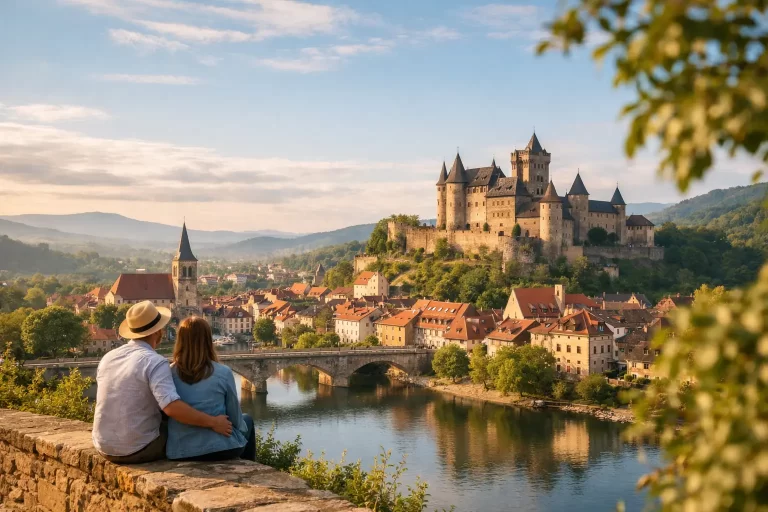
The best moments on a rural holiday rarely happen at the landmark you circled in advance. They happen when the church bell sounds at six, when a baker hands over a warm loaf through a tiny doorway, or when a glass of local red arrives at a table beneath plane trees. This guide to European village getaways is for travellers who would rather remember the name of the winemaker than tick off five cities before lunch.
Village travel asks you to slow down, and it gives plenty back: quieter roads, proper regional cooking, landscapes shaped by vines or olive groves, and the lovely sensation that an afternoon has nowhere else to be. It is not always the cheapest or simplest way to travel, admittedly. Public transport can be patchy, restaurant hours can be firm, and the village shop may consider Tuesday afternoon an excellent time to close. Yet those small inconveniences are usually part of the charm.
Choose a village with a reason to linger
A pretty village alone is not quite enough for a satisfying stay. The best bases have a rhythm beyond their photogenic square: a weekly market, a family-run café, a walking route from the edge of town, or a wine bar where you can try what grows a few miles away. Look for a place with at least two or three places to eat, a small grocer or bakery, and a setting that rewards unplanned wandering.
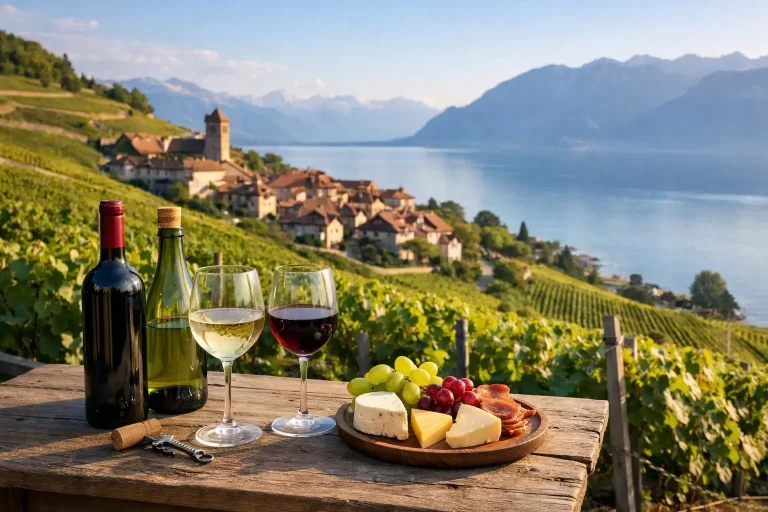
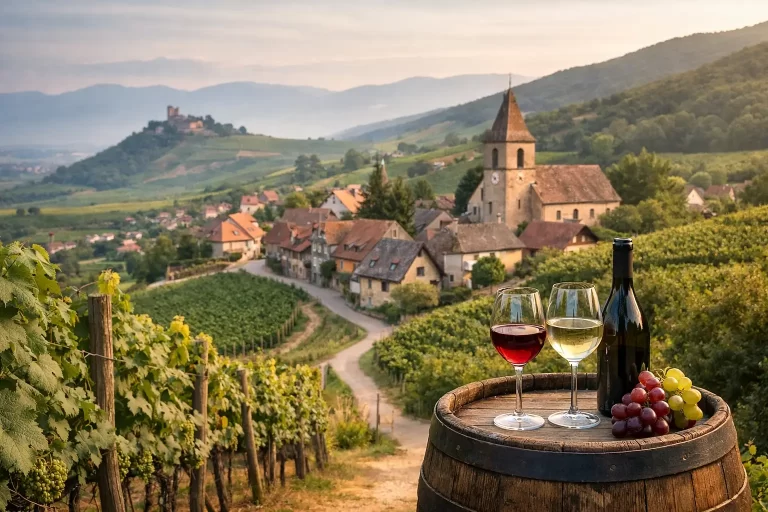
Wine regions are particularly generous for this kind of break. In Alsace, villages such as Riquewihr or Eguisheim sit among vines and half-timbered houses, with crisp whites made for lunch on a sunny terrace. In Italy, the hill towns of Piemonte and Tuscany offer cellar doors, hazy views and the sort of trattorias where the menu barely needs explaining. Portugal’s Douro villages bring steep terraces and soulful reds, while the Languedoc, the Mosel Valley and inland Croatia all offer their own quieter versions of vineyard life.
Do not overlook villages without famous labels, either. A place on the edge of a lesser-known appellation can feel more relaxed, and prices for rooms and meals are often kinder. Sometimes the memorable bottle is not the prestigious one you planned to seek out, but the chilled carafe recommended by someone who has been making it nearby for three generations.
Match the landscape to your kind of holiday
If you want leisurely lunches and gentle walks, choose rolling wine country rather than a dramatic mountain village with gradients that make your calves mutiny. Coastal villages can be glorious outside high summer, when the sea is still bright but the car parks no longer resemble a competitive sport.
For a campervan trip, consider access before falling for the view. Many medieval centres have narrow lanes, low arches and parking arrangements designed long before anyone imagined a modern motorhome. Staying just outside the village and walking in is often the happier plan, particularly after a local tasting.
Plan less, stay longer
The most common mistake with European village getaways is treating them as a string of overnight stops. One night gives you a dinner and a hurried photograph. Three or four nights allow a place to reveal itself: the morning market, the quiet back lane, the good table that only becomes available on a Wednesday, and the shifting light over the vineyards.
Build each stay around one anchor experience, rather than a packed itinerary. It might be a vineyard visit in the morning, a long lunch featuring a local speciality, or a circular walk ending at a small bar. Leave the rest deliberately loose. Villages reward the traveller who can change plans because a noticeboard advertises a harvest festival, or because the owner of the wine shop says, with great conviction, that you simply must drive ten minutes up the road.
This is also where timing matters. May, June, September and early October often offer the most agreeable balance of open restaurants, green or golden countryside, and manageable crowds. Harvest can be magical in wine regions, but book ahead and expect activity rather than peace. In winter, some villages become wonderfully atmospheric, especially where there are Christmas markets or fireside cuisine, though you may find reduced opening hours and a very real need for waterproof shoes.
Eat and drink where the village does
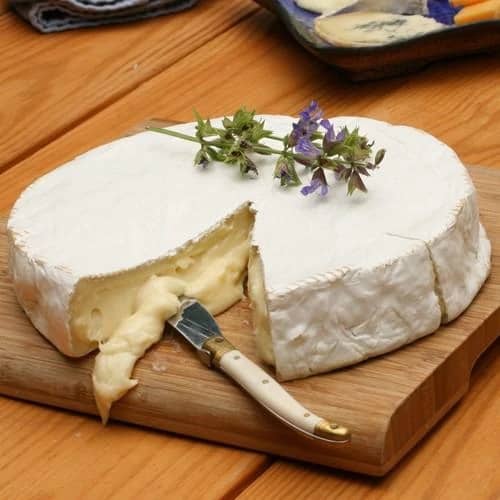
A village meal should feel rooted in its surroundings, not merely styled to look rustic. Read the menu for clues: local cheese, river fish, game, beans, mushrooms, cured meat, orchard fruit, and breads that have clearly been taken seriously. The regional dish may be humble, but that is often its appeal. A bowl of stew, a slice of tart, or a plate of grilled vegetables can become unforgettable when it belongs exactly where you are eating it.
When ordering wine, begin locally and ask a simple question: what goes best with this? You do not need to perform expertise. A good host will usually be delighted to pour something from nearby, whether that is a mineral white with trout, a pale rosé beside a plate of charcuterie, or an earthy red for a slow-cooked dish that has clearly been on the stove since breakfast.
There is a trade-off. In famous villages, the prettiest terrace may charge a premium and cater chiefly to day-trippers. Walk one or two streets away, especially at lunchtime, and look for tables occupied by locals. If every menu is translated into six languages and every chair faces the same postcard view, it may still be pleasant, but perhaps save your grandest appetite for somewhere less polished.
Visit vineyards with good manners and curiosity
Small producers are not theme parks. Book tastings where possible, arrive on time, and remember that harvest, pruning and bottling do not pause because a visitor fancies a chat. Buy a bottle if you have enjoyed the welcome and the wine, but do not feel pressured to turn a tasting into a major purchase.
The loveliest visits tend to be conversational. Ask what the family drinks at home, which parcel they are most proud of, or how the weather shaped the latest vintage. You may leave with a case in the boot, or simply with a better story to tell over dinner. Both are excellent souvenirs.
Make room for ordinary village life
A good slow-travel day includes something gloriously unremarkable. Buy peaches at the market. Sit with coffee longer than is strictly necessary. Watch shutters open, cyclists pass and dogs conduct important business in the square. These are the details that give a trip its texture, and they cost almost nothing.
It helps to learn a few phrases in the local language, particularly greetings, thanks, and the all-important question of whether a table is available. English is widely spoken in many destinations, but making the effort changes the tone of an exchange. It signals that you are a guest, not simply a consumer of scenery.
Respect the practicalities, too. Keep voices low late at night, park where you are meant to park, and do not wander into vineyards as though they are public gardens. Grapes, after all, are someone else’s livelihood. Supporting village businesses matters more than buying magnets: choose the local bakery, the independent deli, the small museum, and the modest bottle shop with a handwritten recommendation tucked beside the shelf.
A gentler way home
Leave a little space in the car, suitcase or campervan for a bottle that carries the place with it. Better still, open it later with the food that first made sense beside it. A European village getaway is not about collecting perfect images or proving how far you travelled. It is about returning with a slower pace in your bones, and the pleasing suspicion that there is still one more village road worth taking.