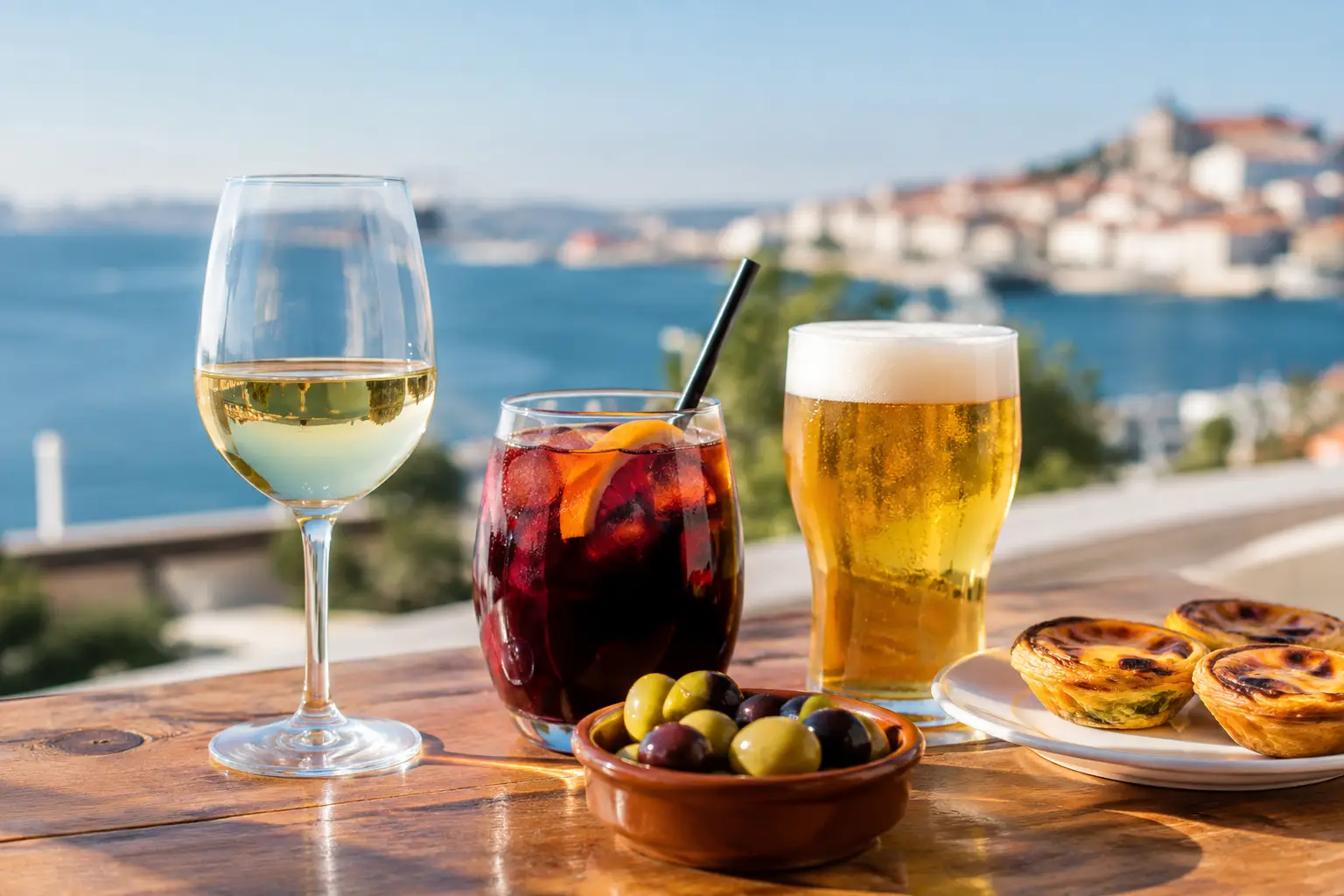
Local Drinks in Portugal Worth Planning a Stop For
A glass of something local can change the pace of a Portuguese journey. One minute you are simply driving through olive groves or following a cobbled lane towards the Atlantic; the next, you are seated beneath a vine-covered terrace, being handed a drink that makes perfect sense of the view. The best local drinks in Portugal are not merely items on a menu. They are little introductions to a region’s weather, farming traditions and particular way of gathering around a table.
Portugal rewards the traveller who lingers. This is a country where the same grape can taste entirely different a few hours down the road, where a tiny bar may serve a liqueur made from fruit growing in the hills behind it, and where an afternoon coffee can be as ceremonial as a glass of old tawny Port. You do not need to know your Baga from your Bical to enjoy it all. A little curiosity, and perhaps an agreement not to rush back to the campervan, will do nicely.
Local drinks in Portugal, tasted slowly
The country is compact on a map but gloriously varied in the glass. Cool, rainy northern valleys produce bright wines with a gentle spritz; the scorching interior calls for ice-cold beer and mineral whites; islands have their own liquid rituals entirely. The useful question is not simply, what should I drink in Portugal? It is, where am I, what am I eating, and how much of the afternoon am I willing to surrender?
That final detail matters. Portuguese pours can be generous, lunch can stretch, and a village square at golden hour has a persuasive quality that no itinerary can overcome.
Start north with Vinho Verde
In the green folds north of Porto, Vinho Verde is the drink that seems made for road-trip lunches. Despite the name, it is not necessarily green. It is a youthful style of wine, often white, sometimes rosé or red, and commonly fresh enough to make a plate of grilled sardines feel even more like a holiday.
The most familiar versions are light, low-ish in alcohol and slightly fizzy, with apple, citrus and a touch of saltiness. They are wonderfully easy to enjoy on a warm day, although it is worth seeking out small-producer bottles too. A more serious Alvarinho from the Monção and Melgaço area can be textured, aromatic and perfectly at home with richer seafood. It is the difference between a cheerful terrace companion and a wine you might carry back to your accommodation to open with dinner.
If you are travelling by campervan, this is a region for a long lunch rather than a hurried tasting schedule. Park where permitted, walk into a village, and let the meal guide the wine. Portugal has many fine views, but a shady table with Vinho Verde and a plate of bacalhau is a particularly convincing one.
Port is only the beginning in the Douro
The Douro Valley is one of those places that can feel almost too theatrical to be real. Vineyards rise in terraces above the river, trains trace the water’s edge, and every bend in the road appears determined to outdo the last. Port deserves its fame here, particularly when tasted in the valley rather than only in the cellars of Vila Nova de Gaia across from Porto.
A chilled white Port with tonic and a strip of lemon is a splendid aperitif when the sun is high. It is lighter on its feet than many visitors expect, and it works beautifully before lunch. Later, a ten-year-old tawny Port brings dried fruit, toasted nuts and caramel notes that seem tailor-made for a cool evening on a terrace. Vintage Port is the grand occasion bottle, powerful and age-worthy, but it need not be your first choice after a day spent negotiating hairpin bends.
Do make room for still Douro wines as well. The region produces reds with depth and drama, often from the same families of grapes that go into Port, alongside elegant whites that can be unexpectedly crisp. A tasting here is most enjoyable when it comes with a sense of place rather than a race through ten glasses. Choose one estate, ask what they are proud of, and give yourself time to listen.
Lisbon’s sweet little ritual: ginjinha
In Lisbon, look for ginjinha, the cherry liqueur commonly served in small, no-nonsense glasses. It is made with sour Morello cherries, sugar, alcohol and spices, and it has the comforting warmth of a winter pudding despite being perfectly acceptable at almost any hour. You may be asked whether you would like it com elas, meaning with a cherry in the glass. The sensible answer is yes.
Ginjinha is especially woven into the atmosphere of old Lisbon, where a quick stop at a tiny standing-room counter can feel like joining a ritual that has outlasted countless guidebooks. In nearby Óbidos, it is often poured into a small chocolate cup. Delightful? Absolutely. A little messy under a hot afternoon sun? Also absolutely. Eat the cup quickly and preserve your dignity.
This is not a drink to analyse too seriously. It is a pause between steep streets, tiled façades and the next pastel de nata. Think of it as Lisbon putting a friendly hand on your shoulder and saying, stay another ten minutes.
Madeira asks you to linger
Madeira wine has a flavour all its own: concentrated, lifted and surprisingly alive, even after years in bottle. The island’s fortified wines range from dry Sercial to sweeter Bual and Malmsey, with Verdelho sitting between them. They often carry flavours of citrus peel, toasted nuts, dried fruits and spice, held together by a remarkable brightness.
For a first tasting, try a dry style before lunch and a sweeter one with dessert or cheese. The contrast makes the range easier to understand, and Madeira is far less heavy than its reputation sometimes suggests. It is a wine of cliffs, sea air and strenuous roads, yet it somehow feels composed.
Do not overlook poncha while on the island. Traditionally made with sugar-cane spirit, honey and citrus, it arrives with enough charm to make you forget it has a proper kick. There are fruit variations everywhere, but a classic lemon poncha is the one to try first. Order it after a walk along a levada, not before. Your balance, and the mountain path, will thank you.
The Algarve has more than rosé by the pool
The Algarve’s beach bars may make chilled rosé feel like the obvious answer, and on a warm afternoon it is hard to argue. Yet the region also offers medronho, a clear spirit distilled from the fruit of the strawberry tree. It is earthy, fiery and generally served in a small glass that should be treated with respect. This is the sort of drink that arrives after dinner, perhaps after someone insists it is good for digestion.
It may be, though the evidence becomes less scientific after the second glass. Medronho is particularly associated with the rural Algarve, where hills rise behind the coastal bustle and old distilling traditions remain part of village life. If you see it on a menu, ask where it was made. The answer may lead to a worthwhile detour.
The Algarve is also a good place to notice how Portuguese people drink with food. A crisp local white beside clams, garlic and coriander is not a lesser choice because it lacks a famous label. Often, it is exactly the right one.
A word for beer, coffee and the in-between moments
Wine may take centre stage, but local drinking culture in Portugal is broader and more relaxed than a cellar door itinerary suggests. A cold imperial in Lisbon or a fino in Porto is simply a small draft beer, ideal with salty snacks and a late-afternoon view. Ask for a beer in the other city using the wrong word and you will almost certainly still be understood. Portugal is forgiving in this regard.
Coffee deserves its own moment, too. An espresso is commonly ordered as a café, while a Lisbon bica is a short, strong coffee with a slightly more local flourish. It is less about sitting with a laptop and more about pausing at the counter, watching the day unfold, then getting on with it. Add a pastel de nata if you must. This is not a difficult decision.
How to drink well while travelling Portugal
The best approach is to let each place make the introduction. Order the house wine in a family-run restaurant, especially if the owner speaks about it with pride. Try the regional aperitif before dinner. Ask whether the bar serves something made nearby, but do not expect every local drink to be polished for visitors. Some will be rustic, some sweet, some startlingly strong. That is part of the pleasure.
A little moderation makes the journey better, particularly on rural roads and island hairpins. Share tastings, keep water on the table, and choose one memorable drink rather than three forgettable ones. Portugal is not short of tempting bottles, and there is no prize for treating a holiday like a competitive sport.
Leave room for surprise. It might be an unlabelled red poured from a jug in the Alentejo, a frosty glass of Vinho Verde beside the Minho, or ginjinha taken shoulder-to-shoulder with locals in Lisbon. The drink itself matters, of course, but the real souvenir is the moment around it: the view, the conversation, the unplanned extra hour that suddenly feels like the whole point of travelling.