A Campervan Journey Through Portuguese Wine Country
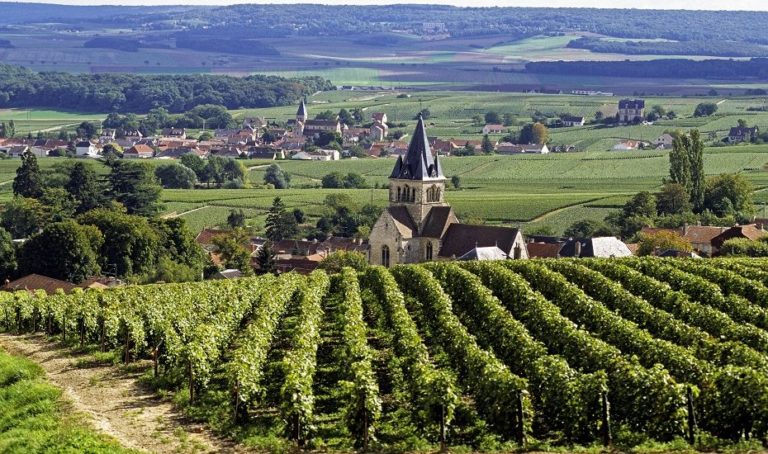
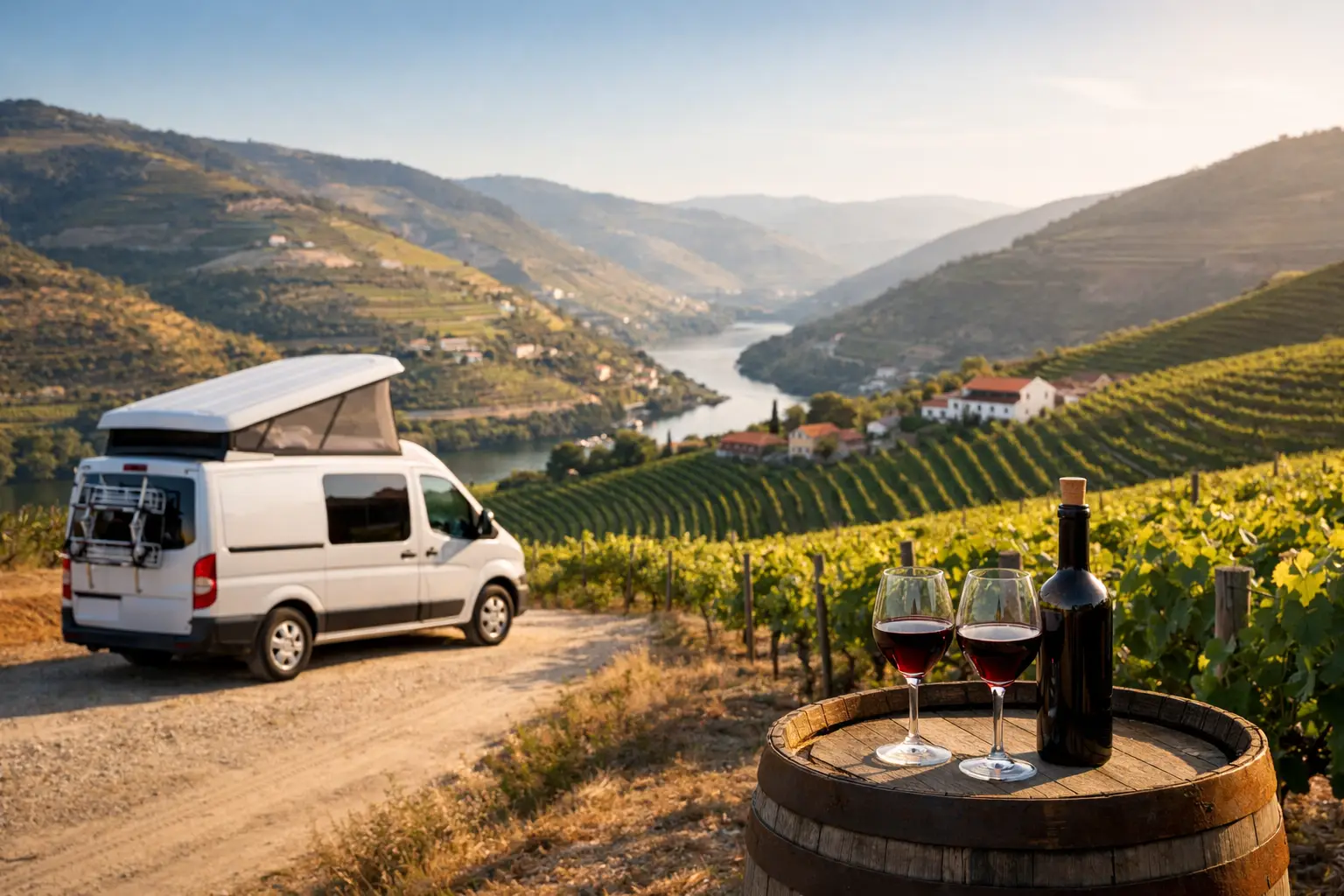
The first bend in the Douro valley has a way of silencing a campervan. One moment, you are concentrating on a narrow road curling above the river; the next, terraced vineyards appear in every direction, rising like giant green staircases from the water. A campervan journey through Portuguese wine country is not about ticking off famous labels. It is about following the rhythm of the landscape: a sleepy morning in a village square, a long lunch under vines, a bottle chosen because the person pouring it told a story you wanted to take with you.
Portugal suits this kind of travelling beautifully. Distances are manageable, rural roads reveal more than motorways ever could, and the country’s wine regions feel distinct without feeling remote. The trick is resisting the urge to cover too much ground. Wine country rewards the traveller who parks up, walks slowly and leaves plenty of room for a second glass – consumed, naturally, after the keys have been put away for the night.
Begin in the Douro, but do not rush it
Most journeys begin in Porto, where the Douro meets the Atlantic and the old port lodges of Vila Nova de Gaia offer a fitting introduction to the region. It is tempting to collect a hire campervan and point it east immediately, but give Porto at least a night if you can. Its tiled façades, riverside bustle and cellar-door history make the valley ahead feel even more meaningful.
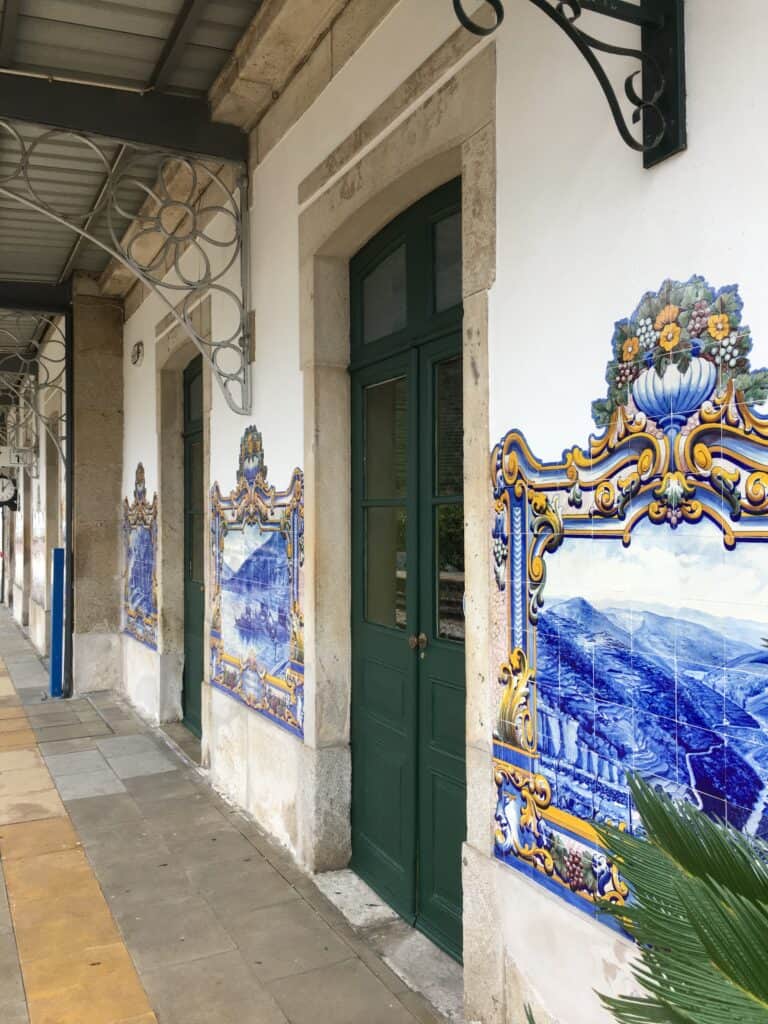
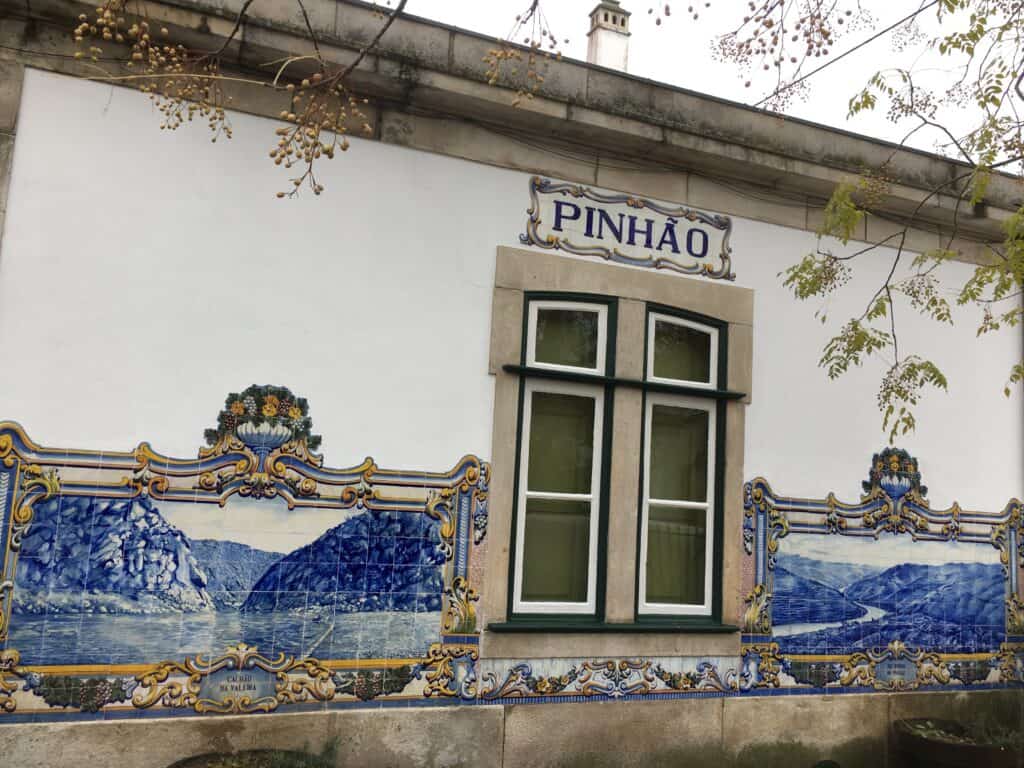
From Porto, the route into the Douro is dramatic. The scenery changes gradually from city edges to wooded hills, then suddenly opens into sculpted terraces and pale schist slopes. Peso da Régua is a useful base for provisions and bearings, while Pinhão is the place to linger. Its little railway station, decorated with blue-and-white azulejo panels, is practically an illustrated introduction to the valley’s working life.
This is where a campervan journey through Portuguese wine country asks for a little humility. The roads can be steep, winding and narrow, especially when you leave the main valley. Drive them in daylight, take the bends patiently and avoid assuming that every vineyard lane is suitable for a larger vehicle. The best view may be up a challenging hill, but there is no prize for finding yourself wedged between a stone wall and a very unimpressed grapevine.
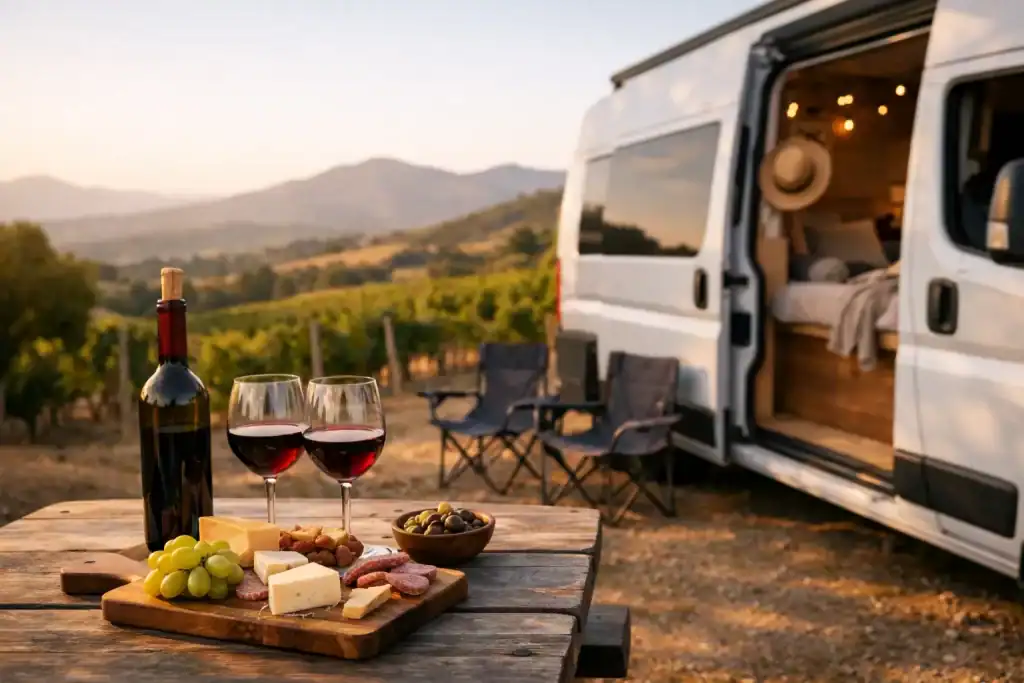
What to drink in the Douro
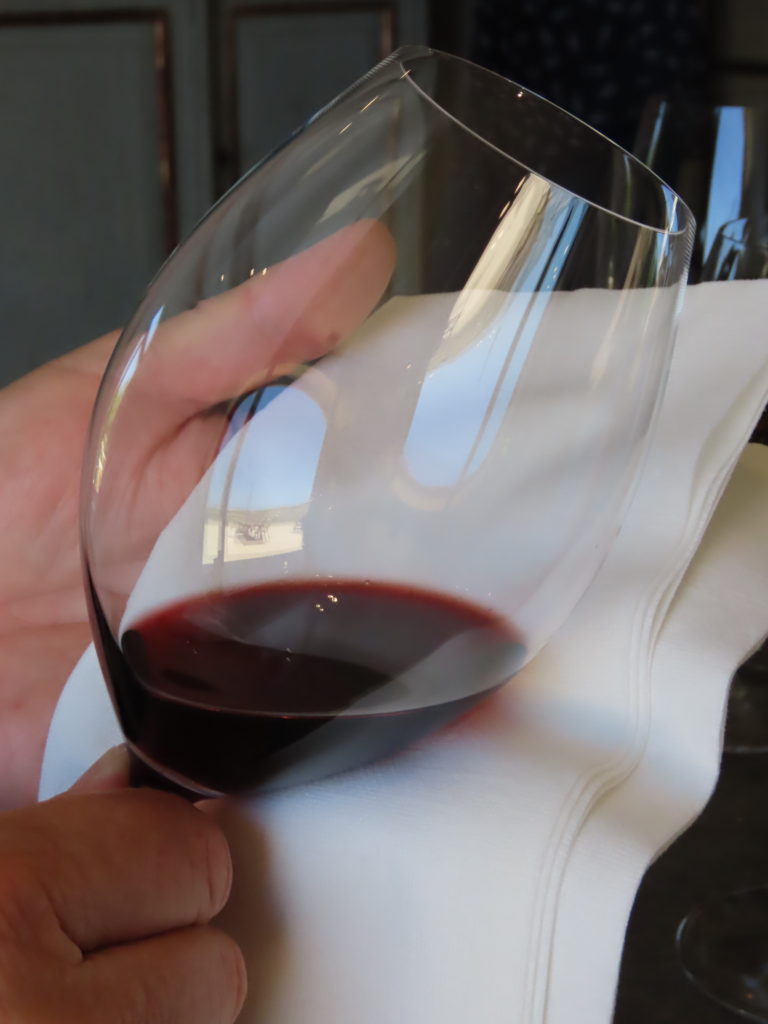
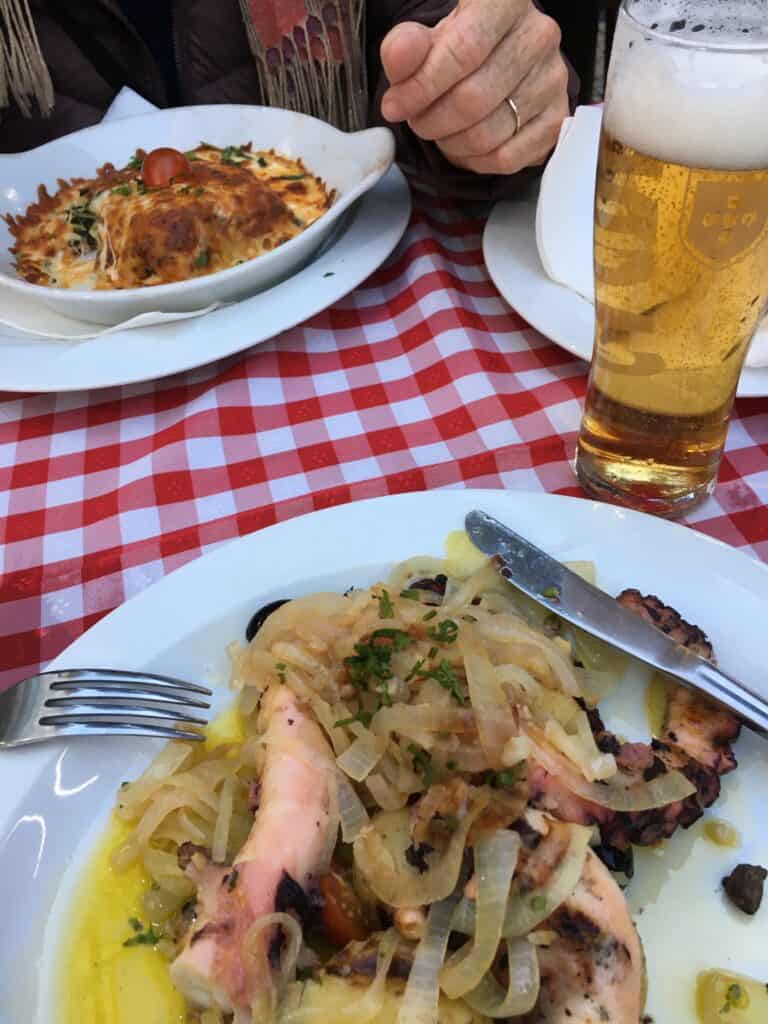
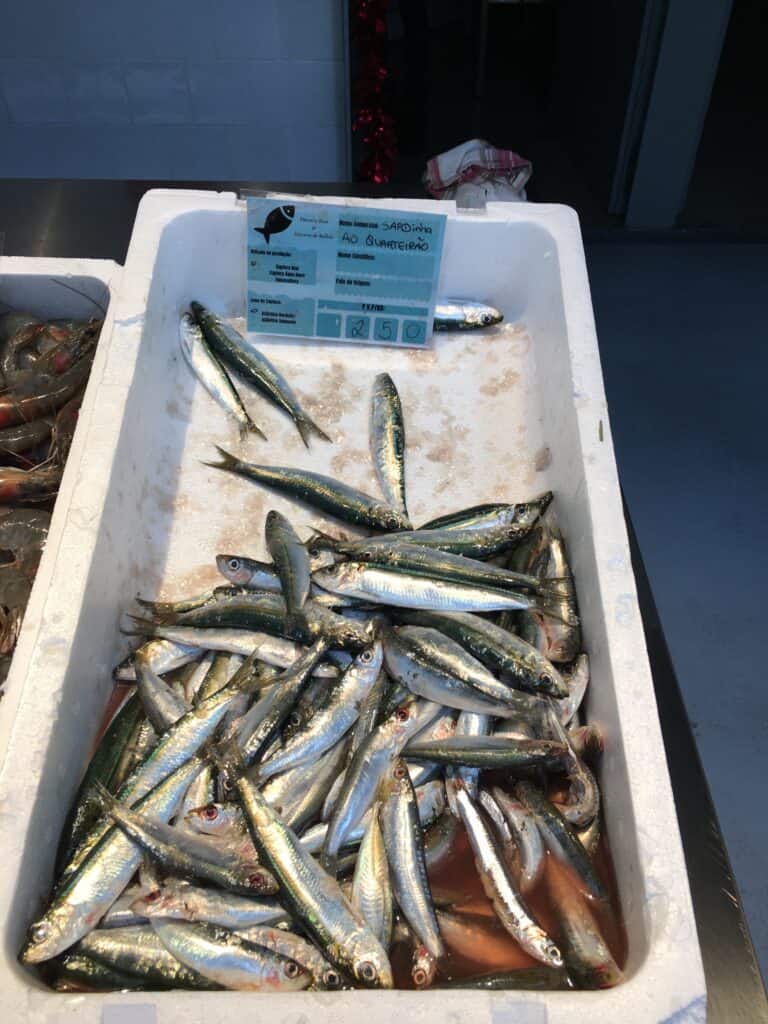
Port may be the region’s best-known calling card, but table wines are the reason to make room in the van’s wine rack. Reds built around Touriga Nacional, Touriga Franca and Tinta Roriz often carry dark fruit, herbs and a stony edge that seems to belong to the schist beneath your feet. In warm weather, a chilled Douro white can be a revelation: bright, textured and entirely at home beside grilled fish or salty almonds.
Book tastings ahead where possible, particularly at smaller estates. A grand quinta overlooking the river is undeniably lovely, but some of the most memorable visits happen at family-run producers where the conversation moves from grapes to grandparents and back again. If one of you is driving, share a tasting or choose the spittoon without embarrassment. Portuguese hospitality does not require heroic consumption.
Follow quieter roads through Dão
Leaving the Douro for Dão feels like moving from theatre to woodland. The landscape softens around granite outcrops, pine forests and old villages with honey-coloured stone houses. It is a less showy wine region, perhaps, but that is part of its charm. After the Douro’s grand views, Dão offers a quieter, more contemplative stop.
Viseu makes a pleasant place to wander, with handsome streets, cafes and enough local life to remind you that not every good day needs a tasting appointment. Further south, the historic villages around the Serra da Estrela foothills offer cooler air and a welcome sense of space. Park carefully outside old centres, then explore on foot. These lanes were designed for donkeys, not motorhomes with bike racks.
Dão reds are often more elegant than their Douro cousins, with red berry fruit, floral notes and a gentle savoury character. Encruzado, the region’s leading white grape, deserves attention too. It can be fresh and citrus-led when young, yet has enough body to sit happily beside roast chicken, creamy sheep’s cheese or a picnic assembled from a village grocer’s counter.
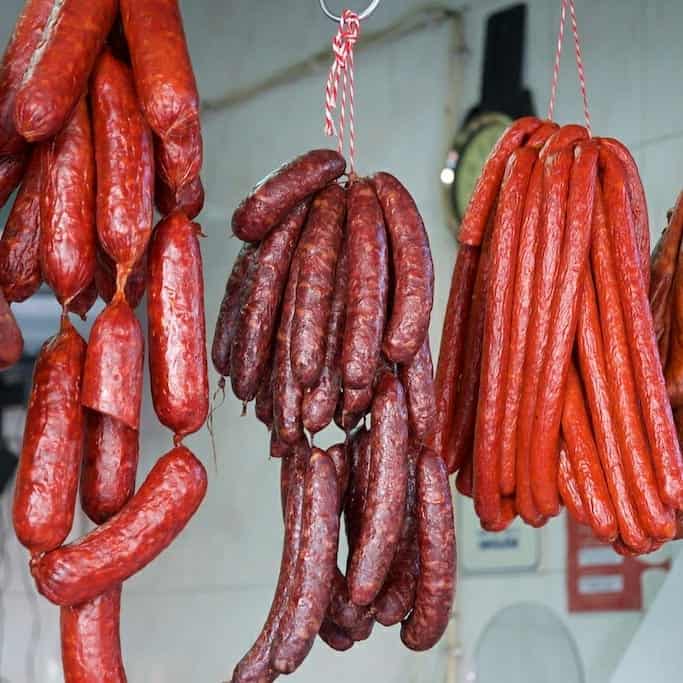
There is a particular pleasure in cooking in a campervan after a market stop here. A hunk of pão, ripe tomatoes, cheese, olives and a bottle cooled in the fridge can feel like a banquet when eaten with the door open to a view of fields and distant hills. The dining room may be compact, but the window is excellent.
Let Alentejo slow the whole journey down
If the Douro is vertical and Dão is tucked among hills, Alentejo stretches out beneath a vast sky. Cork oaks, olive groves and vineyards roll across the plains, interrupted by whitewashed towns that seem designed to catch the afternoon sun. This is the region for settling into a slower gear.
Évora is the natural cultural stop, with its Roman temple, medieval walls and lanes that glow gold at dusk. It can be busy, so consider staying just outside the city and using your campervan as a peaceful retreat once you have explored. Beyond Évora, places such as Monsaraz and Vila Viçosa bring the scale down again: small squares, quiet viewpoints and restaurants where lunch seems to have been granted an extra hour or two.
Alentejo wines tend to be generous and sun-warmed, but the region is far more varied than the old stereotype of big, bold reds suggests. Alicante Bouschet and Aragonez can bring depth and spice, while local whites made from Antão Vaz, Arinto and Roupeiro are often wonderfully refreshing. They are made for food, especially the region’s earthy cooking: black pork, lamb, garlic, herbs, bread soups and plates that do not apologise for being comforting.
Where the campervan fits best
Alentejo is generally easier to navigate than the Douro, with more open roads and a more relaxed sense of distance. Still, do not treat a vineyard as a campsite by default. Ask before parking overnight, use established campervan areas where available and respect signs, gates and working land. A warm welcome is much more likely when you arrive as a considerate guest rather than a self-appointed resident of the car park.
It is worth planning the practicalities around the wine rather than trying to squeeze them in afterwards. Refill water whenever you have the chance, keep shopping simple, and do not rely on tiny village shops for every essential. On the other hand, leave room for the things that do not need planning: a roadside stall selling peaches, a local festival in a town you had never heard of, or the sight of storks nesting on a church tower at sunset.
Make time for villages, not just vineyards
The loveliest moments on a Portuguese wine route often happen between tastings. In the Douro, that might mean coffee and a pastel de nata on a terrace above the river. Whereas, in Dão, it could be buying cheese from a shopkeeper who insists you try three varieties before choosing one. In Alentejo, it may be a late evening walk through a quiet town, when swallows loop above the rooftops and dinner smells drift from open windows.
This is also why an overly rigid itinerary can flatten the experience. A two-week trip could comfortably include Porto, Douro, Dão and Alentejo, with a final detour towards the coast. With only a week, choose two regions and give them proper attention. The Douro and Dão make a lovely pairing for hills, heritage and cooler wines; Alentejo and the coast suit travellers who want broad landscapes, historic towns and a little beach time between cellar doors.
Bring a notebook, or use the notes app on your mobile phone, for the bottles that genuinely moved you. Write down where you drank them, what you ate and what the evening looked like. Wine memories are rarely just about tasting notes. Months later, you may not recall every grape variety, but you will remember the wind through the vines, the clink of plates, and the improbable pleasure of waking up somewhere beautiful with nowhere urgent to be.
Portugal does not demand that you become an expert to enjoy its wine country. It simply asks that you arrive curious, travel kindly and give each place enough time to introduce itself. Park up before sunset, pour something local, and let the road decide tomorrow.
If you’re looking for tours, attractions and experiences across the UK and Europe, you can browse and book here: https://tripadvisor.tpk.ro/D6WNK34w
Affiliate Disclaimer
This article contains affiliate links. If you book tours, attractions or experiences through these links, we may earn a small commission at no additional cost to you. We only recommend services that we genuinely use, trust or believe will add value to your travels. Thank you for your support!