What Makes a Village Worth Visiting on Holiday?
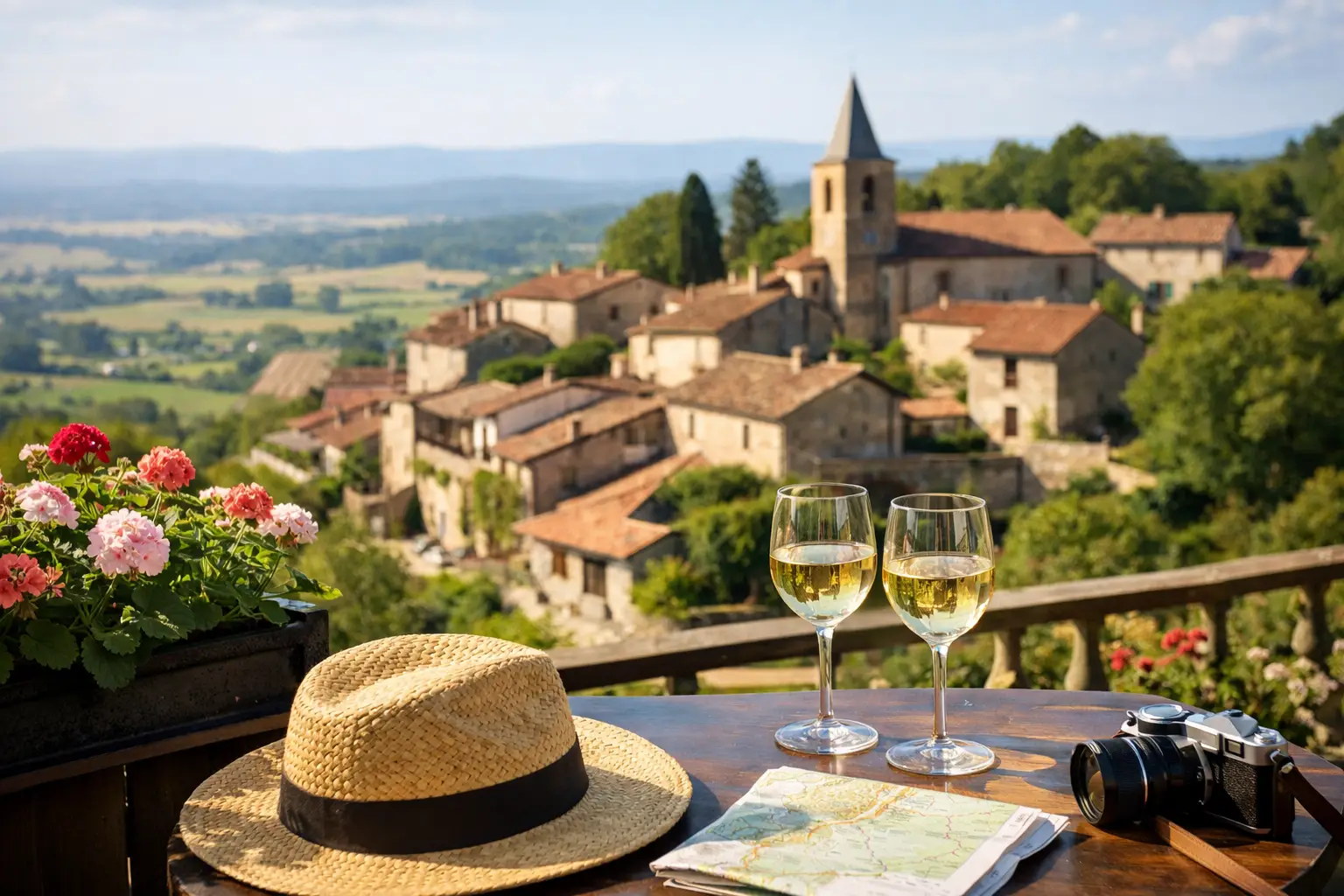
A village can look perfect from the car window: honey-coloured stone, a church tower, geraniums in window boxes and perhaps a promising sign for local wine. But what makes a village worth visiting is rarely the view alone. It is the moment you stop, walk a little further than planned, and realise the place has a pulse beneath its prettiness.
The villages that stay with us are not always the ones with the most polished tourist brochures. They are the ones where the bakery queue is full of neighbours catching up, where the café owner remembers who takes sugar, and where a bottle on the dinner table tastes of the slopes just beyond the last house. For travellers who like to take the scenic road, linger over lunch and choose a destination by its market, vineyard or village square, that feeling matters more than a checklist of attractions.
What makes a village worth visiting?
A worthwhile village offers a sense of place that cannot be packed into a souvenir bag. It has a character shaped by its landscape, history and the people who still live there. You should be able to notice where you are with your eyes closed: the ring of church bells across a French valley, olive leaves rattling in a Spanish breeze, the smell of woodsmoke in a mountain hamlet, or the faint yeasty perfume drifting from a Belgian brewery.
Beauty helps, of course. Nobody is pretending that a faded car park beside a bypass has the same pulling power as a cobbled lane leading to a sunlit square. Yet good looks are only the invitation. The reason to stay is texture: shutters that are actually opened each morning, a small grocer selling local cheese, a noticeboard advertising a fête, a dog asleep outside the bar as though it owns the pavement.
There is a useful difference between a village that is picturesque and one that feels alive. The first may reward a twenty-minute wander and a photograph. The second encourages you to cancel the next stop, order another glass and wonder whether the campsite has space for one more night.
A landscape with a story to tell
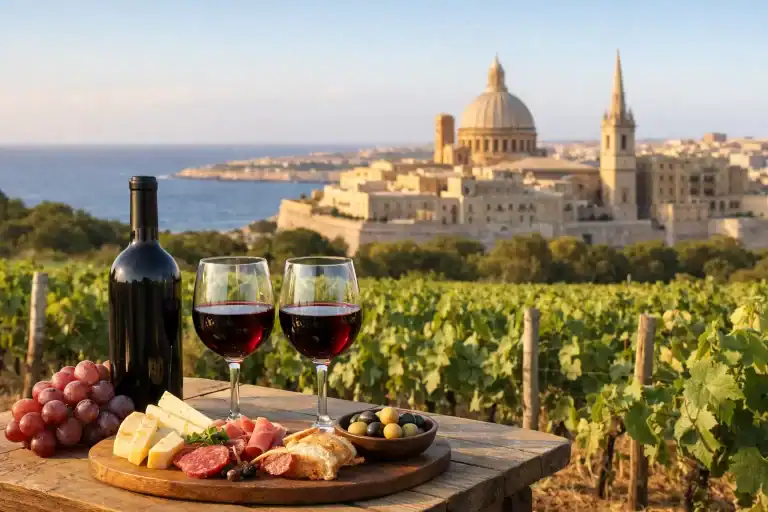
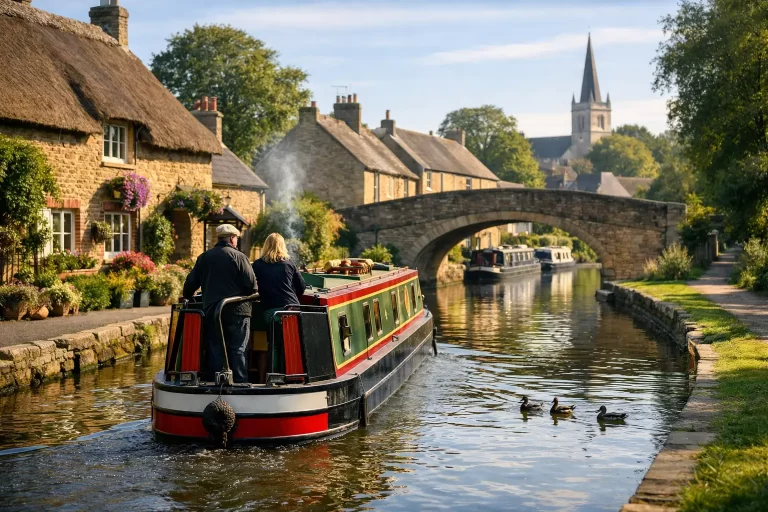
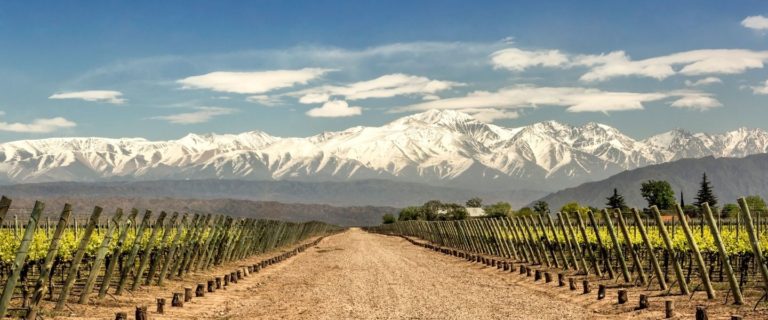
The finest villages belong to their surroundings rather than merely sitting in them. In wine country, that might mean a cluster of tiled roofs pressed against terraces of vines, with a narrow road winding out towards a cellar door. Whereas, in coastal Portugal, it may be whitewashed cottages above an Atlantic cove. In the Cotswolds, the landscape might arrive in the very stone used to build the houses.
This connection gives a village its logic. You begin to understand why it is there: a river crossing, a defensive hill, a trade route, a fertile plain or a sheltered pocket where grapes, figs or chestnuts thrive. Even a modest place becomes more interesting when its setting explains its food, architecture and daily rhythms.
It is worth arriving by the slower route when you can. A campervan road or country lane often reveals the gradual change in terrain that a motorway hides. One minute the land is broad and busy; the next it narrows into folds of green, vineyards appear, and a village seems to have been waiting patiently around the bend.
The pleasure of being slightly lost
A village should leave room for discovery. Not confusion of the “where on earth is the loo?” variety, ideally, but the agreeable sort of uncertainty that leads you down a side street. The best finds are often unlabelled: a tiny Romanesque chapel, an old wash house, a bench with a view over vines, or a courtyard restaurant whose menu is written on a chalkboard in determinedly local handwriting.
This is one reason famous villages can be a mixed blessing. Their beauty may be entirely deserved, but coach parties and identical gift shops can flatten the experience. Visiting early in the morning or staying overnight changes everything. When day-trippers have gone, a celebrated village can become a village again.
Food and wine that could not come from anywhere else
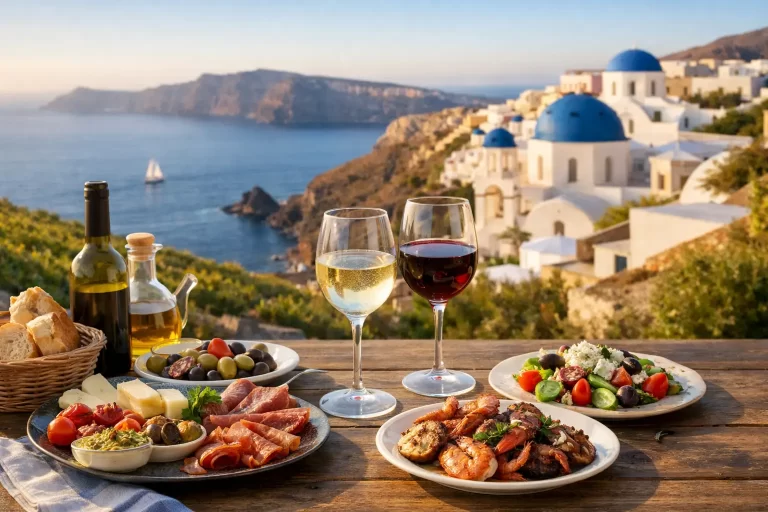
For us, a village becomes especially memorable when lunch tells the story of the place. It need not be fancy. A crisp glass of local white with river fish, a wedge of sheep’s cheese with village bread, or a hearty stew after a rainy walk can say more than a grand tasting menu ever could.
The key is connection. A wine list that includes bottles from the surrounding hills is more exciting than an encyclopaedia of labels flown in from everywhere else. A grower pouring their own wine may explain a grape variety in plain language, or simply point at the vineyard and say, “It comes from up there.” Frankly, that is often all the terroir lesson anyone needs before lunch.
Local specialities also give a village a rhythm. Morning markets, harvest meals, seasonal asparagus, chestnut cakes, cider festivals and autumn truffle menus provide good reasons to return at a different time of year. Travelling slowly means accepting that not every pleasure is available on demand. A village in winter may have fewer open restaurants, but it may also offer crackling fires, empty lanes and the rare treat of feeling like a guest rather than a customer.
The human welcome, without the performance
Hospitality is not about forced cheerfulness or being handed a branded leaflet before you have taken off your coat. The warmest village welcomes are usually quieter. Someone at the bar recommends the road with the better view. A shopkeeper tells you which bakery opens on Sunday. A winemaker suggests a neighbouring village because its annual fête is far more fun than theirs.
These small gestures matter because they make travel reciprocal. You are not consuming a place as quickly as possible; you are being briefly included in its everyday life. Respect helps this along. Learn a few words, buy from local businesses, ask before photographing people, and remember that the attractive square is also where residents park, shop and meet their friends.
A real village does not exist to entertain visitors, and that is precisely its charm. If every corner feels arranged for Instagram, if every menu reads like it has been approved by a marketing committee, it may be lovely but it can feel oddly airless. A little imperfection is reassuring. So is a restaurant that serves one dish because that is what the cook has made.
Things to do, and permission to do very little
A village worth visiting does not need a packed itinerary. In fact, too many formal attractions can make it feel more like a small town with excellent branding. What it needs is enough to gently fill a day: a walk, a church, a viewpoint, a market, a museum with an enthusiastic volunteer, a tasting room, perhaps a swim in a river or lake nearby.
The balance depends on the traveller. Couples may be thrilled with a long lunch and an evening stroll, while families may need a playground, a short trail or somewhere to buy an emergency ice cream. Campervan travellers will care about practicalities such as parking, water and whether the lanes are sensible for a larger vehicle. None of this is unromantic. A beautiful village is easier to enjoy when you are not trying to reverse around a fountain while a queue of locals watches politely.
What matters most is that the place allows time to stretch. Sit in the square. Order coffee even if you have already had coffee. Watch the shutters open and the light move across the roofs. The quiet intervals are often where a destination settles into memory.
How to spot the good ones before you arrive
A little research is sensible, but leave room for chance. Look for villages near a wine route, a regional park, a market town or a food-producing area, then use those anchors to explore outward. Check opening days if you have a particular restaurant or winery in mind, especially outside high season. Rural Europe still takes its rest days seriously, as it should.
More revealing than a list of “must-sees” is the question of whether you could happily spend a night there. Is there somewhere to eat, somewhere to walk after dinner, and a reason to wake up rather than drive away at first light? If the answer is yes, you may have found the right sort of place.
The villages we remember most clearly are rarely those where we did the most. They are where a simple glass of local wine, a warm plate and an unhurried walk made the journey feel wonderfully complete. Leave space in your plans for that kind of stop. The village may not shout for your attention, but it could be the part of the holiday you talk about all the way home.
If you’re looking for tours, attractions and experiences across the UK and Europe, you can browse and book here: https://tripadvisor.tpk.ro/D6WNK34w
Affiliate Disclaimer
This article contains affiliate links. If you book tours, attractions or experiences through these links, we may earn a small commission at no additional cost to you. We only recommend services that we genuinely use, trust or believe will add value to your travels. Thank you for your support!