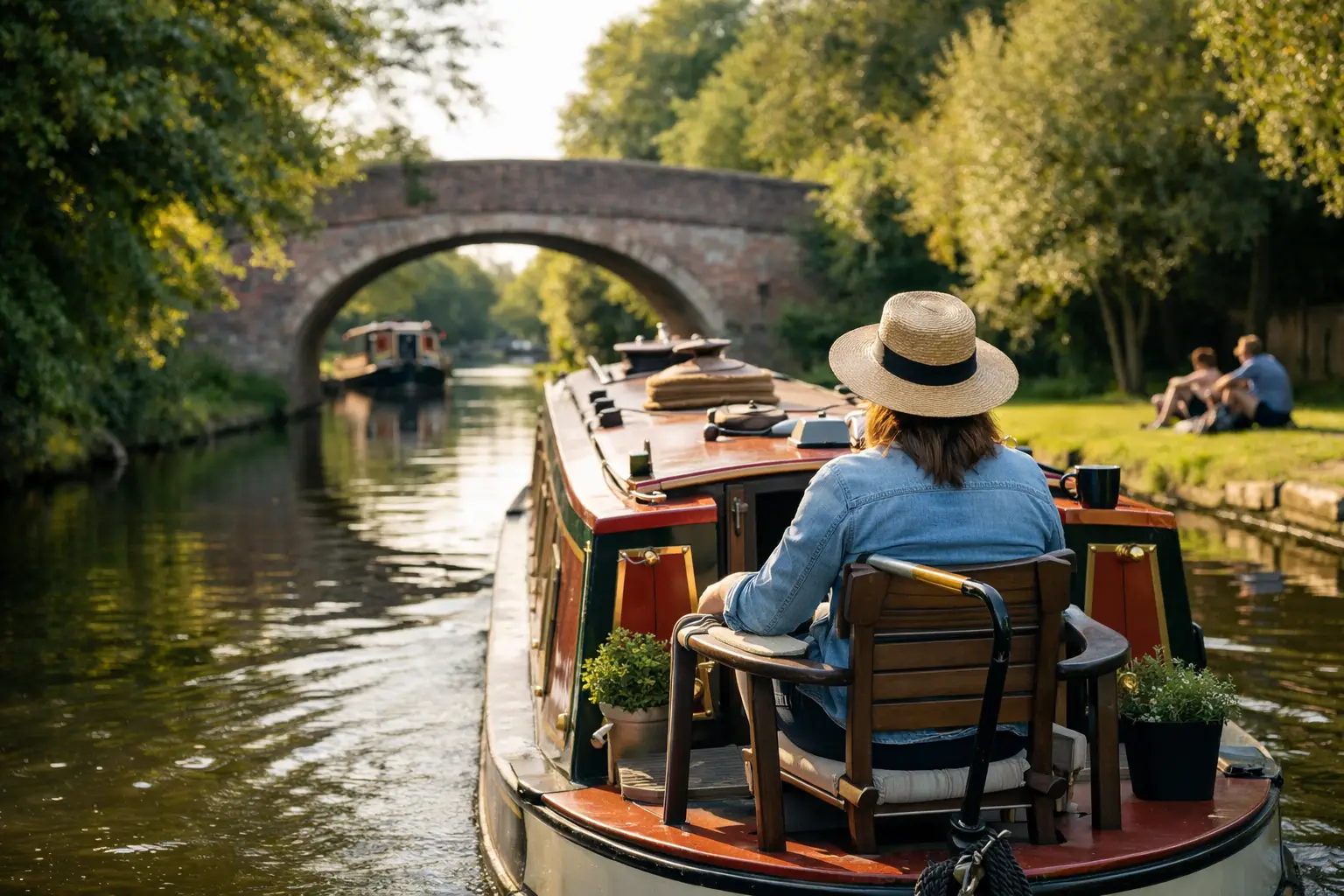
How to Travel by Narrowboat Without Rushing
The kettle had barely boiled when the first lock appeared around the bend, its stone walls glazed with moss and its gates waiting with the quiet authority of something that has seen centuries of travellers arrive flustered. That is the first lesson in how to travel by narrowboat: the canal will not be hurried. Nor should it be. A narrowboat holiday is less about covering ground than watching England unfold at walking pace – towpath hedgerows, red-brick mill towns, church spires, ducks with terrible road sense and villages where lunch can easily become an afternoon.
For anyone drawn to slow journeys, waterside pubs and the pleasing ritual of opening a bottle once the ropes are tied, it is one of Britain’s most charming ways to travel. It does ask a little of you, though. You will steer a substantial floating home, work locks, plan around daylight and learn that reversing is an art best practised when nobody is watching.
Start with the right stretch of canal
The most enjoyable first trip is usually a modest one. A week gives you time to settle into the rhythm; a long weekend can work too, provided you resist trying to conquer an ambitious route. Canal cruising is governed by locks, bridges, water points, queues and the irresistible pull of a pub garden, not by your sat-nav’s optimism.
For a gentler introduction, choose a route with a mixture of open countryside and easy stops rather than a lock-heavy challenge. The Llangollen Canal is famously beautiful, particularly around the Pontcysyllte Aqueduct, but its popularity means planning matters. The Kennet and Avon offers handsome villages and rewarding food-and-drink detours, while the Oxford Canal has wonderfully winding rural stretches and plenty of historic character. The Norfolk Broads are a different proposition: more open water, fewer traditional narrow canal moments, but lovely for those who prefer broad skies and birdlife.
Think honestly about what makes a good holiday for your crew. Keen walkers may welcome a route with towpath access and village stops. Food-and-wine lovers might prefer a slower circuit near market towns, where a decent deli and a local inn are never far away. If someone in the party is nervous about steering, avoid building the itinerary around difficult junctions, tunnels or a daily procession of locks.
The handover is your most useful hour
Before departure, the hire company will show you the engine, tiller, mooring ropes, water and waste systems, central heating and safety equipment. Listen closely, even if everybody is itching to cast off. Ask them to demonstrate the locks if you are new to boating, and ask where the likely pinch points are on your intended route.
A narrowboat responds slowly. You steer from the stern using the tiller, and the boat pivots from the rear, so a small movement can have a surprisingly large effect. Keep your gaze ahead, use gentle corrections and do not expect a car-like response. The best advice is wonderfully unglamorous: go slowly enough that you have time to think.
Most hire boats have an engine speed setting suitable for cruising, and canal speed limits are generally low. In practice, slowing for moored boats, blind bends and bridges is both courteous and sensible. Passing too fast creates a wash that tugs at other people’s ropes and sends mugs sliding off tables. Nobody wants to meet their neighbours because they have launched a mug of tea into the cut.
Share the jobs before the first lock
Decide who will steer, who will handle ropes and who will operate lock paddles and gates. These roles can rotate, but clarity makes the day calmer. The skipper should keep an eye on the boat and communicate plainly; lock crew should never jump on or off a moving boat, wrap a rope around a hand, or put fingers between the boat and masonry.
Wear sensible shoes with grip, especially around wet lock sides. Keep children supervised and dogs on leads near locks. A lifejacket is a wise choice for children, non-swimmers and anyone uneasy around deep water, even if the canal itself looks as placid as a village pond.
Locks become the rhythm of the journey
At first, a lock can look like a small piece of Victorian engineering designed to expose family dynamics. After two or three, the pattern begins to make sense. You approach slowly, check whether it is set for you, bring the boat in gently, close the gates behind you if required, then fill or empty the chamber using the paddles before opening the exit gates.
The detail varies between waterways, and this is where your handover and posted instructions matter. Always make sure the boat is positioned correctly, keep a close watch on its lines and use the paddle gear carefully. Water entering a lock can be powerful. On broad locks, sharing with another boat is common and often sociable, but agree who is doing what before anyone starts winding.
Do not plan your day solely by mileage. A handful of locks can take far longer than a peaceful rural cruise, especially on a sunny Saturday. That is not a failure of planning. It is often where the best conversations happen: with volunteers, seasoned boaters, a couple travelling with a terrier in a lifejacket, or the lock keeper who knows exactly which pub is serving lunch after three.
Moor where the evening feels inviting
Mooring up is one of narrowboating’s small ceremonies. Look for designated visitor moorings or a suitable stretch of towpath where mooring is permitted, check any time limits, then bring the boat in slowly against the bank. Secure bow and stern lines firmly, without creating a trip hazard on the towpath. Once tied up, test the boat with a gentle push before declaring the job done.
There is a particular pleasure in choosing a mooring with a view: sheep grazing beyond the hedge, a row of painted canal cottages, or the smoke-coloured water beneath a willow. But convenience has its charms too. A village mooring close to a bakery, pub or farm shop may be worth more than a remote sunset, depending on how empty the galley is.
Be considerate. Keep towpaths clear, avoid running the engine late into the evening where rules restrict it, and remember that canals are homes as well as holiday routes. Permanent moorers deserve the same quiet enjoyment you came to find.
Eat and drink like you have nowhere urgent to be
A narrowboat galley is compact, so shop with restraint. Bring ingredients that can become easy, generous meals: good bread, local cheese, tomatoes, eggs, a jar of something useful and fruit for breakfast. One-pan suppers feel entirely right after a day outdoors. If you pass a market town, replenish there rather than arriving with enough provisions to feed a minor expedition.
Wine belongs beautifully to canal evenings, but timing matters. The person steering and working locks needs a clear head. Save the bottle for when the boat is securely moored, the engine is off and the day’s navigation is finished. A chilled English sparkling wine or a crisp Bacchus can be a lovely waterside choice, especially with smoked trout, soft cheese or a packet of salty crisps enjoyed on the stern. For cooler evenings, a light red served slightly chilled is far more forgiving in a warm boat than a weighty, tannic number.
There is no need to turn every stop into a tasting itinerary. Some of the best moments are modest ones: a pint beside the canal, a wedge of local cheddar wrapped in paper, or a glass of wine while the last swans paddle past. The landscape is already doing plenty of the entertaining.
Plan lightly, prepare properly
Keep a paper canal guide or reliable navigation app to hand, but let it guide rather than dictate. Note water points, rubbish disposal, toilets, winding holes where you can turn around, tunnels and planned overnight stops. Check weather before leaving each morning. Strong winds make steering far harder, while heavy rain can change conditions and close sections of waterway.
A few practical habits save a great deal of fuss. Fill with water when you have the chance rather than waiting for the tank to run low. Charge phones while the engine is running if your boat’s system requires it. Keep a torch accessible, along with waterproofs, sunscreen and a warm layer – British summer specialises in changing its mind before lunch.
Most importantly, give yourselves permission to alter the plan. If a lock flight takes longer than expected, stop earlier. If a village feels lovely, stay another night. If rain drums on the roof, make tea, read a book and watch the water darken. Narrowboating rewards the travellers who understand that arriving is not really the point; the happy part is being gently, gloriously en route.