How to Taste Wine While Travelling Slowly
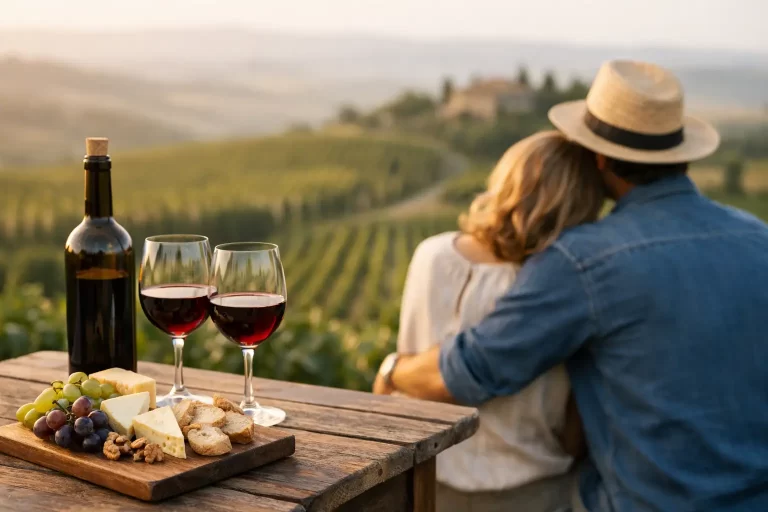
The first sip of a local wine rarely happens in a pristine tasting room. More often, it arrives at a small table beneath a plane tree, with olives in a chipped bowl, maps folded in your bag and a view of vines disappearing over the next hill. That is the joy of learning how to taste wine while travelling: you are not simply assessing a drink. You are tasting weather, landscape, cooking, conversation and the gentle pace of a place.
You do not need a notebook full of tasting terms or a collection of serious-looking swirls to enjoy it properly. A little attention goes a long way. The best wine memories tend to come from being curious, asking kind questions and leaving enough room in the day for a glass to become an afternoon.
Taste the place before the wine
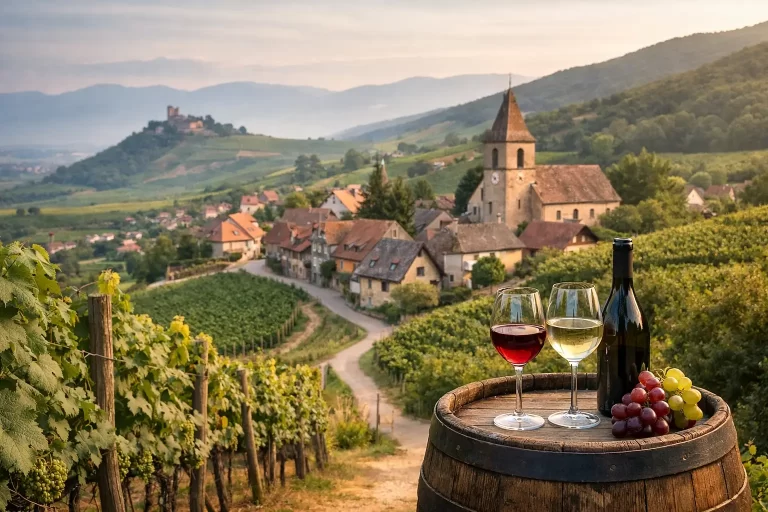
Before the bottle is opened, take a look around. Is the vineyard close to the sea, high in the hills or tucked behind an old stone village? Are the vines growing in pale limestone, red clay or dark volcanic soil? Even if you cannot identify every geological detail, noticing the setting gives the wine a useful frame.
A crisp white in coastal Portugal may make more sense once you feel the Atlantic wind on your face. A deep red from an inland Spanish valley feels less mysterious after a hot drive through dry fields and cork oak. Wine is never only soil and sunshine, of course. It is also decisions made by growers and families, sometimes over generations. But the landscape is where the story begins.
This is one reason slow travel suits wine so beautifully. If you race between three cellar doors before lunch, the wines can blur into one another. Choose one or two visits, then leave time to wander the village, buy bread from the bakery and sit down for a proper meal. The bottle will stay with you more clearly when the whole day has a shape.
How to taste wine while travelling without the fuss
Start by looking, smelling and sipping, but keep the ritual relaxed. Hold the glass against a pale background if you can. Is the wine lemon-coloured, coppery, ruby or almost purple? Colour can offer clues about age and grape variety, yet there is no need to turn it into an exam. Simply notice what is in front of you.
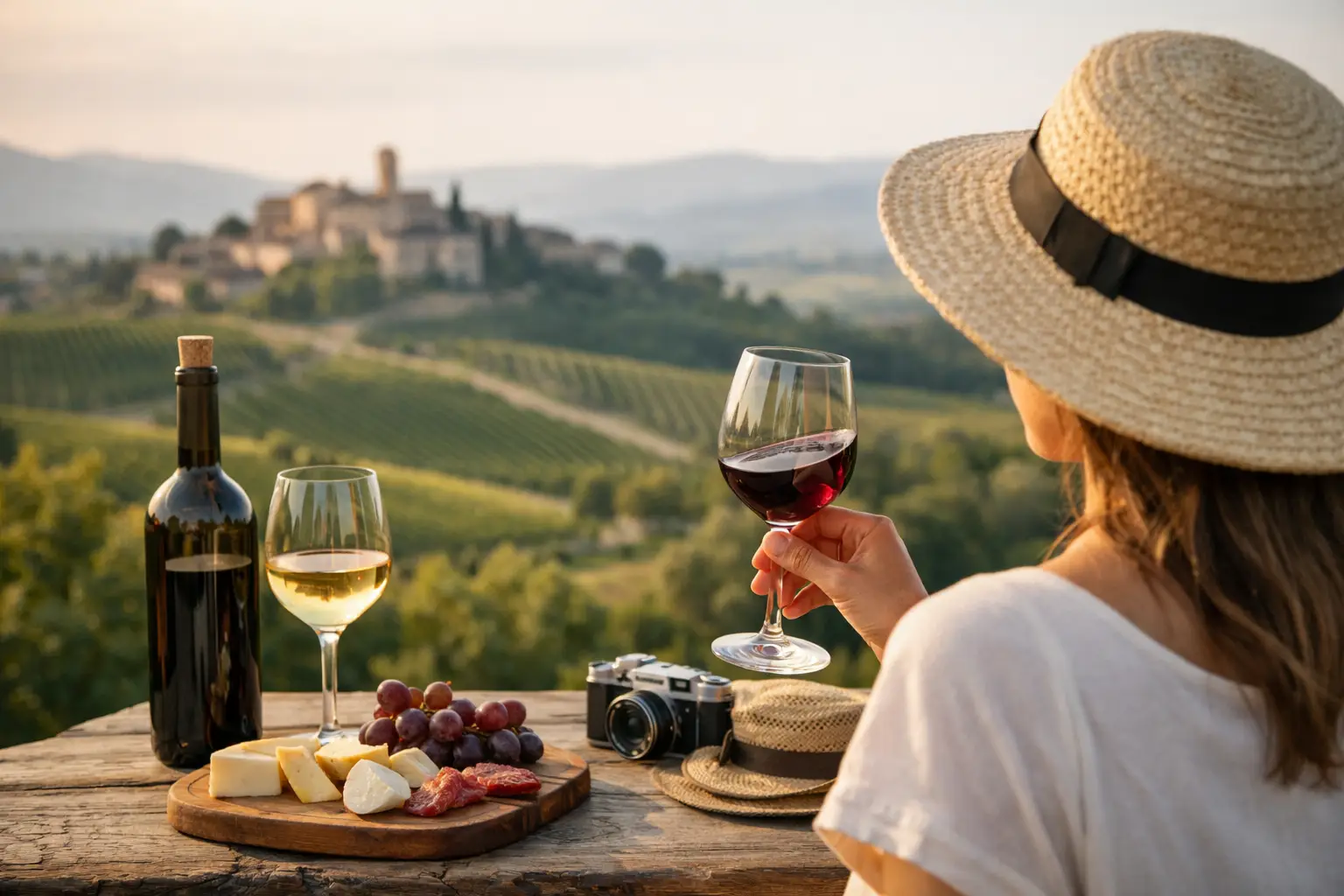
Then give the glass a gentle swirl and smell it before you drink. Your first impression may be fruit, flowers, herbs, spice, wet stones, warm toast or something much less obvious. There is no prize for saying blackberry when you really smell cherries. A vineyard dog may be asleep at your feet, someone may be grilling sardines nearby, and the air may be full of wild thyme. Those things affect what you notice too.
Take a small sip and let it move around your mouth. Ask yourself a few friendly questions: is it fresh or rich, light or weighty, smooth or grippy? Does it make your mouth water? Does the flavour linger after you swallow? Most importantly, do you want another sip?
That final question is more useful than many people admit. Wine language can be wonderfully precise, but pleasure matters. A bright, slightly tart rosé on a warm afternoon may be exactly right, even if it would not impress at a formal tasting. Context is not cheating. Context is part of the flavour.
Let local food do some of the explaining
A wine that seems stern on its own can become charming beside the right plate of food. This is particularly true when travelling, where regional dishes have evolved alongside local bottles rather than beside a supermarket shelf thousands of miles away.
If a host recommends a white with goat’s cheese, a red with slow-cooked lamb or a chilled red with charcuterie, try it their way before reaching for your usual choice. You may find that acidity cuts through creaminess, tannin softens around fat, or a salty dish brings unexpected fruit to the surface. It is the sort of small revelation that makes a simple lunch feel like a lesson, minus the classroom.
There are trade-offs. A grand tasting before a long, hilly walk is not always wise, and a full-bodied red at midday in southern heat can feel like wearing a wool coat on the beach. Follow the local rhythm where possible. In warmer regions, whites, rosés and lighter reds often shine at lunch, while richer wines make more sense as the evening cools.
Ask questions that open a conversation
The most memorable tastings are often guided by people rather than signage. You do not need to know the correct pronunciation of every grape to have a worthwhile chat. In fact, a straightforward question can lead to better stories than an elaborate display of wine knowledge.
Ask what the family drinks at home, which wine works best with a local dish, or whether the vintage was unusually hot, wet or windy. Ask what makes this village’s wine different from one made ten miles down the road. If you are visiting during harvest, ask how the mood changes when the grapes come in. These questions invite a personal answer.
It also helps to say what you normally enjoy. If you tend to prefer dry, fresh whites or softer reds, tell the person pouring. They can steer you towards something suitable, then perhaps pour a wild card that broadens your horizons. The aim is not to prove that you can handle the biggest red in the room. It is to find a wine that makes you understand the region a little better.
Pace yourself, especially on a road trip
Wine travel and driving require a sensible boundary. If you are behind the wheel, save serious tasting for the end of the day, share a small sample only where local laws and personal judgement allow, or use a driver, taxi or guided visit. In many wine regions, rural roads are narrow, poorly lit and far too lovely to be treated casually.
Water is your faithful travelling companion. Drink it between wines and alongside meals, particularly in hot climates. Eat before a tasting when possible, and do not feel obliged to finish every pour. Spitting is completely acceptable at a professional-style tasting, though it may feel less natural over a leisurely village lunch. The sensible choice depends on the setting and your plans afterwards.
Give your palate a break as well. Four interesting wines tasted carefully can teach you more than twelve hurried samples. Strong coffee, minty gum and heavily perfumed hand cream can interfere with aromas, so keep things simple before a visit. And if one wine seems closed or awkward, return to it later. Air, temperature and food can change the picture remarkably.
Take home a memory, not just a bottle
A bottle bought at the source can be a lovely souvenir, but it need not be the most expensive one on the shelf. Choose the wine that belongs to a moment: the unexpected pét-nat shared after a rainy walk, the earthy red poured in a hilltop village, the citrusy white that made grilled fish sing.
Take a quick photograph of the label and jot down where you drank it, what you ate and who recommended it. A few imperfect notes are enough. Months later, “terrace in Sancerre, apricot tart, church bells at six” will bring the experience back far more vividly than “high acidity, medium body”.
If you are travelling with limited luggage or by campervan, consider buying fewer bottles and drinking locally instead. Heat can damage wine in a parked vehicle, and glass adds weight quickly. Ask about local delivery only if it suits your plans, but never let logistics turn a joyful discovery into a packing problem.
The loveliest way to taste wine on the road is to remain present for the unplanned bits: the detour past a hand-painted cellar sign, the old gentleman who insists you try his cousin’s white, the village square that turns one glass into a lingering evening. Bring curiosity, drink thoughtfully, and let each bottle tell you where you are.
f you’re looking for tours, attractions and experiences across the UK and Europe, you can browse and book here: https://tripadvisor.tpk.ro/D6WNK34w