
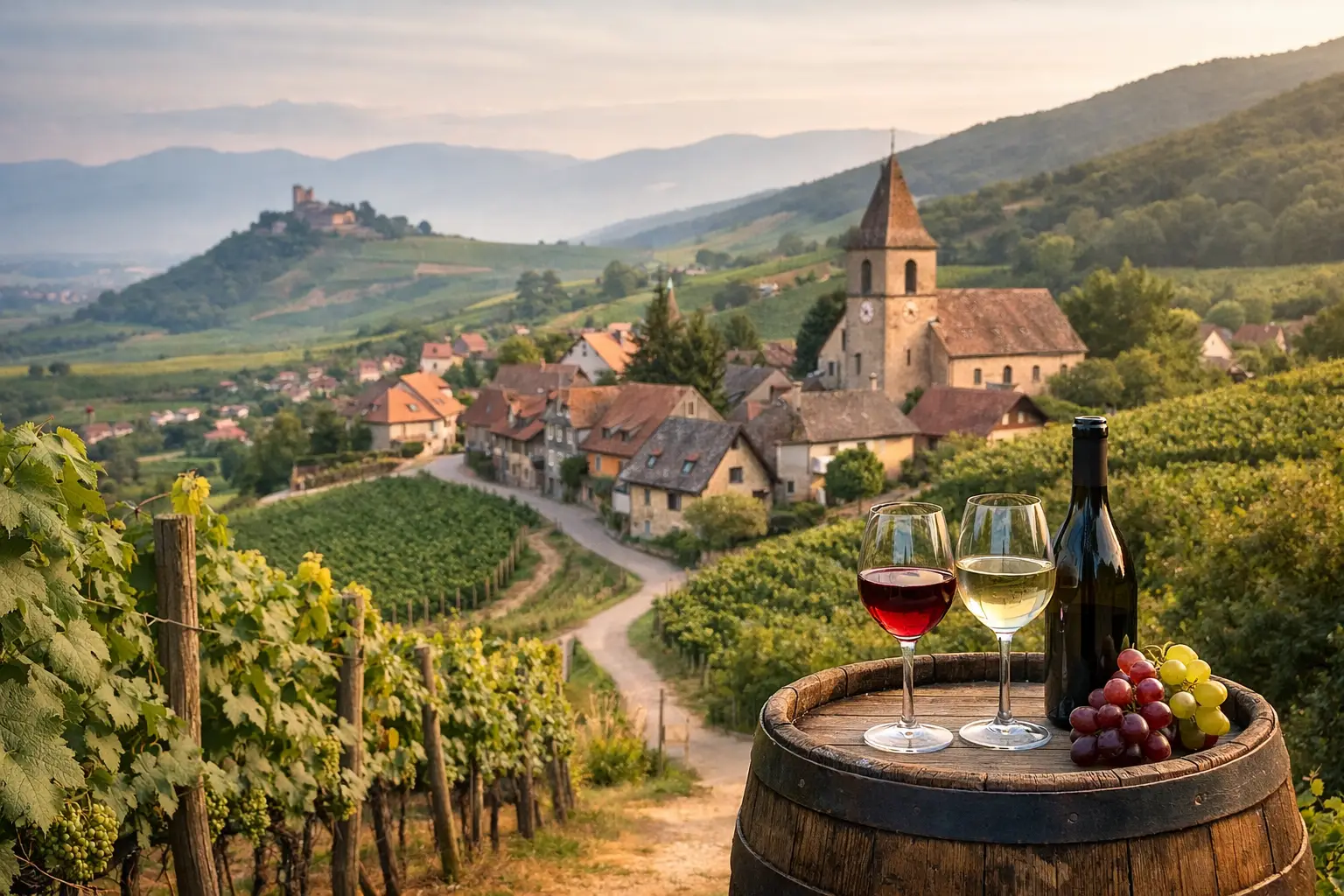
12 Best Wine Villages in Europe for Slow Travel
A good wine village has a way of rearranging your plans. You may arrive intending to taste one local bottle, stretch your legs and move on before lunch. Then there is a sun-warmed terrace, a church bell somewhere above the vines, and a winemaker who has opened something special. Suddenly, the afternoon has other ideas.
The best wine villages in Europe are not necessarily the grandest or most famous names on a label. They are the places where vineyards begin at the edge of the last house, where the local menu makes sense only with the local wine, and where lingering feels like the whole point. These are villages for unhurried drives, muddy walking boots, market cheese and the happy problem of deciding who is driving back.
12 best wine villages in Europe worth lingering in
1. Riquewihr, Alsace, France
Riquewihr is almost outrageously pretty. Its half-timbered houses wear sherbet shades of peach, butter yellow and pink, while the surrounding slopes produce Riesling, Gewürztraminer and Pinot Gris with remarkable precision. It can be busy in high summer and at Christmas, when its fairytale looks attract plenty of admirers, but an early morning walk through the cobbled lanes restores the magic.
This is a village made for a gentle tasting crawl, followed by tarte flambée and a glass of dry Riesling. If you have a car, give yourself time for the short drive between the neighbouring villages of Hunawihr, Ribeauvillé and Kaysersberg. The Alsace Wine Route is made for meandering, not racing.
2. Saint-Émilion, Bordeaux, France
Saint-Émilion rises from the vineyards in a tumble of honey-coloured stone, steep lanes and underground cellars. The wines, built largely around Merlot with Cabernet Franc playing a vital supporting role, are serious, but the village itself has a wonderfully theatrical romance. There are grand château gates, tiny squares and viewpoints that make you want to photograph every roof tile.
It is also a practical choice for travellers who like their wine with a little history. Book a cellar visit, seek out the monolithic church, then settle in for duck confit or a plate of local cheese. The trade-off is popularity: this is no hidden secret. Stay overnight if you can, when day visitors have departed and the streets feel more like a village again.
3. Eguisheim, Alsace, France
A few kilometres south of Colmar, Eguisheim curls around its centre in concentric cobbled lanes. Geranium-filled windows, painted shutters and the gentle clink of glasses from café tables make it easy to understand why people lose whole afternoons here. The village sits in the heart of Alsace’s white-wine country, where floral Gewürztraminer and racy Riesling are especially rewarding with food.
Eguisheim suits travellers who enjoy having a base within strolling distance of tasting rooms and restaurants. It is smaller and more intimate than Saint-Émilion, though it shares the same summer crowds. Visit in late September or October and you may find cooler air, harvest activity and vines turning coppery around the village.
4. Montalcino, Tuscany, Italy
Montalcino has the sturdy, hilltop confidence of a place that knows exactly what it produces. Brunello di Montalcino is one of Italy’s great red wines, made from Sangiovese and usually released only after lengthy ageing. It is a wine with structure and seriousness, yet it becomes wonderfully companionable beside pappardelle with wild boar ragù or a slow lunch overlooking the Val d’Orcia.
The landscape is a large part of the pleasure: cypress trees, pale tracks, olive groves and broad rolling hills that appear to have been arranged for a film set. Montalcino is not cheap, particularly in peak season, but it earns its place for anyone wanting a Tuscan wine stay with genuine depth rather than just postcard appeal.
5. Montepulciano, Tuscany, Italy
Not to be confused with the grape of the same name, Montepulciano is a dramatic medieval town whose steep main street may test the calves before the first tasting. The reward is Vino Nobile di Montepulciano, another Sangiovese-led red, often a little more approachable in youth than Brunello and no less satisfying with local cooking.
Pop into an enoteca for a guided tasting, but do not overlook the historic cellars tucked beneath palazzi. Down there, among vast old barrels and cool brick vaults, the wine feels inseparable from the town above. A small glass at sunset is an excellent excuse to pause halfway up the hill. Purely strategic, of course.
6. La Morra, Piedmont, Italy
La Morra is one of those villages that makes you stop the car simply because the view demands it. From its belvedere, vineyard ridges fold across the Langhe, with the Alps sometimes appearing on the horizon like a rather extravagant backdrop. This is Barolo country, where Nebbiolo creates wines of perfume, tannin and astonishing longevity.
The village has a polished feel, with smart wine bars and excellent restaurants, but it remains rooted in working vineyards. Visit in spring for green slopes and truffle-season anticipation, or in autumn for misty mornings and heartier food. Barolo tastings can become pricey, so mix celebrated producers with smaller family estates and give yourself permission to discover a less famous label.
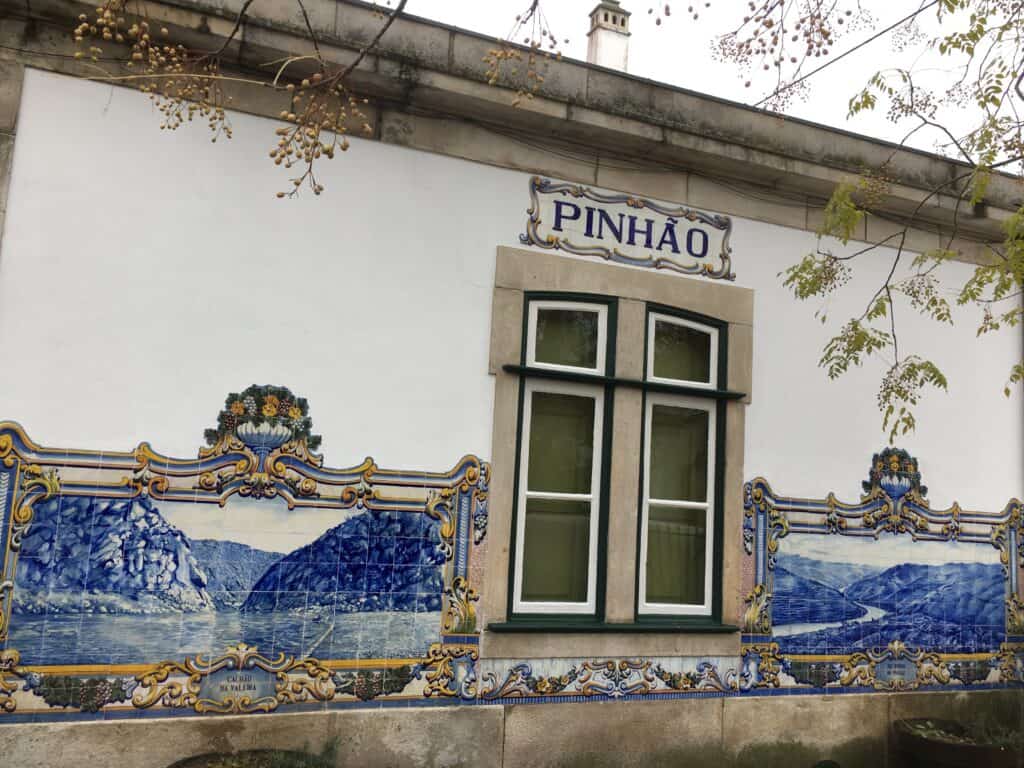
7. Pinhão, Douro Valley, Portugal
Pinhão is less polished than some European wine villages, and that is part of its charm. It sits at the meeting of the Douro and Pinhão rivers, surrounded by vertiginous terraces that look almost too steep to farm. Yet these are working vineyards, producing the grapes for Port as well as an increasingly exciting range of dry Douro reds and whites.
Arrive by train from Porto if you can. The riverside route is one of Europe’s great rail journeys, and it saves the designated driver from negotiating twisting roads after a long lunch. Pinhão itself is small, but use it as a base for quintas, boat trips and slow evenings with grilled fish, olive oil and a chilled local white.
8. Spello, Umbria, Italy
Spello is not a household name in the way that Tuscany’s villages are, which makes its flower-lined lanes and Roman stone walls feel especially rewarding. The surrounding Umbrian countryside offers Sagrantino from nearby Montefalco, crisp Grechetto and plenty of unshowy, food-loving local wines. It is a place where a simple plate of lentils, pecorino and cured meat can become a very memorable meal.
Come in late spring when the streets are dressed with flowers for the Infiorata, or in autumn for olive harvest colour and cooler walking weather. Spello is ideal for travellers who want wine at the centre of a wider rural escape, rather than a tightly scheduled programme of grand cellar visits.
9. Goriška Brda, Slovenia
Goriška Brda is a region rather than one single village, but its tiny hilltop settlements are so close together that it feels like a string of wine villages draped over the border with Italy. Dobrovo and Šmartno make excellent starting points, with views across orderly vineyards and low wooded hills. Rebula, known as Ribolla Gialla just over the Italian border, is the grape to seek out, especially in its textured skin-contact expressions.
Slovenia offers the pleasure of discovery without the formality that can occasionally creep into more famous wine regions. Producers are often small, conversations feel personal, and the food draws from both Alpine and Adriatic traditions. It is particularly well suited to a campervan or road trip, although the narrow village roads require patience and a sensible appetite for reversing.
10. Rust, Burgenland, Austria
Rust sits beside Lake Neusiedl, with storks nesting on rooftops and vineyards fanning out towards the water. It is a charming place to drink Austria’s dry Blaufränkisch, but its real calling card is sweet wine. The lake’s autumn mists create ideal conditions for botrytis, producing luscious late-harvest bottles that balance honeyed richness with bright acidity.
This is a lovely choice for cyclists and anyone who enjoys a less predictable wine break. Pair local whites with freshwater fish, try a sweet wine with blue cheese, and leave time to wander the old town. The landscape is flatter than the Douro or Tuscany, but the open skies have their own quiet drama.
11. Sancerre, Loire Valley, France
Sancerre perches above the Loire Valley, looking out over a patchwork of vineyards planted mainly with Sauvignon Blanc. If you think Sauvignon is only about sharp, grassy supermarket bottles, this is the place to recalibrate. The best examples carry flinty tension, citrus, herbs and a stony character that seems to come directly from the slopes beneath your feet.
The village is compact, elegant and easy to combine with a wider Loire road trip. It is at its best when you treat tasting as part of a day outdoors: a vineyard walk in the morning, goat’s cheese at lunch, then a cool glass of Sancerre as the evening light settles across the valley.
12. Eger, Hungary
Eger brings something different to a European wine itinerary: baroque architecture, thermal-bath culture and the historic cellars of the Valley of the Beautiful Woman. Yes, that is really its name, and no, it is not an excuse to skip the tasting. Eger is known for Egri Bikavér, or Bull’s Blood, a spicy red blend that can range from cheerful and rustic to genuinely refined.
The cellars are close together and the atmosphere is more relaxed than formal, making Eger an especially friendly stop for curious drinkers. Pair a local red with paprika-rich dishes and let the region surprise you. Hungary’s wine scene deserves more attention, and Eger is an easy place to begin.
How to choose a wine village that suits your trip
The right village depends on what you want from the bottle and the break. For storybook lanes and easy walking, Alsace is hard to beat. For grand reds, hilltop views and long lunches, Tuscany and Piedmont are natural choices. If your happiest travel days involve driving a scenic route, stopping whenever a view catches your eye, the Douro and Slovenia deliver generously.
Try not to cram too many cellar doors into one day. Two thoughtful tastings are usually more enjoyable than five hurried ones, particularly if you want to remember what you drank. Book ahead for smaller producers, ask what is open rather than only chasing prestige labels, and build in time for a village meal. Wine is rarely better understood than when it arrives beside the food, weather and landscape that shaped it.
Most of all, leave one afternoon unplanned. The best village memory may not be the famous estate or the bottle you carried home. It may be a bench beneath a plane tree, a glass of something unfamiliar, and the deeply satisfying realisation that there is nowhere else you need to be.
If you’re looking for tours, attractions and experiences across the UK and Europe, you can browse and book here: https://tripadvisor.tpk.ro/D6WNK34w
Affiliate Disclaimer
This article contains affiliate links. If you book tours, attractions or experiences through these links, we may earn a small commission at no additional cost to you. We only recommend services that we genuinely use, trust or believe will add value to your travels. Thank you for your support

One Comment
Comments are closed.