8 Historic Villages in Europe Worth Savouring
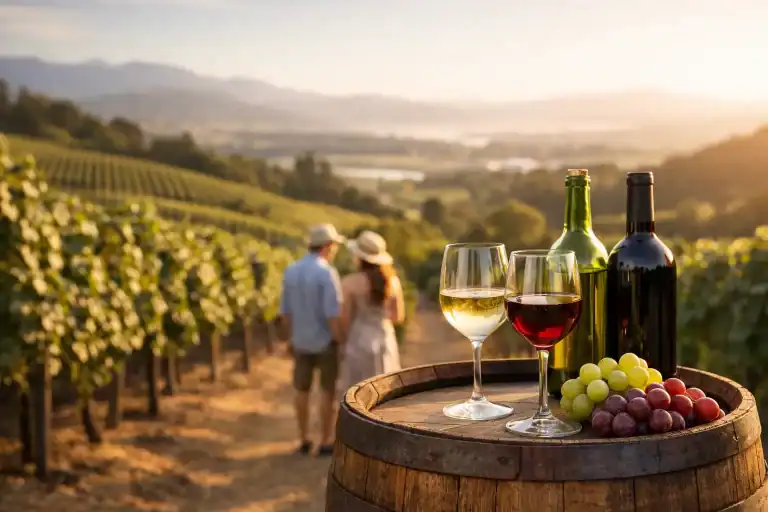
The best historic villages Europe offers do not reveal themselves in a hurry. They arrive in fragments: the rattle of wheels over cobbles, a bakery window fogged with warmth, shutters thrown open above a tiny square, and a glass of local wine that somehow tastes more vivid because you can see the vines from the terrace.
These are places made for unhurried mornings and long, slightly aimless afternoons. They reward the traveller who parks the car, puts the phone away for a moment and follows the lane that smells faintly of stone, geraniums and lunch being prepared somewhere nearby. Some are famous enough to draw coaches. Others sit quietly behind old walls, waiting for the evening light to do its very flattering work.
Historic villages in Europe that pair beautifully with wine
Saint-Cirq-Lapopie, France
Perched high above the River Lot, Saint-Cirq-Lapopie feels as though it has been arranged by a particularly theatrical set designer. Honey-coloured medieval houses tumble down the hillside, their steep roofs and timbered façades overlooking the broad, green sweep of the valley below.
It is a place for walking slowly, preferably early or later in the day when the lanes are quieter. The wider Lot Valley has a wonderfully grounded food-and-wine character, and a bottle of Cahors Malbec makes a fitting companion at supper. It is darker, more savoury and more structured than many holiday reds, but with duck, lamb or a plate of local charcuterie, it makes perfect sense. Stay nearby if you can. The village after the day-trippers leave is the real treat.
Riquewihr, France
Alsace has no shortage of pretty villages, but Riquewihr has that rare ability to feel both polished and genuinely rooted in its landscape. Its half-timbered houses come in a cheerful wash of colour, while vineyards rise almost immediately beyond the old walls.
This is white-wine country, and the pleasure lies in tasting the differences without making a chemistry lesson of it. Try a dry Riesling with tarte flambée, or choose Pinot Gris if the evening has turned cool. Riquewihr can be busy, especially around Christmas when it becomes almost absurdly storybook, so spring weekdays or September are kinder choices for travellers who prefer their charm with a little breathing room.
Pienza, Italy
Pienza sits above the Val d’Orcia like a Renaissance daydream, all pale stone, neat proportions and views so beautiful they can make a simple drive feel like an event. The surrounding landscape rolls away in cypress-lined folds, with farmhouses, olive groves and vineyards stitched between them.
The village is known for pecorino cheese, and quite right too. Pick up a wedge from a local shop, then settle in for a leisurely lunch with a glass of Brunello di Montalcino or a younger Rosso di Montalcino from nearby. Brunello deserves time, and so does Pienza. This is not the place to tick off three Tuscan towns before tea. Choose one hilltop, one long lunch and one sunset view, and call it a successful day.
Monsaraz, Portugal
Monsaraz rises from the Alentejo plains in a wash of whitewashed houses and ancient defensive walls. Inside, the streets are narrow and bright, with blue trim around doors and an almost startling sense of space once you reach the ramparts. Beyond them lies the vast Alqueva reservoir and a horizon that seems to have no interest in ending.
Alentejo wines are generous, sunny and exceptionally easy to enjoy at the table. A local red, perhaps built around Alicante Bouschet, Aragonez or Trincadeira. It suits grilled pork, lamb and the region’s glorious rustic cooking. Summer can be fiercely hot, so this is a village for early starts, shaded lunches and a late return when the stone cools and the sky turns peach-coloured.
Albarracín, Spain
In the hills of Aragón, Albarracín seems to glow pink and russet against the rugged countryside. Its houses cling to slopes above the Guadalaviar River, their crooked balconies, old wooden doors and winding streets giving the whole place a deliciously unplanned feel.
There is plenty of history here, but the joy is in allowing the village to be a little bit confusing. Get gently lost. Climb towards the cathedral. Pause for coffee in the square. Then look towards the regional wines of Aragón. Particularly Garnacha, which can be beautifully fragrant and full of red fruit when handled with care. Albarracín is less of a vineyard destination than Pienza or Riquewihr, but that is part of the appeal. It makes an atmospheric stop on a Spanish road trip rather than a place you arrive with a strict tasting schedule.
Hallstatt, Austria
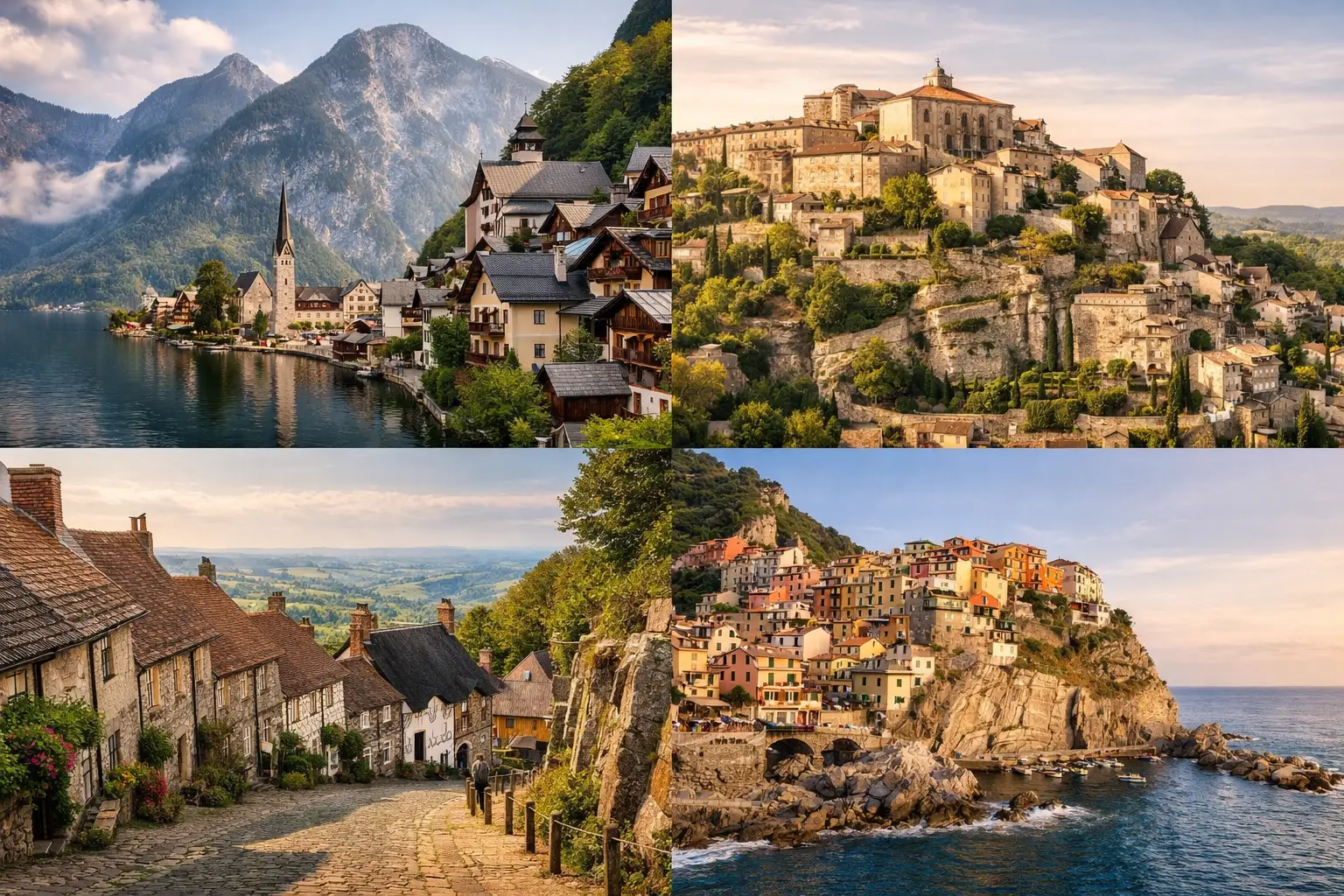
Hallstatt is famously photogenic, with wooden balconies, flower boxes and a mirror-like lake framed by steep mountains. It is also one of those places where the photographs have not entirely lied. On a quiet morning, mist lifting from the water and church bells carrying across the village, it can feel remarkably serene.
The trade-off is its fame. Daytime crowds can be considerable. A quick visit during peak season may feel more like queueing for a postcard than inhabiting a village. Stay overnight, come in late autumn or visit outside the central hours. Austria’s crisp Grüner Veltliner is a refreshing match for freshwater fish and lake-view lunches, especially after a walk that has earned it.
Eguisheim, France
Just south of Colmar, Eguisheim curls around itself in concentric streets lined with timbered houses, fountains and flowers. It is compact, cheerful and almost comically lovely, the sort of village where even the drainpipes appear to have made an effort.
It also makes a wonderfully practical base for exploring Alsace’s wine route. Taste a bright Crémant d’Alsace before lunch, then move on to aromatic Gewürztraminer with stronger cheeses or spiced dishes. If you are travelling by campervan, do check local parking rules. Use designated areas rather than attempting to squeeze down streets designed for horses, carts and people with considerably smaller ambitions.
Aínsa, Spain
Aínsa, in the Spanish Pyrenees, has a broad stone square, arcaded edges and a position that makes it a superb pause between mountain drives. The medieval centre feels lived-in rather than stage-managed, with hikers, cyclists and locals sharing the same cafés beneath the old walls.
Its surrounding Somontano wine region is an excellent excuse to linger. The area produces fresh whites, lively rosés and reds with real character, often from a mix of familiar and local grapes. Order a glass with tapas after a day in the mountains and you will understand why a village need not sit beside a famous vineyard to deliver a deeply satisfying wine moment.
How to enjoy historic villages in Europe without rushing them
The temptation is understandable: plan a route, pin every handsome village on the map, then attempt to collect them all before dinner. But historic villages are at their best when they are given space. Choose two or three for a week-long route rather than ten for a three-day sprint, particularly if wine tasting is part of the plan.
Arrive before lunch or stay overnight where possible. Mornings belong to market stalls, quiet lanes and the first coffee of the day. Evenings belong to local diners, swallows above the rooftops and the simple pleasure of walking back to your room without consulting a satnav. The middle of the day, especially in peak summer, is often when the crowds and heat do their worst.
A car or campervan gives welcome freedom in rural regions, although village centres are rarely built for modern vehicles. Park on the edge, walk in, and treat the final few hundred metres as part of the experience. If you are tasting wine, appoint a driver, use local transport where it exists, or save the cellar-door visit for the next day. A regrettable three-point turn after a generous tasting is not a travel memory anyone needs.
Finally, let the local table guide you. Ask what grows nearby, what the house pours and what the kitchen recommends. The memorable bottle may not be the most expensive one, and the most memorable meal may be bread, cheese, olives and a carafe enjoyed while the village settles into evening.
The real luxury of these places is not the perfect photograph. It is having enough time to hear the church clock, notice the scent of a cellar door and order one more glass because, for once, there is nowhere else you need to be!
If you’re looking for tours, attractions and experiences across the UK and Europe, you can browse and book here: https://tripadvisor.tpk.ro/D6WNK34w
Affiliate Disclaimer
This article contains affiliate links. If you book tours, attractions or experiences through these links, we may earn a small commission at no additional cost to you. We only recommend services that we genuinely use, trust or believe will add value to your travels. Thank you for your support