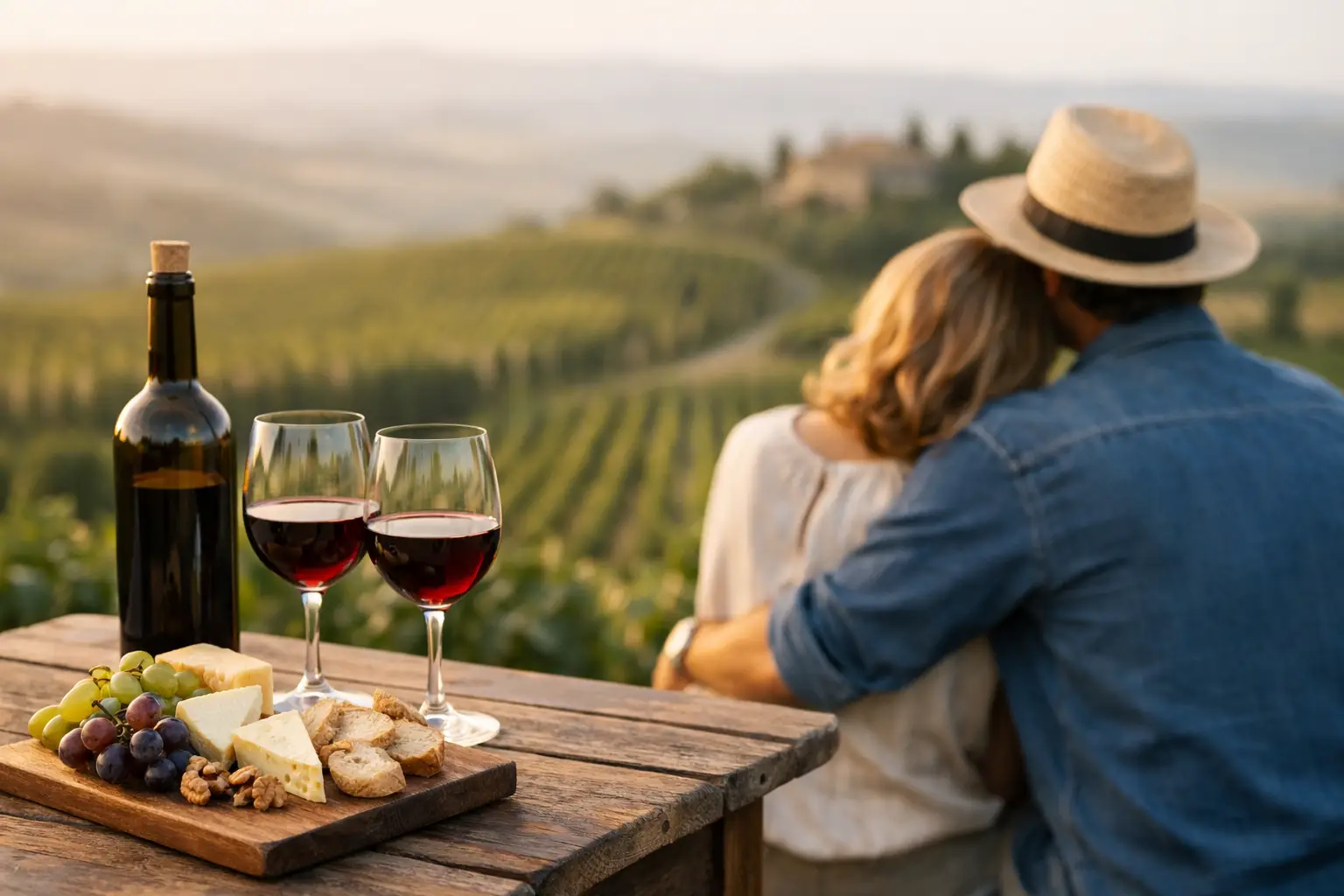
What Is Slow Wine Travel? A Better Way to Taste
The best glass of wine I can remember was not poured in a grand tasting room with a polished script. It arrived at a small table outside a village restaurant, as evening light settled over the vines and the owner explained, with great pride and very little English, that his cousin had made it. That is the spirit behind the question, what is slow wine travel? It is less about collecting famous labels and more about giving a wine, and the place that made it, enough time to tell its story.
Slow wine travel turns a wine holiday into something more rooted. You might stay for three nights rather than sweep through in an afternoon, take the back road between villages, buy bread from the same bakery twice, and learn why one hillside produces a different bottle from the next. There is no medal for fitting in six wineries before lunch. Frankly, after the third, even the prettiest cellar door can begin to look suspiciously alike.
What Is Slow Wine Travel, Really?
Slow wine travel is an unhurried, place-led way of visiting wine regions. It borrows the principles associated with the wider slow movement: attentiveness, local connection, seasonality and respect for craft. In practice, it means choosing depth over quantity.
Rather than treating a vineyard as one stop on a packed itinerary, you give it context. You see the soil beneath the vines, notice the food on the table, meet the people behind the bottle where possible, and understand the village rhythms around it. The wine becomes more than a souvenir. It becomes a delicious little memory of a landscape.
It does not require a vast budget, expert-level tasting notes or a countryside cottage with a fireplace worthy of a film set. A modest family-run guesthouse, a local market, one well-chosen tasting and a free afternoon can be enough. Slow is not about being precious. It is about being present.
It is not simply travelling slowly
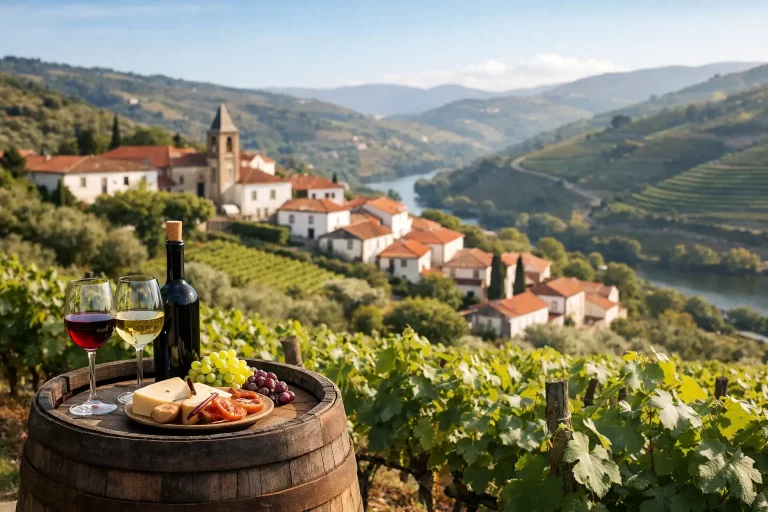
A leisurely drive through Tuscany or the Douro can certainly be slow wine travel, but speed alone is not the point. You could spend a week in one region and still rush from attraction to attraction. Equally, a short weekend can feel wonderfully slow if you stay in one village, book one or two meaningful visits and leave room for an accidental detour.
The difference is intention. Slow wine travel asks: what makes this place taste like itself, and how can I experience it without flattening it into a checklist?
Why Wine and Slow Travel Belong Together
Wine is one of the most local things we consume. Grapes carry the influence of weather, altitude, geology, farming choices and human habit. A crisp white from a windy Atlantic coast makes more sense when you have felt the breeze yourself. A bold red from sun-baked hills lands differently after a walk among warm stone walls and olive trees.
This is why slow travel suits wine so naturally. It gives your senses time to join up the dots. The salty cheese at lunch, the scent of wild herbs beside a track, the bell from a church tower at six o’clock, the cool hush of a cellar – all of it can change how a bottle feels in the glass.
There is also a human side. Smaller growers and family estates often have stories that do not fit neatly into a twenty-minute tasting. Perhaps a daughter has returned home to take over the vineyard. Perhaps a co-operative is preserving a local grape that nearly disappeared. Perhaps a producer is working organically because they want their children to inherit healthier land. These are not marketing details when you hear them on the spot. They are the reason the wine exists.
How a Slow Wine Trip Feels in Practice
Imagine basing yourself in one village in Alsace, rather than changing hotels every night. Your morning starts with coffee and a still-warm pastry from the boulangerie. Later, you walk or cycle between nearby vineyards, stopping at a small domaine where the tasting is led by the person who pruned those vines in winter.
Lunch is not squeezed between appointments. It is a long plate of tarte flambée or a simple seasonal dish, perhaps with a local Riesling you would never have selected from a supermarket shelf. In the afternoon, you might visit a neighbouring village, browse a market, or do almost nothing at all beyond sit in the square. By the time you open a bottle at dinner, you know a little more about its accent.
The setting might just as easily be the Alentejo, the Mosel, Languedoc, Sicily, Georgia or a lesser-known corner of England. The formula is not fixed. What matters is choosing a manageable area and allowing its food, landscape and people to set the pace.
Stay close enough to return
One of the simplest ways to travel more slowly is to sleep in, or very near, a wine village. Returning to the same base gives a region room to unfold. You begin to recognise the road home, the café with the good terrace, the shopkeeper who recommends a local goat’s cheese.
It also makes practical sense. Tasting wine and covering long distances are poor travelling companions. A village stay means you can walk to dinner, use local transport where it exists, arrange a driver, or simply keep your tastings modest and enjoy the road with a clear head. Campervan travellers have an extra layer of freedom, though it is still worth checking local parking rules, designated stopovers and tasting arrangements before settling in for the night.
Choose fewer visits, and choose them well
A slow wine itinerary might include one appointment at a historic estate, one at a small independent producer and one food-focused experience, such as a market, cookery class or village restaurant. That is plenty for a couple of days.
When booking, look for visits that feel personal rather than theatrical. Ask whether you will taste wines made on site, whether there is a vineyard walk, and whether the estate can suggest local places to eat or stay. The best recommendations often begin after the official tasting has ended.
That said, do not dismiss larger wineries automatically. Some offer excellent architecture, thoughtful hospitality and a valuable introduction to a region. The trade-off is that they can feel more structured and less spontaneous. A mix of both often works beautifully.
The Quiet Value of Eating Locally
Slow wine travel is never only about wine. A regional bottle comes alive beside the food it grew up with. This need not mean a formal, expensive meal every evening. It may be a picnic assembled from market tomatoes, bread, charcuterie and fruit, enjoyed under a plane tree with a view of the vines.
Ask what locals drink with local dishes. In coastal regions, a bright, mineral white may be the obvious match for seafood. In mountain areas, lighter reds or fragrant whites can make perfect sense with cured meats and cheese. These combinations are often born from common sense, not complicated rules: food and wine developed alongside one another because they belong to the same climate and table.
There is pleasure, too, in leaving a little room for chance. A handwritten menu, a dusty bottle in a village shop, a bar owner who insists you try something from ten kilometres away – these moments are usually more memorable than another carefully engineered reservation.
What Slow Wine Travel Is Not
It is not a demand to avoid famous regions, luxury hotels or polished experiences. Champagne, Bordeaux, Rioja and Napa all offer ways to slow down if you resist the urge to race through them. Nor does it mean every choice has to be rustic, organic or obscure. Great wine can come from many scales and styles of production.
It is also not an excuse to romanticise rural life. Vine growing is hard work, shaped by frost, drought, rising costs and uncertain harvests. Travelling thoughtfully includes recognising that a pretty vineyard is a working agricultural landscape. Buy directly when it suits your budget, respect appointment times, and do not wander into vines as if they were a public garden.
Most of all, slow wine travel does not mean doing nothing. It means doing the things that matter with enough care to remember them.
A Gentle Way to Plan Your First Slow Wine Escape
Start with a region that genuinely appeals to you beyond the bottle. If you love dramatic river valleys, look towards the Mosel or Douro. If medieval lanes, markets and languid lunches are your weakness, parts of southern France, Italy or Spain may call louder. Choose one base, ideally for at least two or three nights, then identify a handful of nearby villages and producers.
Book key tastings in advance, especially at small estates, but avoid filling every hour. Leave space for weather, lingering lunches and the very real possibility that you will find a village square too lovely to abandon. Research driving and alcohol rules carefully, and build in a designated driver, taxi, tour or walking day where needed.
Then pack a notebook, even if you are not remotely serious about tasting notes. Jot down the wine, yes, but also the view, the dish, the name of the dog asleep by the cellar door. Months later, those details will bring the bottle back more vividly than a score ever could.
The next time you plan a wine break, try leaving one afternoon deliberately blank. Follow the smaller road, order the local pour, and give yourself permission to stay for the second coffee. A region rarely reveals its best stories to people in a hurry.