
Best Vineyard Stays in Italy to Book
You notice it almost immediately at a proper vineyard stay in Italy – the quiet. Not silence, exactly, but the soft rhythm of vines moving in the breeze, a tractor somewhere in the distance, glasses being set on a terrace before supper. Vineyard stays in Italy are not just places to sleep between tastings. At their best, they change the pace of a trip completely, drawing you out of the city rush and into a landscape where wine, food and daily life still feel closely stitched together.
What makes Italy so special for this kind of escape is variety. A vineyard stay in Tuscany feels very different from one in Piedmont or Sicily, even if all three offer cellar tours and a bottle waiting in the room. The scenery changes, the wines shift, the food grows more regional, and the mood follows suit. That is why choosing where to base yourself matters almost as much as choosing the estate itself.
Why vineyard stays in Italy feel different
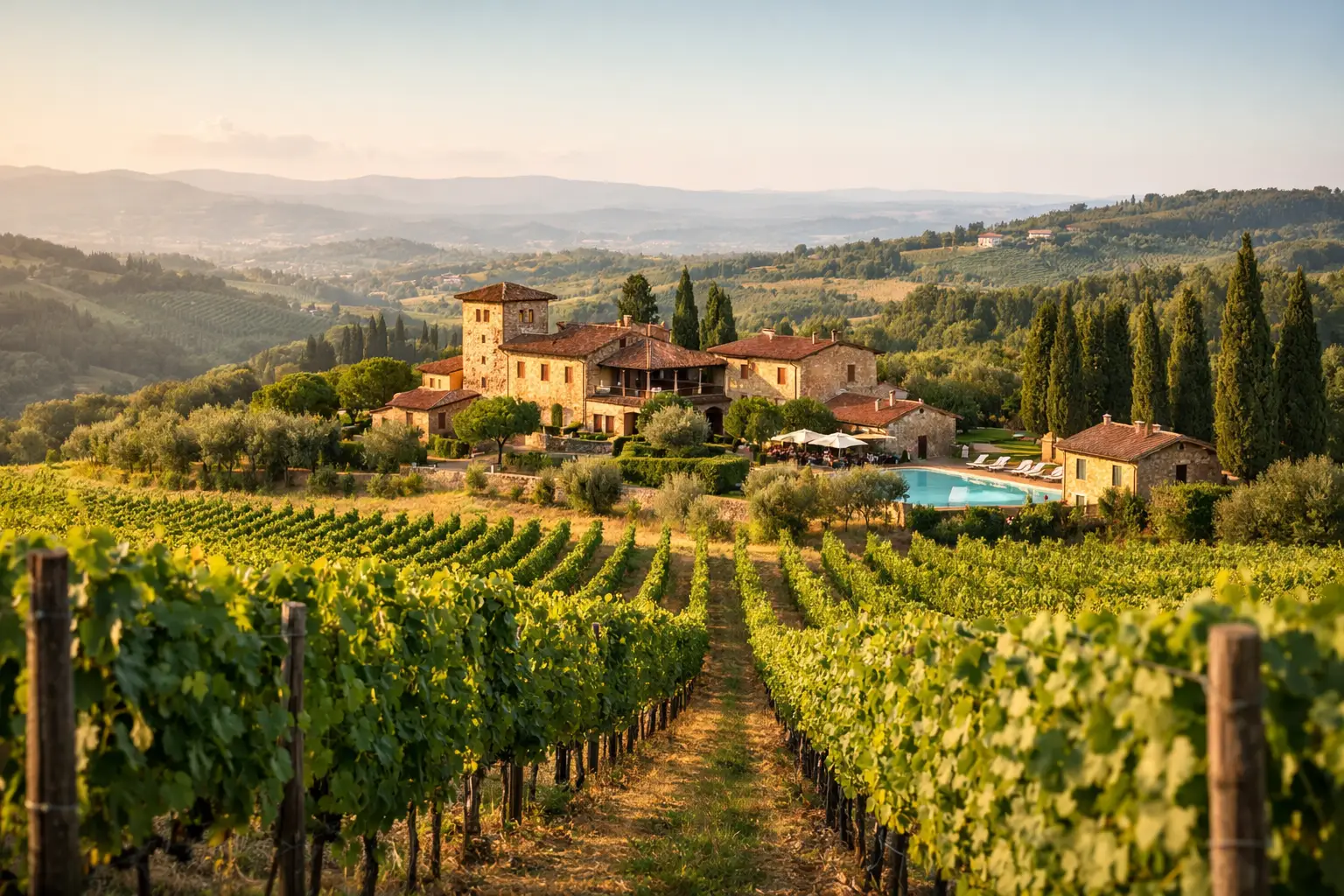
There is a particular intimacy to sleeping on a working wine estate. You are not just near the vines. You wake up among them. Breakfast might come with a view of Sangiovese rows catching the early light. By late afternoon, you could be tasting a crisp Vermentino where it was grown, with olive trees on one side and a hilltop village on the other.
In Italy, these places often sit within a much older rural world. Many estates are restored farmhouses, family-run agriturismi or historic properties that still feel connected to the land rather than polished into anonymity. That matters. Even when the rooms are luxurious, the best places keep a sense of place – terracotta floors, local cheeses at breakfast, wines poured with stories rather than scripts.
There is a trade-off, of course. If you want nightlife, shopping and constant restaurant choice, a vineyard stay can feel remote. But if your idea of a good evening is a long supper, one excellent bottle and a slow walk back under a dark sky, this is where Italy really shines.
The best regions for vineyard stays in Italy
Tuscany for classic postcard beauty
Tuscany is the region many travellers picture first, and for good reason. Between Chianti, Montalcino and Montepulciano, the landscape seems almost designed for lingering: cypress-lined drives, warm stone houses, rolling hills that change colour through the day. Vineyard stays here tend to lean romantic, and they suit couples especially well.
Chianti is often the easiest choice if you want access to both vineyards and villages. You can spend the morning tasting young reds and the afternoon wandering through Greve, Radda or Castellina. Montalcino feels more refined and wine-focused, with Brunello giving the area a serious edge. Montepulciano has its own elegant pull, and a slightly gentler pace.
The caution with Tuscany is popularity. Some properties are deeply atmospheric; others can feel as though they were built around the idea of Tuscany rather than rooted in it. Look for estates that still talk about their land, their harvest and their local food, not just infinity pools and wedding packages.
Piedmont for food, fog and deeper wine culture
If Tuscany is golden and open, Piedmont feels moodier and more inward. The Langhe and Monferrato hills have a beauty that creeps up on you – steeper slopes, tighter villages, a cooler light, and a stronger sense that wine here is taken very seriously. Vineyard stays in this part of Italy often appeal to travellers who want substance as much as scenery.
This is where Barolo and Barbaresco shape the landscape, and where meals can be every bit as memorable as tastings. A stay here suits autumn particularly well, when truffle season begins and the mornings can arrive with mist hanging low over the vines. It feels thoughtful, slow and quietly luxurious.
One practical point: estates in Piedmont can be more spread out than they first appear on a map. A car makes a real difference, especially if you want to combine vineyard visits with village lunches and scenic drives.
Sicily for warmth and contrast
Sicily offers a completely different version of wine country. Around Etna, vineyards climb volcanic slopes in dramatic black-soil terraces, and the air feels sharper than many first-time visitors expect. Elsewhere on the island, wine estates can sit among citrus groves, dry hills and broad open spaces that feel unmistakably southern.
A vineyard stay here suits travellers who want sunshine with character. Etna wines bring freshness and minerality, and the food has that generous Sicilian mix of brightness, sweetness and depth. It is less storybook than Tuscany, but often more surprising. You can spend one day tasting elegant Nerello Mascalese and the next at the coast, eating grilled fish with a chilled white as the sea turns silver.
Veneto and Friuli for lighter, easier-going wine trips
Not every vineyard holiday needs to revolve around famous reds and grand estates. In Veneto and Friuli, the mood can be lighter, greener and a touch more relaxed. Prosecco country around Valdobbiadene has steep vineyard views and easy charm, while Friuli offers excellent whites and a quieter feel that rewards travellers who prefer understated places.
These regions work well if you want wine as part of a broader journey rather than the whole point of it. They are also a good fit for spring and early summer, when everything feels fresh and the roads are lovely for slow driving.
What to look for when booking a vineyard stay
The phrase itself covers a wide range. Some vineyard stays are luxury hotels on wine estates with spas, formal restaurants and beautifully designed suites. Others are working farm stays with simple rooms, homemade cake at breakfast and a tasting room next to the cellar. Neither is better by default. It depends on the trip you want.
If you are planning a romantic break, privacy matters more than brochure glamour. A terrace, vineyard views and a good on-site dinner can do more for the mood than polished interiors alone. If you are travelling with friends, look at whether the estate offers proper tastings, nearby restaurants and enough shared space to make evenings enjoyable.
It is also worth checking whether the property is genuinely a winery or simply near vineyards. There is nothing wrong with a countryside hotel surrounded by vines, but if you want to learn about production, meet the people making the wine and taste on site, the distinction matters.
The small details that make the stay memorable
The places people talk about afterwards are rarely the most extravagant. They are the ones where a host remembers which wine you liked at dinner, where breakfast includes local ricotta and apricot jam, where sunset arrives across the rows just as someone places a final glass of rosato in your hand.
That is the real appeal of vineyard travel. It brings together all the things that can feel fragmented elsewhere: where you sleep, what you drink, what you eat, the view from the table, the road that brought you there. For a brand like Vineyards and Villages, that connection is the whole point. Wine tastes better when it belongs to the landscape around you.
There are practical pleasures too. On-site dinners can save you from driving after tastings. Smaller estates often offer more personal conversations. Staying two or three nights, rather than using the estate as a one-night stop, gives you time to feel the rhythm of the place instead of simply passing through it.
When to go for vineyard stays in Italy
Late spring and early autumn are usually the sweet spots. May and June bring green landscapes, mild evenings and fewer crowds than peak summer. September and October have harvest energy, richer colours and that lovely feeling that the wine world is fully awake.
Summer can be beautiful, especially if your estate has a pool or shaded garden, but heat changes the experience. In parts of Tuscany and Sicily, afternoons can feel too hot for much beyond a slow lunch and a nap. Winter is quieter and often more affordable, particularly in regions like Piedmont, though some smaller properties reduce services or close altogether.
How to make the most of a vineyard stay
Do less than you think. That is my strongest advice. It is tempting to pack each day with winery visits, village stops and restaurant bookings, but the real joy of these places often lies in staying put for longer than feels strictly productive. Read by the vines. Join the tasting without checking the time. Order the bottle you liked at lunch again at supper and see how it changes with food.
A good vineyard stay in Italy is not about ticking off labels. It is about letting one landscape hold your attention properly. Choose the region that suits your mood, book somewhere with a genuine connection to its land, and give yourself enough time to settle into it. The glass on the terrace will still matter, of course. But chances are, what stays with you longest will be the light, the stillness and the feeling that for a day or two, you belonged exactly where you were.
Affiliate Disclaimer
This post may contain affiliate links. If you book accommodation, tours, travel products, or services through these links, Vineyards and Villages may earn a small commission at no extra cost to you. These commissions help keep our campervan adventures, travel stories, and slightly questionable parking decisions on the road. Thank you for your support!


2 Comments
Comments are closed.