European Vineyards Worth Slowing Down For
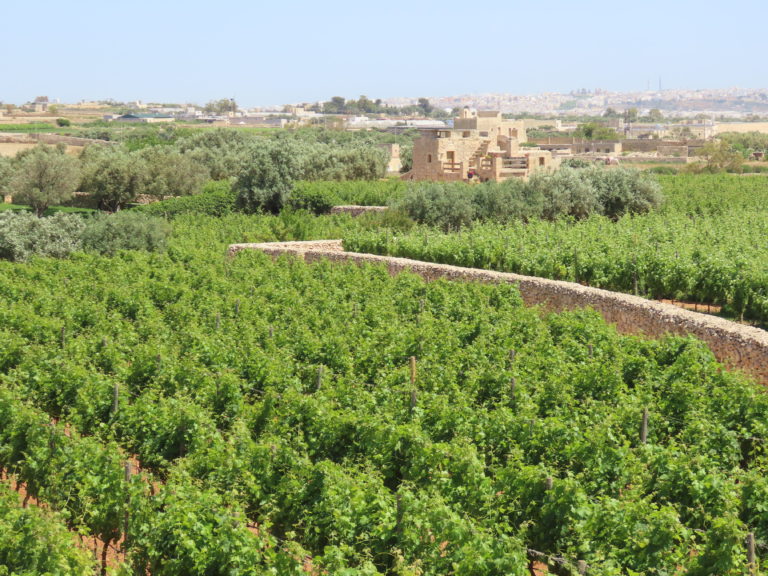
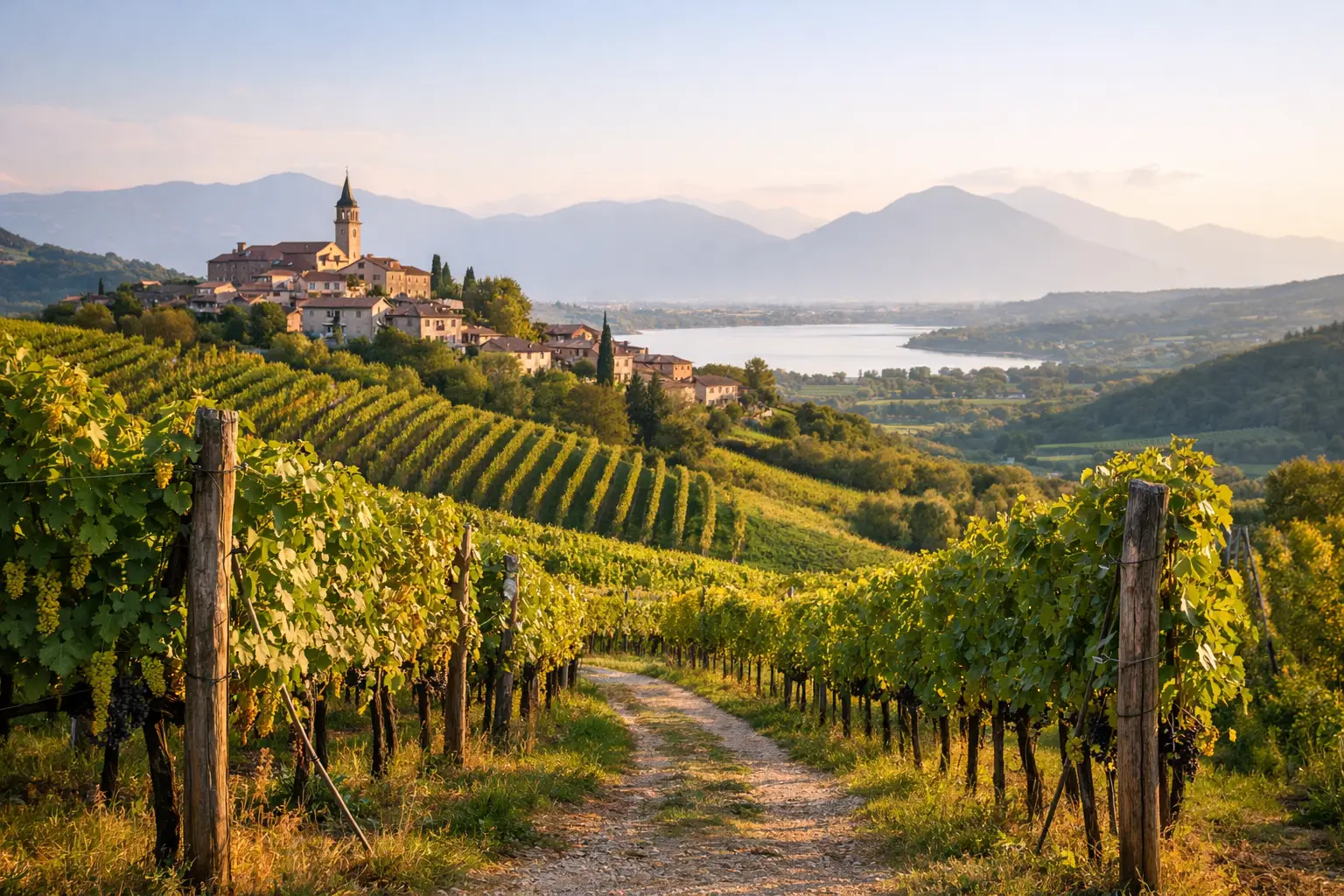
The best European vineyards rarely announce themselves with a giant sign or a perfect parking bay. More often, they appear after a bend in a quiet road: rows of vines climbing a slope, a stone village gathered around a church tower, perhaps a dog asleep outside a cellar door. This is the point where a wine trip stops being about ticking off famous labels and becomes something far more satisfying – a chance to travel at the pace of the landscape.
For those of us who like a good bottle but love the story around it just as much, Europe is wonderfully generous. Its vineyard regions are stitched into everyday life. Grapes grow beside market gardens, cycling lanes and family-run restaurants. You may arrive for a tasting and leave thinking about the baker’s apricot tart, the view from your pitch for the night, or the kindly winemaker who insisted you try one more splash.
Why European vineyards feel different
Wine exists in many beautiful parts of the world, but Europe’s special trick is proximity. In a matter of miles, sometimes minutes, soil changes, dialects shift and a local grape takes on a new personality. A crisp white from a lakeside slope can taste entirely unlike one made across the next ridge. It is not wine theatre. It is geography in a glass.
There is history too, although it need not be treated like homework. Ancient terraces in the Douro, monastery cellars in Burgundy and volcanic plots on Sicily all make more sense when you stand among them. You can see why a vineyard was planted where it was: shelter from wind, a south-facing incline, a river throwing back warmth as daylight fades.
The real pleasure is that these places are still working landscapes. Harvest may mean tractors on narrow lanes, café tables full of muddy boots, and a little less peace than the brochure promised. But that is exactly the charm. A vineyard region should feel alive, not arranged for visitors with matching tote bags.
European vineyards to experience slowly
Alsace, France: villages between vines and mountains
Alsace is made for unhurried wandering. The Vosges Mountains rise behind its famous wine route, while timber-framed villages sit in a tumble of flower boxes, shutters and cobbled lanes. Yes, some spots can be busy in high summer, but a short drive can still lead to a quieter village where the only soundtrack is church bells and the clink of glasses on a terrace.
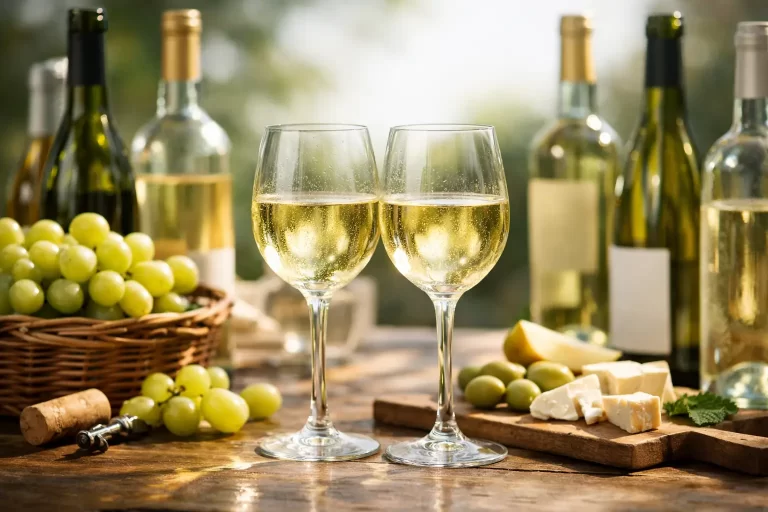
This is a friendly place to build confidence with white wine. Riesling can be racy and dry, Pinot Gris richer and more rounded, while Gewürztraminer brings fragrant notes of rose, lychee and spice. Order a local tarte flambée, preferably after a day in the fresh air, and suddenly the pairing feels less like a rule and more like very good common sense.
Base yourself in one village for several nights rather than hopping between the headline names. Morning walks among the vines are especially lovely, before the coaches arrive and before anyone has suggested a second glass with lunch.
The Douro Valley, Portugal: drama with a corkscrew road
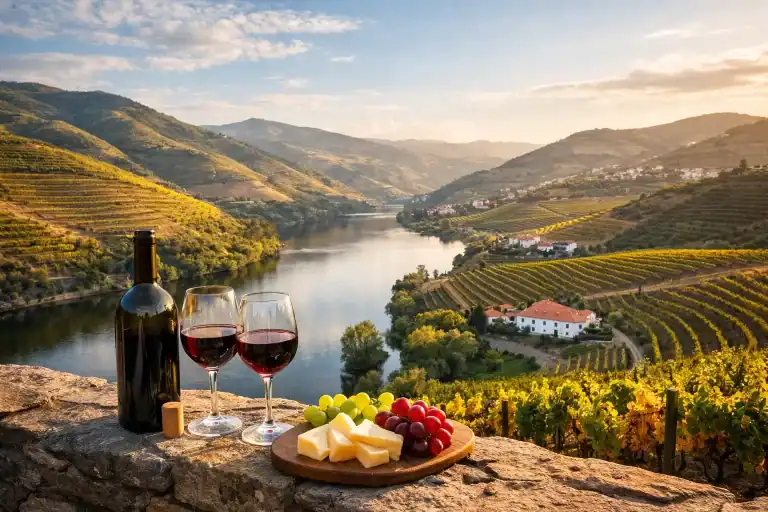
The Douro does not do subtle scenery. Vineyards rise in steep, hand-built terraces above a winding river, and the roads twist so enthusiastically that passengers may wish to look at the view with one eye closed. Take your time. This is not a region for racing between appointments.
Port may be its best-known export, but dry Douro reds deserve a place on the table too. They are often dark-fruited, warm and structured, shaped by intense sun and schist soils. In summer, a chilled white from the region can be a marvellous answer to a late-afternoon terrace and a plate of salty almonds.
A river cruise offers a grand overview, but staying in a small quinta or village gives the valley more texture. You notice the train tracing the riverbank, the scent of wild herbs after heat, and the enormous effort behind every terrace. It is a place that earns your attention.
Piedmont, Italy: serious wine, gloriously relaxed meals
Piedmont has a reputation for powerful reds and polished restaurants, both deserved. Yet the region’s appeal lies as much in its softer moments: hazy hills, small towns with arcaded squares, hazelnut cake beside coffee, and an aperitivo that quietly becomes dinner.
Barolo and Barbaresco, both made from Nebbiolo, reward a leisurely meal and a little patience. Their perfume can be wonderfully complex, with cherries, roses, herbs and earthy notes. But do not overlook Barbera, often more immediately generous, or the gently sparkling sweetness of Moscato d’Asti with fruit or pudding.
Autumn brings truffle season and a great deal of understandable excitement, but it also brings crowds and higher prices. Spring can be an easier choice for a road trip, with green hills, lighter layers and more room at the table. Either way, book cellar visits ahead. Small producers are often busy making wine rather than waiting beside the telephone.
Mosel, Germany: Riesling on impossible slopes
Along the Mosel, vines seem to cling to slopes too steep for sensible footwear. The river loops through a landscape of slate, castles and compact towns, creating views that make even a simple picnic feel rather cinematic.
Riesling is the star, and it is worth tasting across styles rather than assuming it will be sweet. A dry Mosel Riesling can be feather-light, citrusy and sharply refreshing; an off-dry version can balance spicy food beautifully; a late-harvest wine may be all peach, honey and electric acidity. The labels can seem complicated at first, but a good host will happily guide you through them without a test at the end.
This is an excellent region for combining wine with cycling or gentle riverside walks. Just remember the obvious but occasionally neglected rule: if you are driving a campervan or hire car, appoint a designated taster. The vineyards will still be there tomorrow, and so will that brilliant bottle shop in town.
Sicily, Italy: vines shaped by sea and volcano
Sicily offers a different kind of vineyard escape: bigger skies, sea air, ancient towns and food with enough personality to compete with the wine. Around Mount Etna, vineyards sit high on volcanic soils, sometimes framed by black stone walls and the faintly unnerving presence of the volcano itself.
Etna Rosso, often based on Nerello Mascalese, can be elegant and savoury rather than heavy, with red fruit, smoke and a stony edge. Whites from Carricante can feel bright and mineral, especially welcome after a day of sun. Further west, Marsala is worth revisiting beyond the cooking-wine stereotype. At the right producer, it has depth, freshness and a sense of place that deserves a proper glass.
Sicily requires a little flexibility. Roads can be slower than expected, opening hours may be interpretive, and a meal may run deliciously late. Rather than fighting that rhythm, lean into it. Book fewer stops, allow room for a swim or a long lunch, and keep the evening pleasantly unplanned.
How to make a vineyard road trip feel like a holiday
The temptation is to visit three estates a day and return home with a boot full of bottles. There is nothing wrong with enthusiasm, but the best vineyard trips usually have more breathing room. One well-chosen tasting, a village stroll and a relaxed supper will tell you more about a region than a frantic timetable ever could.
Choose a base with life beyond wine. Look for a bakery, a small grocer, somewhere to sit outside and perhaps a weekly market. The point is not to avoid famous names, but to make space for the ordinary details that make a place memorable. A bottle bought after meeting the person who made it will always taste better than one selected under fluorescent airport lighting.
It also helps to travel with modest expectations about access. Many European wineries are family businesses, not visitor attractions. Appointments are often essential, English may vary, and harvest can make visits difficult. A few words of the local language, punctuality and genuine curiosity go a long way. Ask what the family drinks at home, what local dish they would pair with their wine, and which season they love most. Those answers often lead to the best detours.
Pack a cool bag if you plan to buy wine, particularly in warm weather, but resist treating every tasting as a shopping mission. Leave room in the vehicle and in the itinerary for the unexpected: a hand-painted village sign, a roadside cherry stall, an invitation to taste something not yet labelled.
When you next plan a European vineyard escape, pick one region and let it unfold slowly. Follow the smaller road, linger after the tasting, and order the local bottle with dinner even if you cannot pronounce it perfectly. The landscape will do the rest.