How to Visit Wineries Without Booking Ahead
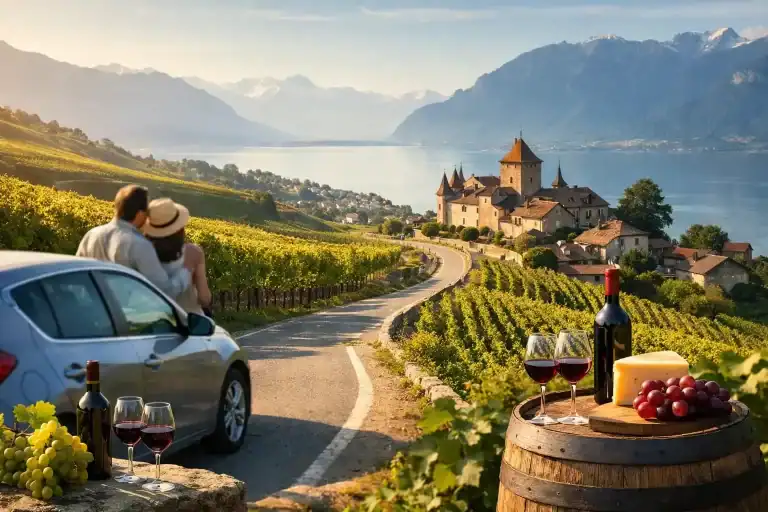
A handwritten ‘Open’ sign beside a dusty lane, a dog asleep in the shade, the faint clink of bottles from somewhere behind a stone barn – this is the hopeful side of figuring out how to visit wineries without booking. There is a lovely spontaneity to it. You follow a vineyard-lined road, spot a cellar door that looks promising, and wonder whether the afternoon might end with a local red and a plate of cheese.
Sometimes, it absolutely can. But turning up unannounced works best when it is treated less like a right and more like an invitation you are politely hoping to receive. Wine regions are not theme parks with unlimited tasting counters. They are working farms, family businesses and small teams balancing visitors with pruning, bottling, harvest and, occasionally, a very determined tractor.
With a little flexibility, a good eye for the sort of winery you are approaching and the right timing, an unplanned tasting can become one of the most memorable moments of a slow-travel holiday.
How to Visit Wineries Without Booking and Still Be Welcome
The easiest route to a spontaneous tasting is to choose regions where walk-ins are part of the local rhythm. Larger, well-established wine routes, particularly those with obvious cellar-door signs and villages built around visitors, are your best bet. Think of popular stretches of Alsace, Rioja, the Douro, Bordeaux’s better-known appellations, or parts of Tuscany and the Mosel. These areas often have producers accustomed to curious travellers appearing between lunch and late afternoon.
Even there, do not assume every gate is open. A grand estate may look like the obvious place to call at, but its tastings may be strictly appointment-only, particularly if it receives many international visitors. Smaller family domaines can be more relaxed, though they may also be closed because everyone is out in the vines. It depends on the producer, the season and the day’s work.
A useful rule of thumb is to look for signs of active hospitality. A visible tasting room, a chalkboard mentioning dégustation or cata, parked cars, outdoor tables, advertised opening hours and a clearly marked shop all suggest that visitors are expected. A locked gate, no signage and a silent courtyard usually suggest the opposite. Admire the view, take a photograph from the public road, and keep moving.
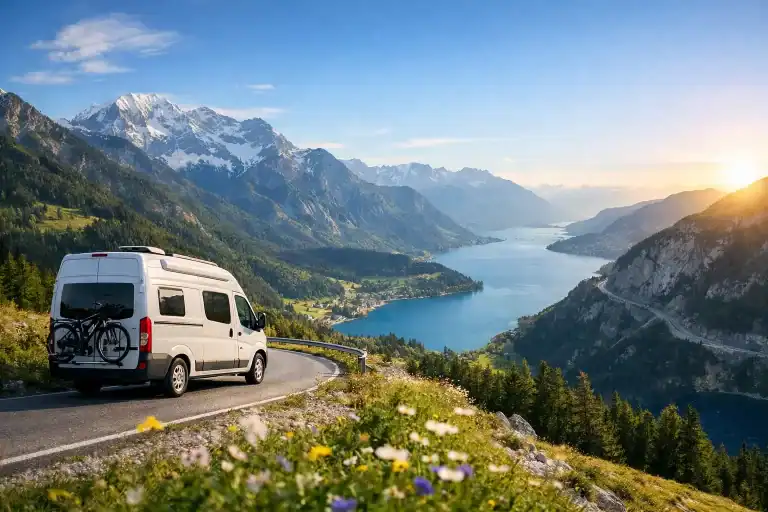
If you are travelling by campervan, resist the temptation to treat a winery car park as an automatic overnight stop. Some vineyards welcome motorhomes and even encourage stays, while others need their space kept clear for deliveries. Ask warmly, accept the answer gracefully and never make a tasting feel like payment for parking.
Timing Is Half the Story
Arrive at the wrong time and even the friendliest vineyard can feel unavailable. Mid-morning, from around 10.30 onwards, is often a good window, as is mid-afternoon after the local lunch break. In much of southern Europe, lunch is not a hurried sandwich at a desk. It is a real pause in the day, and a winery may close completely between noon and 2pm or later.
Avoid arriving just before closing. A tasting that begins at 5.45pm when the door shuts at 6pm puts the host in an awkward position, especially if they need to explain several wines, process a sale and lock up. Give the visit enough room to unfold naturally.
Harvest season is the great exception. September and October can be magical in the vineyards: trailers heavy with grapes, the sweet-fermented scent around the cellar, a sense that every lane is busy with purpose. It is also when many winemakers have no spare hands. You may be welcomed for a quick purchase, but a full tasting is less likely. If you do happen upon a producer who opens a bottle amid the bustle, consider it a small piece of luck rather than a service you expected.
Weekdays tend to be kinder than Saturdays, when popular estates can be full, and Sundays can be surprisingly quiet or entirely closed depending on the country. Public holidays are another wildcard. The village may be alive with a fête, while every tasting room is shut.
Call first, even if you have not booked
There is a pleasantly old-fashioned trick that solves much of the uncertainty: telephone ahead on the day. This is not really booking in the formal sense. It is a simple, respectful question: “Hello, we are nearby. Are you open for a tasting this afternoon?”
A short call can save an hour of scenic but unnecessary driving. It also gives the winery a chance to say, “Yes, but come after three,” or, “We are closed, though our neighbour is open.” In rural regions, these recommendations can lead to the best discoveries of the day.
If language feels daunting, keep it brief and cheerful. Learn the local phrase for tasting and opening hours, or use a translation app to prepare a message. A smile and patience travel remarkably well, even when your pronunciation has taken an unexpected detour.
Arrive Like a Guest, Not a Tour Group
Walking into a winery without an appointment calls for a little social awareness. Start by asking whether a tasting is possible rather than announcing that you would like one. If the answer is yes, ask what they recommend and how much time they have. The host may offer a relaxed tasting of three wines, or simply pour one glass and tell you about it. Both can be worthwhile.
This is especially true at small estates, where the person pouring may be the owner, winemaker, accountant and chief grape-picker depending on the week. They may be interrupted by a delivery, a family member or a ringing phone. Let the visit breathe. Some of the finest wine conversations begin in precisely this unpolished way, with a bottle opened on a counter rather than a polished reception desk.
Do not be disappointed if there is a tasting fee. Booking or not, wine has value, and a small fee helps producers offer a thoughtful experience rather than a free bar for passing traffic. In many places, buying a bottle may offset the charge, but never presume that it will.
If you enjoy what you taste, buying directly is a generous response. It need not be a case of filling the boot with six cases, although the boot does have feelings on the matter. One bottle chosen because you heard the grower describe a difficult vintage or a beloved old parcel of vines carries far more holiday magic than a generic souvenir.
Let the Village Do Some of the Work
The most rewarding unplanned winery days often begin away from the winery itself. Stop in the village bakery, café, tourist office or small grocer and ask who is open nearby. Local people know which family has a tasting room, who makes excellent rosé, and which producer has just released a new vintage.
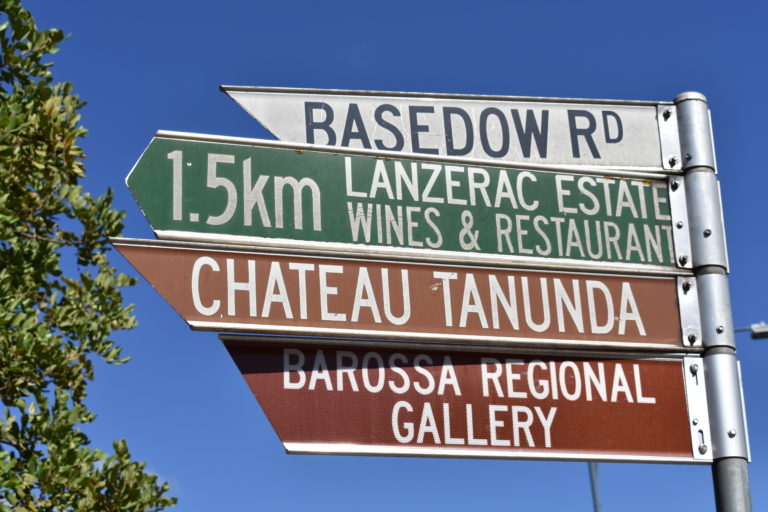
In France, a sign for vente directe can point towards direct sales. In Italy, look for vendita diretta or degustazione. In Spain, bodega is the word to watch for, while Portuguese wine regions often advertise provas. These clues are not guarantees, but they make a countryside drive feel more like a gentle treasure hunt.
Village wine bars can also be an excellent fallback. A knowledgeable owner may pour local bottles, explain the surrounding appellation and suggest a nearby producer to visit the following morning. You still taste the place, and you may do so with a plate of charcuterie, which is rarely a hardship.
Know When Booking Is the Better Choice
Spontaneity is charming, but not every winery visit should be left to chance. Book ahead if you have your heart set on a famous estate, a vineyard tour, a food-and-wine pairing, an English-language guide or a visit during a busy weekend. Booking is also wise when you are travelling with a group, have limited time, or are visiting a remote producer whose wines you genuinely love.
There is a difference between wandering into a village cellar for a glass and hoping that a celebrated château can fit four people into its afternoon schedule. The first is part of the adventure. The second may leave everyone frustrated.
A good compromise is to reserve one or two special tastings for a trip, then leave whole afternoons open for detours. That balance gives your holiday a little structure without ironing out all the delightful creases.
Taste Slowly and Plan the Drive
The freedom to stop wherever looks inviting comes with an obvious responsibility: somebody must stay sober enough to drive. Share small pours, use spittoons without embarrassment, or make one person the designated driver. In a campervan, it can be tempting to tell yourself that you are already home, but the road outside may still be narrow, steep and full of cyclists.
Better still, build in a walk. Park in a village, stroll through the vines where permitted, have lunch, and visit one nearby cellar before returning to the vehicle. A wine region reveals more when you are not rushing from one glass to the next.
The best unbooked winery visits are not usually the most polished. They are the ones where the owner points towards the hillside that made the wine possible, where you leave with purple-stained memories and a bottle wrapped in tissue, and where the road home through the vines feels just a little more golden.