Rural Portugal Food Worth a Slow Road Trip
A blackboard outside a village tasca may offer only three dishes, handwritten in chalk and slightly obscured by the afternoon sun. That is often a very good sign. Rural Portugal food is not usually dressed up for applause. It arrives in a clay dish, smells faintly of woodsmoke and garlic, and makes you wonder why you ever thought lunch needed to take less than two hours.
Away from Lisbon’s polished dining rooms and the busy beaches of the Algarve, Portugal feels generous in a quieter way. The countryside feeds you according to what grows nearby, what was preserved after the last harvest, and what somebody’s grandmother still insists should be cooked properly. For a slow traveller, particularly one travelling by car or campervan, that is the real pleasure: following small roads into places where the meal still belongs unmistakably to the landscape.
Why rural Portugal food tastes like its landscape
Portugal is a comparatively small country, yet its food changes quickly with the scenery. Head north and the air grows greener, the wines fresher, the cooking more hearty. Cross the dry interior of Alentejo and you find bread, pork, herbs and olive oil doing heroic work in deceptively simple dishes. Along the central rivers, freshwater fish appears on menus; in the mountains, chestnuts, goat and game make more sense than seafood ever could.
This is cooking built around thrift as much as pleasure. Stale bread becomes soup or migas rather than waste. Salt cod, despite arriving from far beyond Portuguese waters, is transformed into a pantry staple with a hundred regional expressions. Pork is cured, roasted, simmered and celebrated with admirable determination. It is food with patience in it.
That does not mean every rural meal is heavy. In warmer months, a plate of tomatoes dressed with local olive oil, soft sheep’s cheese and a glass of chilled white can feel like the entire point of being on holiday. Portuguese cooking understands that a few excellent ingredients do not need a committee meeting of garnishes.
The rural Portugal food dishes to look for
Alentejo: bread, pork and the long table
Alentejo is where many travellers fall hard for Portugal’s unhurried appetite. The wide plains, cork oaks and whitewashed towns create a landscape made for lingering, preferably after a dusty afternoon among vines.
Start with açorda alentejana, a fragrant bread soup often made with garlic, coriander, olive oil and a poached egg. It sounds humble because it is humble, but that is its charm. When the bread soaks up the broth and golden yolk, it becomes far more comforting than its short ingredient list suggests.
Migas are another essential, usually formed from broken bread and flavoured with garlic, herbs, olive oil and sometimes pork drippings. You may find them beside grilled pork, sausages or black pork from the prized Alentejo breed. Carne de porco à alentejana – pork with clams – is more often associated with coastal influence, but it also captures the region’s confidence with bold, salty flavours.
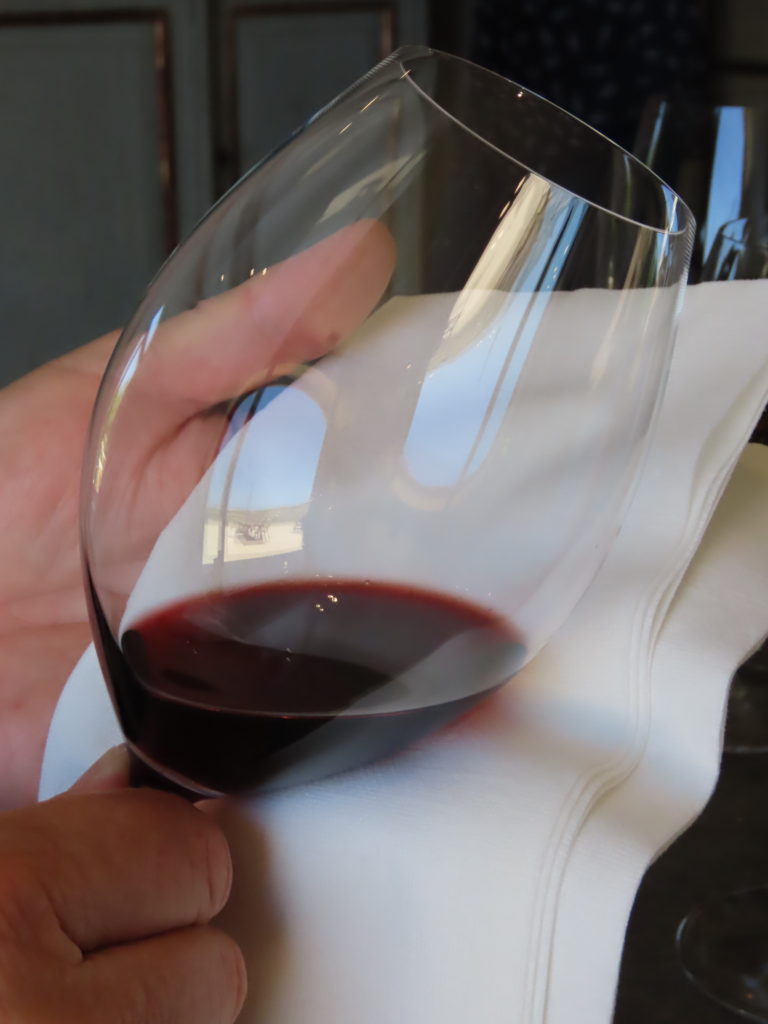
Alentejo is a natural place to pair food with wine. Its reds are often generous, ripe and easy to enjoy without a textbook at hand. With pork, lamb or a slow-cooked stew, choose a local red with enough freshness to keep the meal lively rather than sleepy. A lunch beneath a plane tree can become a very persuasive argument against making evening plans.
Beiras and the central interior: smoke, cheese and river fish
The central regions are wonderfully varied, from the granite villages around Serra da Estrela to the river valleys and pine-covered hills further south. Here, food tends to have a mountain edge: sturdy, smoky and deeply comforting after a day spent wandering cobbled lanes.
Seek out queijo da Serra, the celebrated soft sheep’s cheese of the Serra da Estrela. When ripe, it is almost spoonable, rich and grassy, with a gentle tang that calls for crusty bread and a glass of local white. This is not a cheese for dainty nibbling. It deserves a small, serious pause.
Chanfana, traditionally goat or sometimes lamb slowly cooked in red wine, garlic and herbs, is another dish with real character. The meat is cooked until tender and the sauce takes on the dark, warming depth of the wine. It is country cooking that has no interest in rushing you.
Near the rivers, look for lamprey in season or simpler freshwater fish preparations, although availability varies widely. If you are unsure, ask what the kitchen recommends that day. In a family-run restaurant, that question can lead to the best meal of the trip and occasionally a portion large enough to require a strategic nap afterwards.
Trás-os-Montes and the north: serious winter cooking
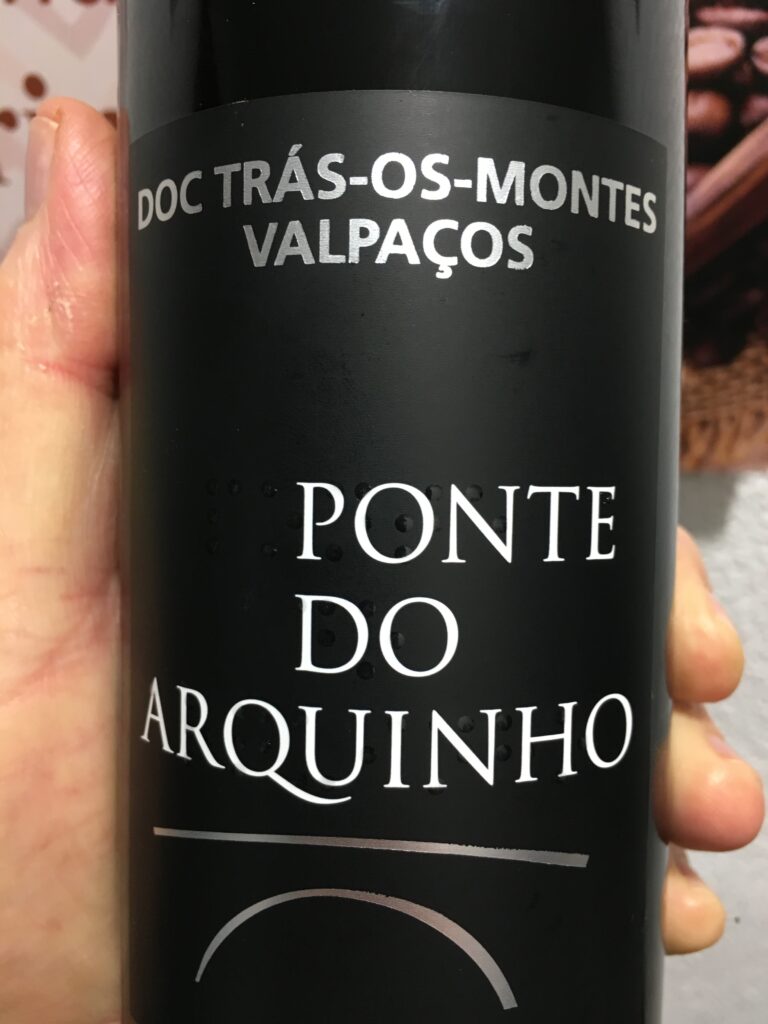
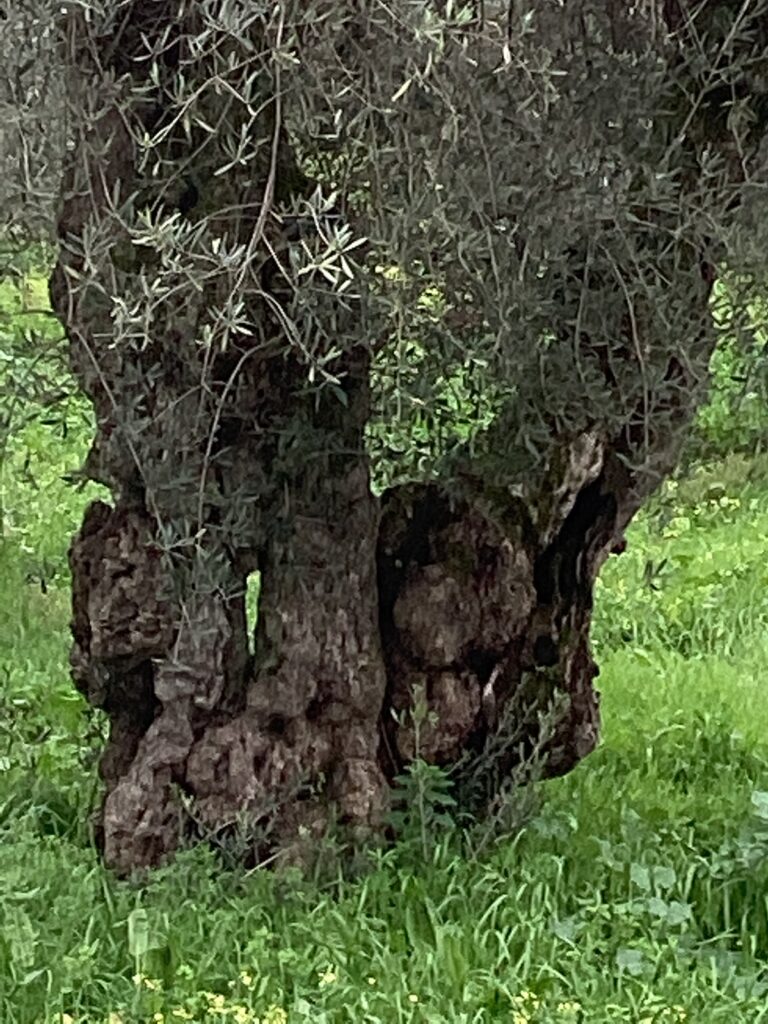
In Portugal’s north-east, Trás-os-Montes feels proudly remote. The winters can be sharp, the villages ancient and the pantry built for cold weather. Smoked meats, beans, potatoes, cabbage and chestnuts feature heavily, though the region also produces excellent olive oil and quietly impressive wines.
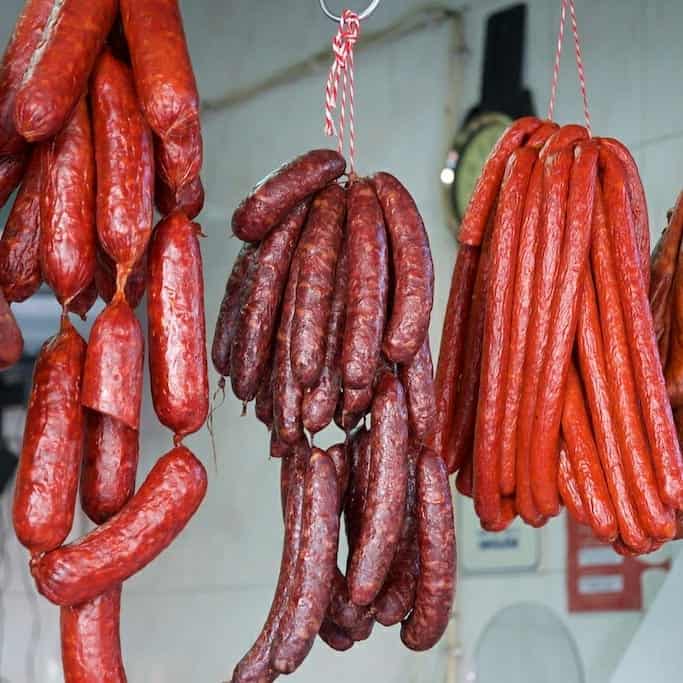
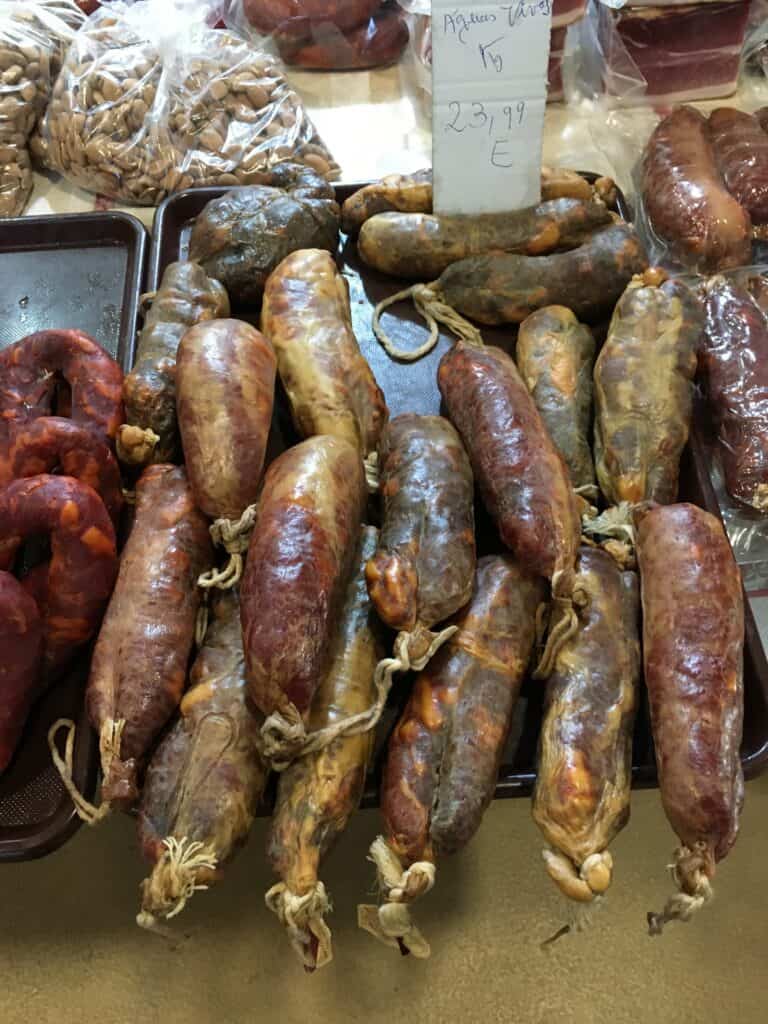
Alheira is one of the area’s best-known sausages, traditionally made with poultry and bread rather than pork. Served grilled with chips, rice and a fried egg, it is not subtle, but it is deeply satisfying. For something more local to the highlands, look for smoked ham, cured sausages and bean-rich stews that arrive bubbling in earthenware.
This is also a fine region for red wine.If you enjoy something with structure and a little rustic confidence. The best pairing is rarely complicated. A village red, a plate of cured meat, good bread and a view across hills.
Eat where the village eats
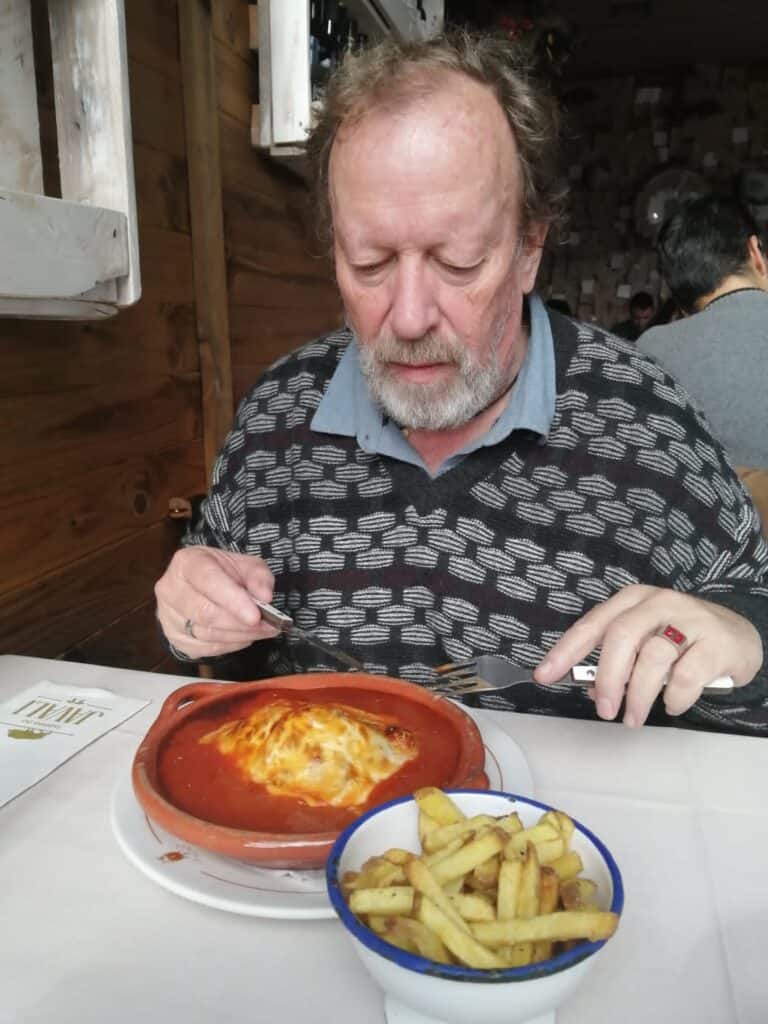
The most memorable meals are not always found by searching for a famous dish. They are found by noticing where the local tables are full at 1.30pm, where a retired couple is splitting a bottle of house wine, and where the menu is short enough to suggest the kitchen knows exactly what it is doing.
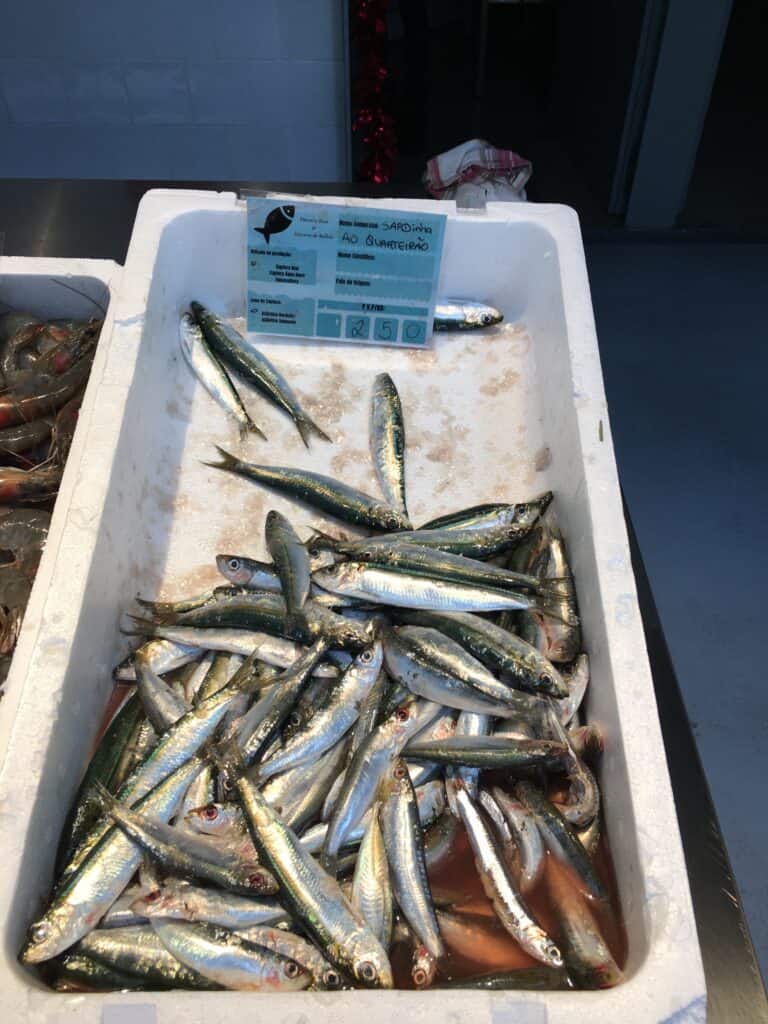
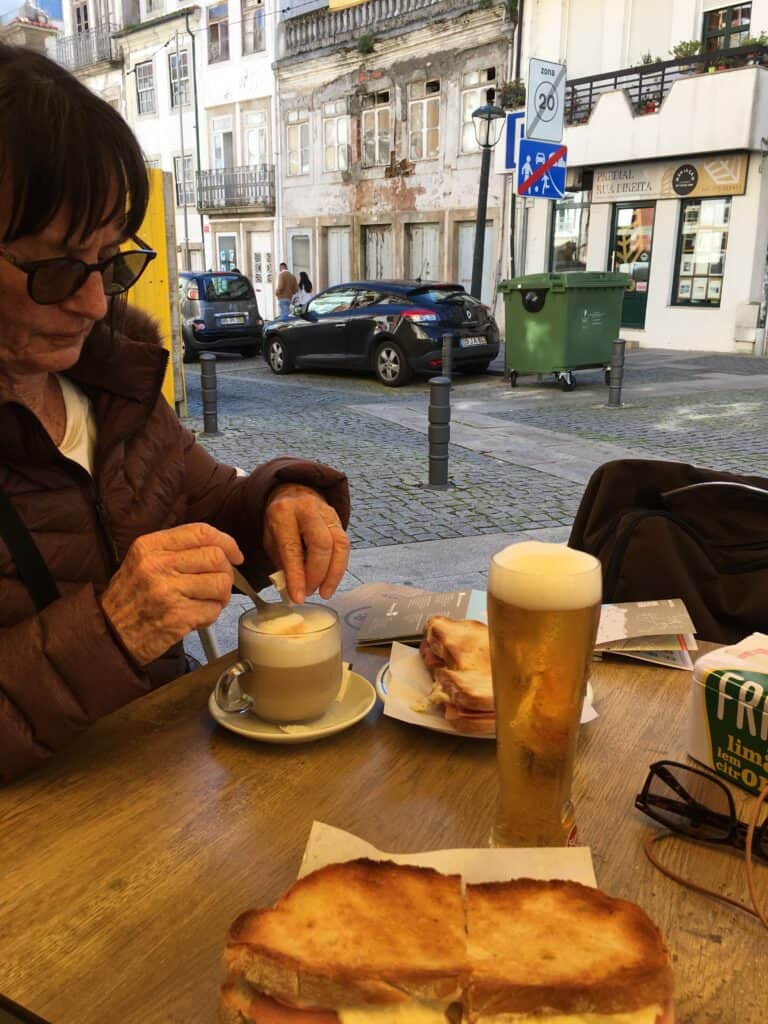
A tasca is often the place to start. These informal restaurants or bars may have modest décor, a television murmuring in the corner and no interest whatsoever in fashionable lighting. What they often have is a cook who makes one superb stew, grilled fish or roast each day. Ask for the prato do dia, the dish of the day, and be open to a little surprise.
Timing matters. Lunch is a social institution, especially outside major cities. Arrive too late and the best dish may be gone. If you arrive too early, you may be the only person ready for roast goat at noon. Around 1pm is usually a comfortable bet. Booking is wise at weekends, during local festivals or in small wine towns where there may be only a handful of tables.
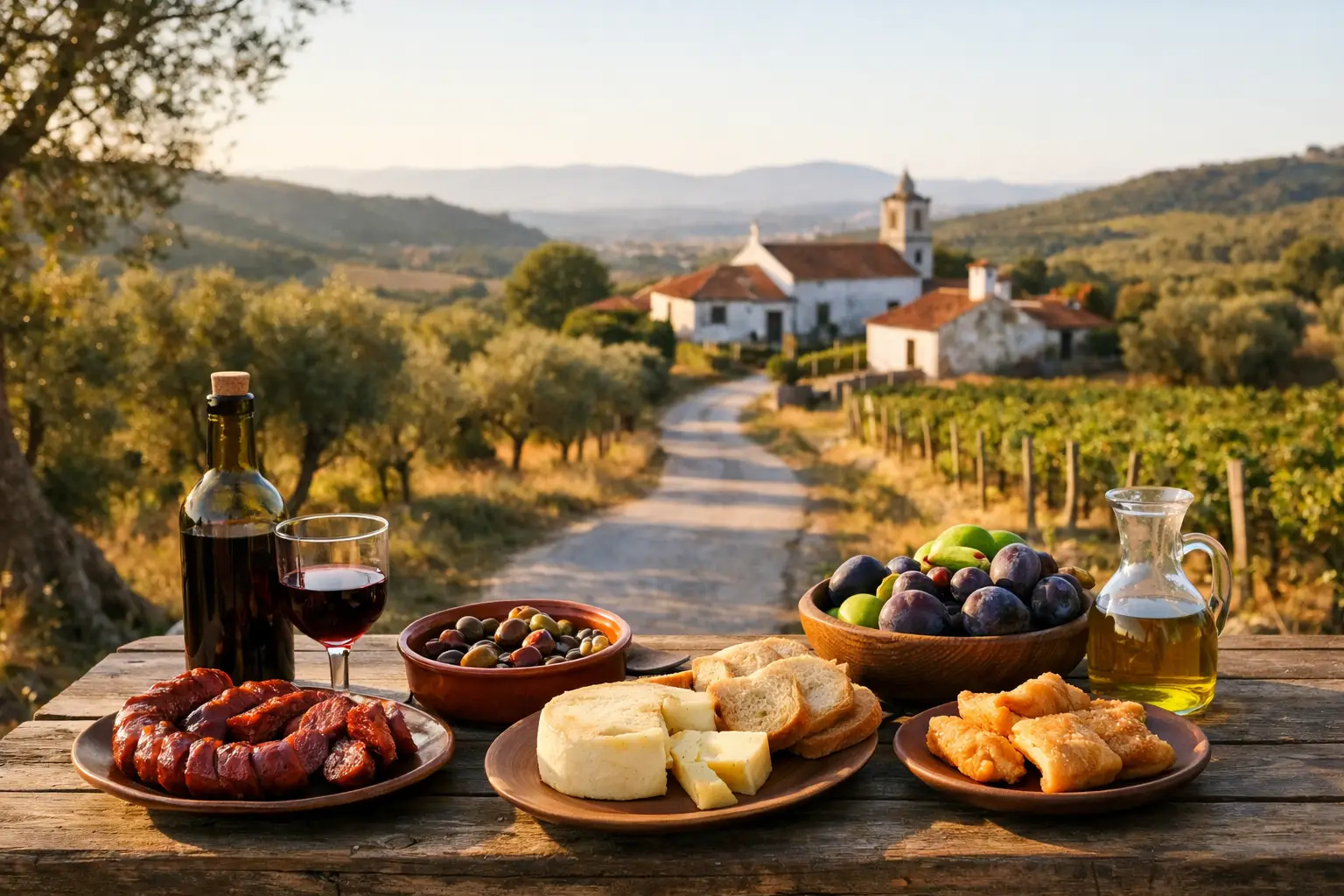
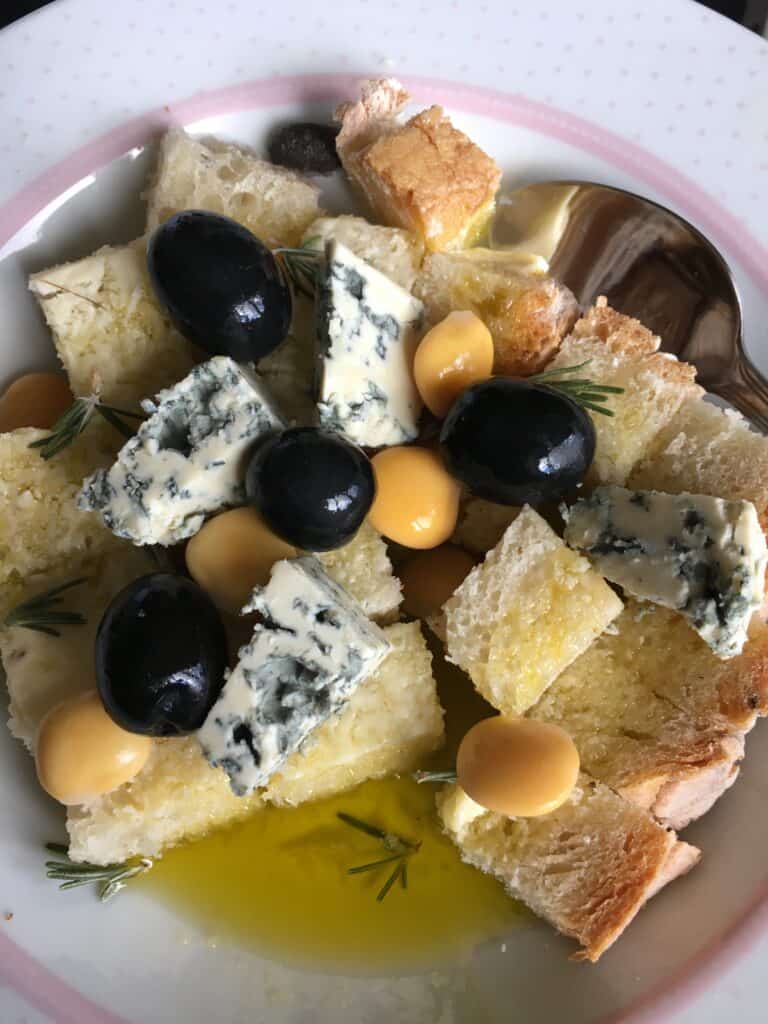
Do not overlook the couvert either. Bread, olives, butter, cheese or pâté can appear before the meal. It is not always complimentary, so simply ask if you are uncertain. It is a small detail, but travel is made easier by knowing when the delicious little bowl of olives is also a line item on the bill.
A glass beside the plate
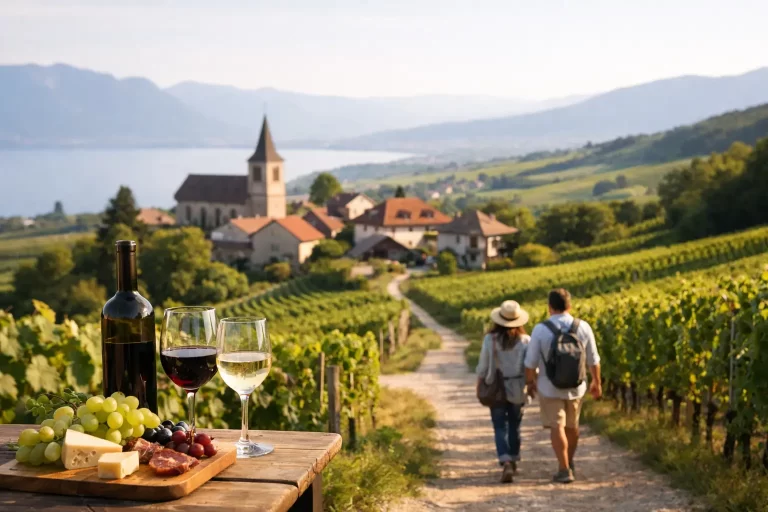
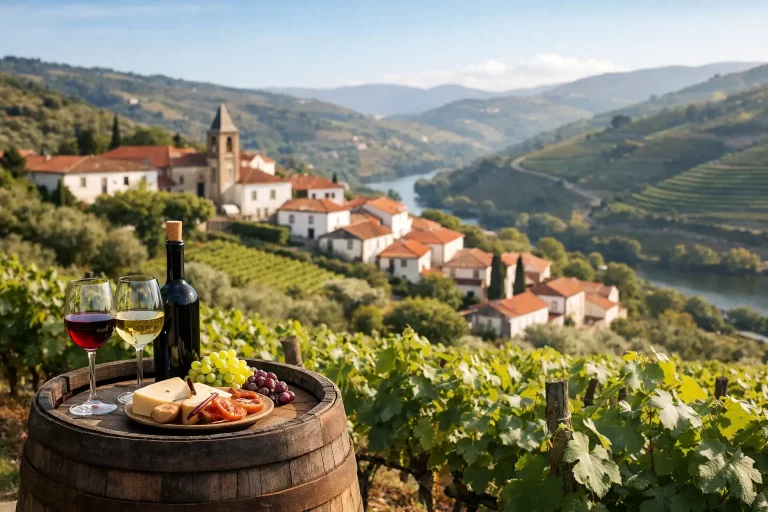
Wine in rural Portugal is rarely an afterthought. Even a simple house pour can be surprisingly good, particularly in regions where vines are woven into everyday life. The sensible approach is to drink locally and match the mood of the meal, rather than hunting for the most prestigious label.
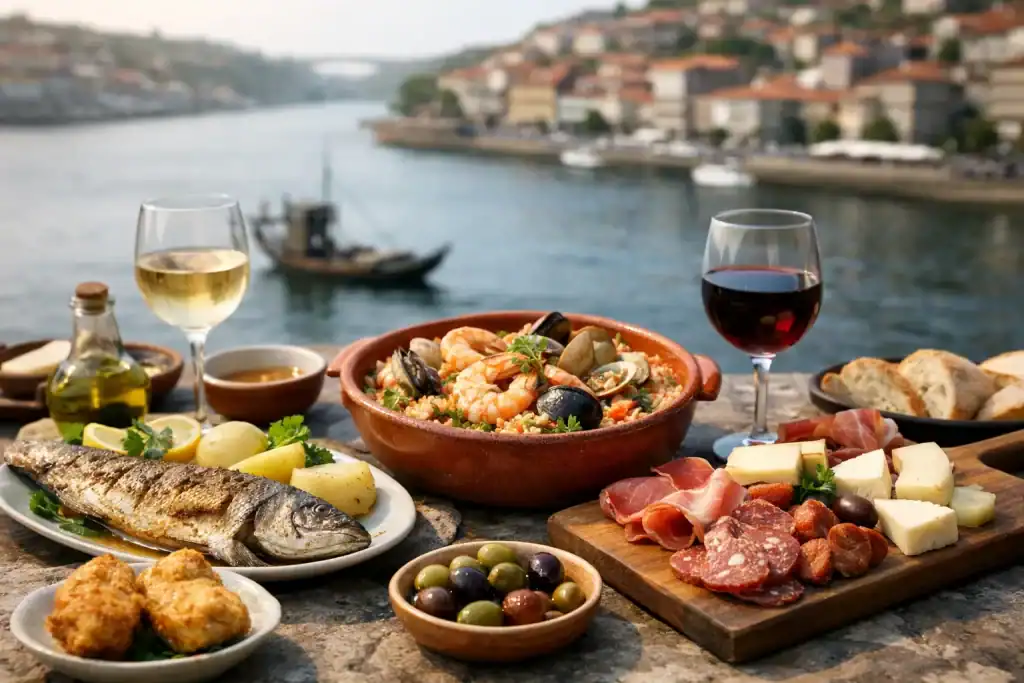
In the north, crisp Vinho Verde can be a lovely partner for grilled river fish, salty cheeses or a sunny plate of petiscos. In the Douro and Dão, reds often sit beautifully beside roasted meats and smoked sausages. Alentejo’s rounder reds suit pork, lamb and long lunches, while its whites can be wonderfully textural with bread-based dishes and cheese.
If you are driving, this is where campervan travellers need a little discipline. Enjoy a tasting at a winery, then settle somewhere for the night before opening the bottle you brought away. Portugal rewards that sort of sensible planning with quiet municipal motorhome areas, vineyard stays and village evenings where there is nowhere else you need to be.
Leave room for the sweet things
Portugal’s famous custard tarts are easy to find, but rural bakeries offer pleasures that feel more tied to place. In the Alentejo, convent-inspired sweets often use egg yolks, sugar and almonds with cheerful abandon. In mountain areas, chestnuts may appear in cakes, liqueurs and desserts. Honey, figs and local citrus turn up wherever the climate allows.
Then there is coffee. Order a bica or simply ask for a coffee, stand at the counter if that is what everyone else is doing, and take five minutes to watch the village reset itself after lunch. This small ritual is as much part of the meal as dessert.
The best way to enjoy rural Portugal is to leave a little space in the itinerary and a little space on the table. Take the turning towards the village with no obvious attraction, order what is being cooked that day, and let the local wine persuade you to stay until the light softens.
If you’re looking for tours, attractions and experiences across the UK and Europe, you can browse and book here: https://tripadvisor.tpk.ro/D6WNK34w
Affiliate Disclaimer
This article contains affiliate links. If you book tours, attractions or experiences through these links, we may earn a small commission at no additional cost to you. We only recommend services that we genuinely use, trust or believe will add value to your travels. Thank you for your support