
How to Explore Wine Villages Properly
You can tell within ten minutes whether a wine village is going to charm you or merely sell to you. The good ones announce themselves quietly – laundry at an upstairs window, a church bell somewhere behind the square, a dog asleep outside a cave cooperative, and the smell of coffee drifting past a row of stone houses before the first tasting room even opens. If you are wondering how to explore wine villages in a way that feels rewarding rather than rushed, start there: pay attention to the village before you pay attention to the wine list.
That might sound slightly odd coming from people who happily plan trips around bottles, but wine villages are never only about wine. They are about landscape translated into daily life. You taste the region more fully when you notice the bakery queue, the pace of lunch, the market stall selling apricots, the old men arguing about weather as if the vineyard rows personally report to them.
How to explore wine villages without rushing them
The temptation is to treat a wine village like a checklist. Arrive, taste, buy, photograph a pretty lane, move on. It is efficient, and efficiency is often the enemy of a memorable trip. A better approach is to choose one village as a base for half a day or, better still, a full day. Walk first. Taste later.
There is a practical reason for this as well as a romantic one. Once you have had a couple of glasses, your powers of observation tend to become very affectionate and not always very sharp. A slow wander while your palate is fresh helps you get your bearings and decide where you actually want to linger.
Start in the oldest part of the village if there is one. In many European wine regions, the heart of the place still tells the clearest story: cellars dug into hillsides, family homes with oversized wooden doors for carts, small chapels, fountains, and a central square built for trade long before tourism arrived. This context matters because it helps you understand whether the wine culture still feels local or has become more performative. Neither is automatically bad, but they offer very different experiences.
A village with polished tasting counters and designer signage may be easy and welcoming. A quieter one with handwritten opening times and slightly dusty bottles may feel more intimate, though occasionally less organised. It depends what you enjoy. Some travellers want polished ease. Others want the thrill of finding somewhere that feels gloriously unbothered by trends.
Pick villages, not just famous wine regions
One of the best lessons in how to explore wine villages is learning not to chase only the headline region. Burgundy, Rioja, the Douro, Alsace, Tuscany, the Mosel – yes, of course. They are famous for good reason. But a region can be magnificent while individual villages vary wildly in atmosphere.
I would rather spend a day in one village with a lovely square, a good lunch spot and two thoughtful producers than race through six postcard stops where everyone else had the same idea by eleven in the morning. The right village gives you a sense of place, not just a tasting itinerary.
When choosing where to go, look for a mix of three things: vineyard access, village life and food. If the setting is beautiful but the centre feels deserted, it may work better as a scenic stop than a full day out. If the village has charm but no easy way to taste locally, you might be better staying nearby and visiting for lunch. The sweet spot is where all three overlap and you can move through the day on foot.
That is especially true if you are travelling as a couple and one of you would rather not spend all day discussing tannins. A wine village should still be enjoyable for the person more interested in church towers, antiques, river views or pastries. Frankly, that person often ends up having the best instincts.

Taste with curiosity, not ambition
There is a small travel tragedy that unfolds daily in wine country: visitors trying to fit in too many tastings and ending up remembering almost none of them. Four villages and five producers in a day may sound impressive, but by the final stop many palates are simply tired. So are many legs.
A gentler rhythm works better. Book one meaningful tasting if appointments are needed, then leave room for one more spontaneous stop. Ask for the village wine, the house speciality or the bottle locals drink with lunch. You do not need the most expensive cuvee to understand a place.
This is where personality matters as much as production. A warm host who explains why one slope ripens earlier than another, or why the family still harvests a tiny parcel by hand, will probably stay with you longer than a technical lecture delivered with all the joy of a tax return. Good wine travel is rarely about proving what you know. It is about becoming more attentive.
If you are not confident with wine language, keep it simple. Say what you like. Ask what is typical of the village. Ask what people eat with it. Ask what changed after a hot summer or a wet spring. These are accessible questions and they often open better conversations than trying to sound terribly knowledgeable after half a glass of local red.
Let the landscape lead the day
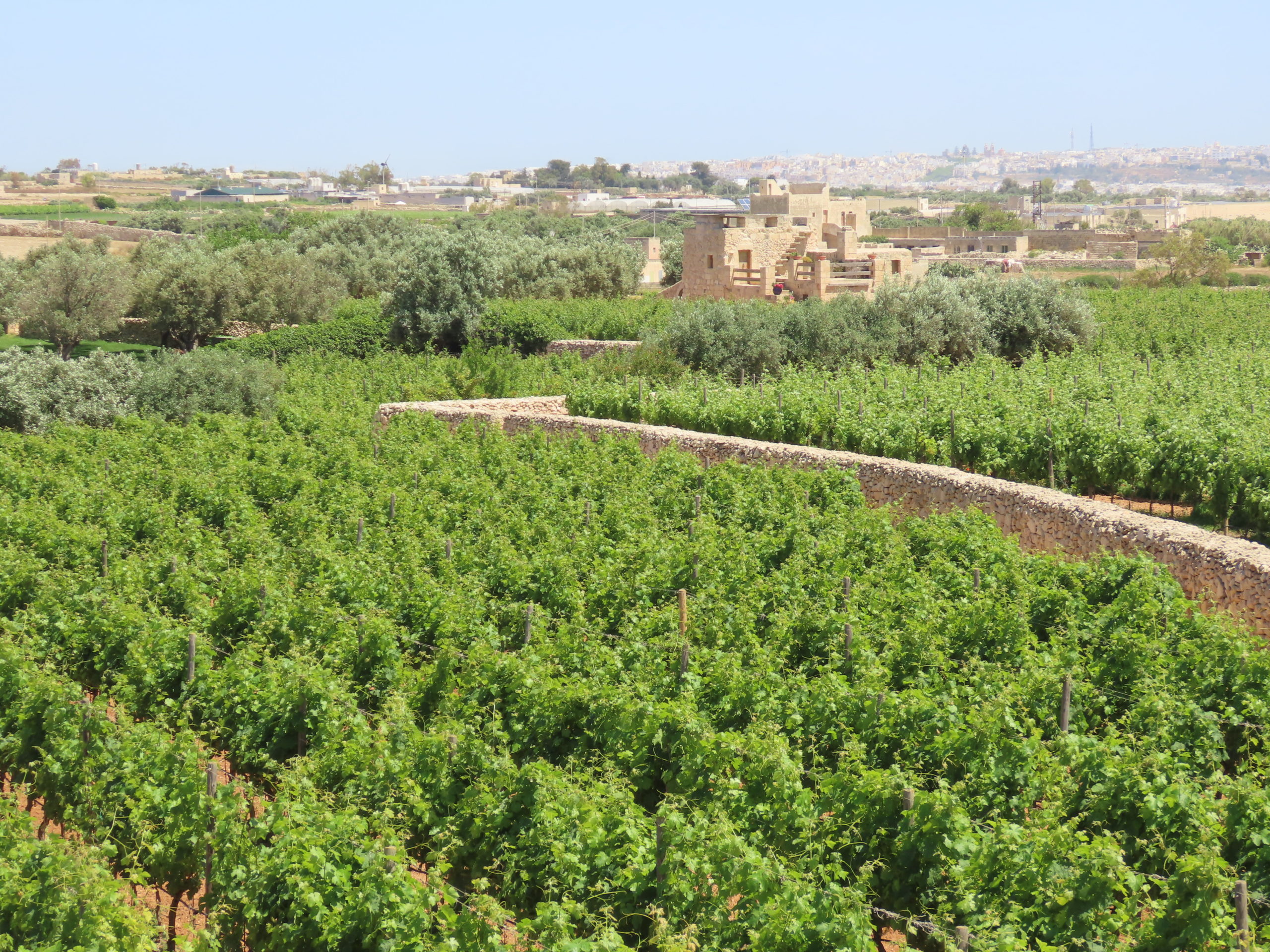
The best wine villages make sense from the outside before they make sense from the inside. You see the rows of vines, the orientation of the slopes, the river or valley that softens the climate, the patchwork of soils if you know what to look for. Then you walk into the village and realise all of life here has grown around that geography.
So make time to step beyond the centre. Follow a vineyard path. Drive or cycle to a viewpoint. Sit on a bench overlooking the rows in late afternoon when the light softens and the village starts to glow a little around the edges. This is often the moment a place becomes memorable.
Campervan travellers know this instinctively. The joy is not only in arriving but in approaching slowly, noticing how one village gives way to vines, then woodland, then a ridge, then a cluster of tiled roofs. Even if you are staying in a hotel or cottage, borrow that road-trip mindset. Leave room for the scenic detour. Some of the best discoveries happen when you pull over because the light on the hillside looks absurdly beautiful and suddenly there is a tiny cellar nearby with an honesty box and a cat supervising the entrance.
Eat where the village eats
If wine tells you about the land, lunch tells you about the people. And no, this does not always mean the prettiest terrace in the square. Sometimes it does. Sometimes it means the plain little place with a handwritten menu and a carafe on every table.
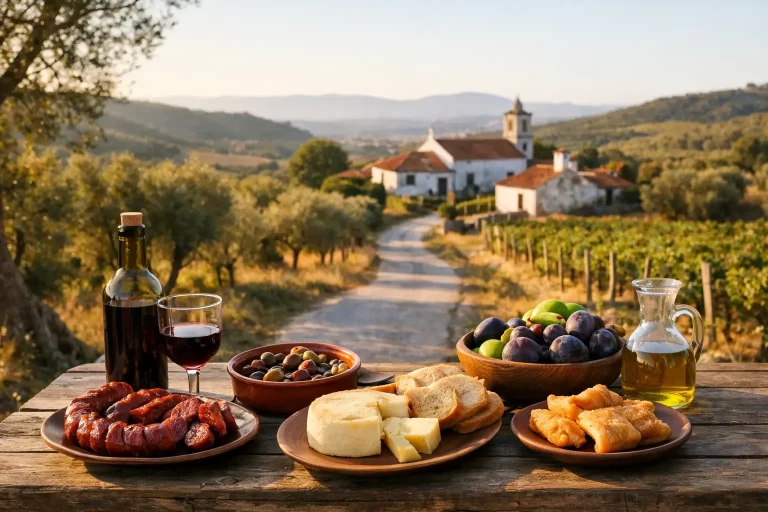
Food anchors a wine village experience. It slows you down, resets your palate and shows you how local bottles are meant to live at the table rather than under forensic inspection. A crisp white with river fish, a light red with charcuterie, a rustic stew with something earthy from nearby vines – these pairings make the region feel coherent.
Watch where locals go if you can. If every table is speaking the local language and nobody seems to be in a hurry, that is usually a good sign. Also, never underestimate the importance of timing. Arrive too late for lunch in a small village and you may find yourself staring mournfully at a packet of crisps and a closed kitchen. Wine touring is more glamorous with proper food in it.
Practical choices make the romance easier
A lovely day in a wine village can be undone by poor logistics. If you are driving, be realistic about tastings. One person may need to spit, skip or settle for a tiny pour. Public transport in wine regions can be charmingly possible or gloriously useless. Check in advance, especially outside peak season.
Opening hours also have their own village logic. Some places close for lunch. Some open only by appointment. Some appear to open when somebody’s uncle has finished doing something in the vineyard. This is part of the charm until you are standing outside a locked door at half past three.
Cash can still be handy in smaller places. So can a light layer for cool cellars, decent shoes for cobbled lanes, and a willingness to accept that not every tasting will be extraordinary. That is fine. Average wine in a beautiful place with a good view and a plate of local cheese can still be a very good afternoon.
Bring home more than bottles
Buying wine is part of the pleasure, but memory works in other ways too. Keep the label from a favourite bottle. Note the name of the square where you had lunch. Photograph the quiet corners, not just the obvious ones. The blue shutters, the barrel outside a doorway, the vineyard dog with aristocratic levels of self-regard.
Those details are what linger. They are also what make one village distinct from another. The most rewarding answer to how to explore wine villages is not to see more of them. It is to notice more while you are there.
Leave a little time at the end of the day to sit somewhere with a final glass and no agenda. Let the place settle. When the bells ring, chairs scrape across the square and the light begins to fade over the vines, you will know whether the village has given you something real. If it has, the journey home will feel pleasantly longer, because part of you will still be there.
Affiliate Disclaimer
This post may contain affiliate links. If you purchase products or services through these links, Vineyards and Villages may earn a small commission at no additional cost to you. We only recommend wines, destinations and travel products we genuinely enjoy during our narrowboat, campervan and vineyard adventures



3 Comments
Comments are closed.