Wine Tasting Trip Itinerary That Works
The best wine days rarely begin with a stopwatch. They begin with a quiet road, a village just opening up, and the promise that the next glass will taste a little different because of where you are standing. A good wine tasting trip itinerary should leave room for that feeling. It should help you see a region properly, not simply collect cellar doors like trophies.
That is the difference between a trip that feels elegant and one that becomes oddly tiring by day two. Wine regions ask for a slower rhythm. Distances can look small on a map, yet country lanes, long lunches and spontaneous stops at a bakery or viewpoint all take their time. If you build your days around generous margins rather than ambitious checklists, you give the wine, the landscape and yourself a chance to settle.
How to build a wine tasting trip itinerary
Start by choosing one region, not three. This sounds obvious, yet it is where many trips go astray. A long weekend in Burgundy, the Douro, Rioja or Stellenbosch can feel rich and complete if you commit to the area and let its details reveal themselves. Trying to add neighbouring wine regions for the sake of variety often means spending your best hours in the car.
Once you have your region, choose one base for every two or three nights. A vineyard hotel can be lovely, but so can a village guesthouse where you can walk to dinner and hear church bells in the evening. In practice, the best base is usually the place that gives you both atmosphere and ease. If you need to drive twenty minutes for every meal, the romance fades rather quickly.
Then decide what kind of traveller you are on this particular trip. Some people want serious tastings with appointments at small producers and time to talk about soils, vintages and élevage. Others want a lighter touch – one winery in the morning, a leisurely lunch, then a market town, a river walk or an old hilltop village in the afternoon. Most travellers are somewhere in between. The point is not to imitate somebody else’s ideal wine holiday. It is to be honest about your own pace.
The rhythm that makes a wine tasting trip itinerary feel good
The most useful rule is simple: one substantial tasting a day, perhaps two, but rarely more. Two can work well if one is relaxed and scenic while the other is more in-depth. Three often sounds manageable when planning from your kitchen table, but on the ground it can become a blur of poured glasses, repeated questions and a creeping sense that you are missing the countryside entirely.
A typical day works best when it has shape. Begin with a slow morning – perhaps coffee in the square, perhaps a short drive through the vines while the light is still soft. Book your first tasting for late morning rather than first thing. That gives you breathing room and usually means you arrive alert and curious rather than rushed.
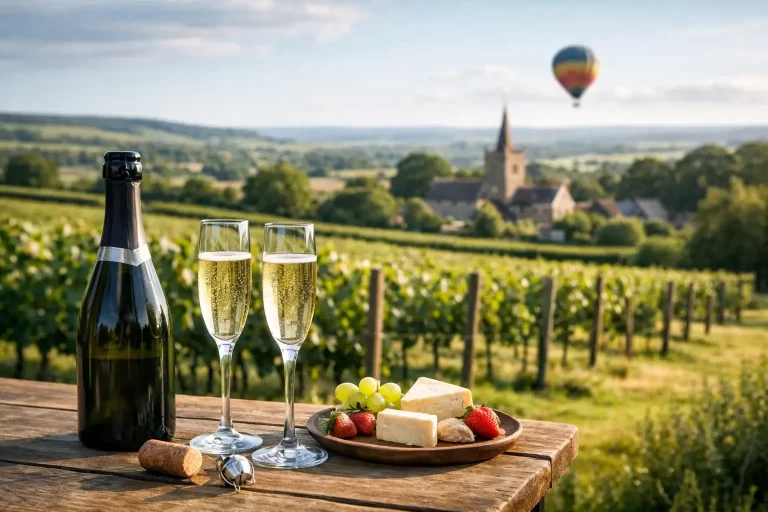
Lunch matters more than people expect. In wine country, lunch is not merely fuel between appointments. It is part of the regional story. A plate of local cheese, grilled fish, roast chicken or something simple from the market can teach you as much about place as a tasting room can. It also gives your palate a pause. If the region is known for long meals, lean into that. Some of the most memorable hours on a wine trip happen over a carafe on a shaded terrace, not in a formal cellar.
Afternoons should stay loose. If you have a second tasting, keep it shorter or make it scenic – perhaps a vineyard with a panoramic terrace, a family-run estate or somewhere that pairs wine with olive oil, charcuterie or a walk through the vines. If not, use the afternoon for the village itself. Browse the little wine shop. Sit by the river. Visit the old abbey or Roman ruins. Buy a bottle and watch the evening arrive.
A sample three-day wine tasting trip itinerary
A three-day format suits most travellers beautifully because it gives you enough time to settle into a region without overplanning every hour. Think of this as a framework rather than a rigid schedule.
Day one: arrive and set the tone
On the first day, resist the temptation to cram in too much. Travel days are unpredictable, and your first impression of a wine region should not be a frantic race to make a booking. Arrive by midday if you can, check into your accommodation, and have a late lunch in your base village.
In the afternoon, visit one welcoming winery close to where you are staying. Choose somewhere known for hospitality rather than technical intensity. The aim is to ease into the region, get your bearings and enjoy that first proper glass with a view of the landscape it came from. Spend the evening in the village, walking before dinner and keeping the night simple.
Day two: the deep wine day
This is the day for your most thoughtful tasting. Book a late-morning visit at a producer you are genuinely interested in, whether that means a celebrated estate or a smaller grower making wines with a strong sense of place. Give yourself time to arrive early, look around and ask questions.
Afterwards, take lunch seriously. Pick somewhere regional and unhurried. If you are in northern Spain, maybe that means lamb, peppers and local red. In southern France, perhaps a terrace lunch with rosé and market vegetables. In Portugal, maybe river fish and white wine that tastes faintly of stone and citrus. Let the meal reset the day.
Keep the afternoon lighter. Visit a second estate only if you still have energy and interest. Otherwise, use those hours for scenic driving, a picnic stop, or a village that drew you in on the map. The trip should still feel like travel, not coursework.
Day three: contrast and local texture
By the third day, you know a little more about what you enjoy. Use that knowledge. If day two focused on prestige, make day three intimate – perhaps a small organic winery, a cooperative with local character, or a sparkling producer if the region is known for one style but quietly good at another.
Leave time for shopping and wandering. This is the day to buy bottles you actually want to remember, not just labels you think you ought to bring home. If shipping is available, ask clearly about costs and timing. If it is not, carry less and choose better.
Finish with a final dinner somewhere atmospheric rather than fashionable. Wine regions are full of restaurants that understand their own landscape. You want the one with honest food, a good local list and windows looking out over the vines or square.
Common mistakes that spoil the mood
The most common mistake is overscheduling. The second is underestimating travel times on rural roads. The third, perhaps less obvious, is forgetting to reserve meals. In popular wine regions, the prettiest lunch places and most charming cellar doors can fill up quickly, especially in harvest season and summer.
There is also the question of transport. If you are travelling as a couple, one person doing all the driving can change the balance of the trip. That does not mean a self-drive holiday is wrong – far from it, especially in regions built for road trips – but it does mean you should plan with fairness in mind. On one day, book a driver or taxi between visits if possible. On another, stay close enough to walk. A good itinerary looks after the people in it.
Weather matters too. Some regions are glorious in shoulder season, when the vines are turning and the villages feel calmer. Others can be sleepy outside peak months, with shorter hours and fewer dining options. Harvest has romance, but it also brings pressure and limited availability. It depends what you want: polished access, autumn atmosphere, or near-empty roads and fireplaces.
Choosing the right base for your style of trip
If you love old stones, markets and evening strolls, stay in a village. If waking up among the vines is your dream, choose vineyard accommodation but make sure there is still somewhere pleasant to eat nearby. Campervan travellers have another sort of freedom entirely: the joy of changing your view with the weather, then opening a bottle by a lake or hillside after the driving is done. At Vineyards and Villages, that kind of slow mobility is part of the charm, but only if you give yourself enough margin to enjoy it.
The same principle applies whether you are heading to Alsace, Tuscany, the Cape Winelands or a quieter corner of inland Europe. Build around one anchor place, one good meal, one meaningful tasting and one piece of local life each day. That local life might be a market, a monastery, a bakery, a swimming spot or simply a bench with a view across the vines. It is not filler. It is what stops the trip from feeling interchangeable.
What to book in advance and what to leave open
Book your accommodation first, then one key tasting per day and at least one special dinner during the trip. That is usually enough structure to hold things together. Leave the rest with some slack. The best travel days have a little drift in them.
You may stumble across a village festival, a roadside producer with a handwritten sign, or a restaurant terrace where lunch quietly turns into late afternoon. A strict schedule cannot absorb those moments. A good wine tasting trip itinerary can.
If there is one guiding thought worth keeping, it is this: plan for flavour, not volume. You do not need to taste everything in a region to feel that you have known it well. Often, one bottle shared at sunset, after a day that moved at the right pace, says far more than six hurried cellar visits ever could.
4 Comments
Comments are closed.