Rural Morocco Travel Guide for Slow Roads
A red-earth track curls away from the main road, past olive trees silvered by the morning light and a shepherd urging his flock through a cloud of dust. There is no grand signboard, no queue, and probably no coffee menu written in English. This is the Morocco that makes a rural Morocco travel guide worth carrying: patient, generous, startlingly beautiful, and best experienced with time to spare.
Morocco’s headline acts – Marrakech, Fez, the Sahara – deserve their fame. But the real pleasure of a longer holiday often begins after the city walls fall behind you. It is found in a simple auberge beneath the High Atlas, a bowl of steaming bissara in a market town, a family-run olive press, or the clink of tea glasses as a village afternoon slows to its proper pace.
Why rural Morocco rewards the unhurried traveller
Rural Morocco is not one neat landscape. It shifts constantly: cedar forests and grazing monkeys around Ifrane; green terraces folded into the Rif; ochre kasbah country south of the Atlas; and the broad, vine-friendly plains around Meknes. A journey of only a few hours can feel like stepping through several countries, each with its own food, architecture and rhythm.
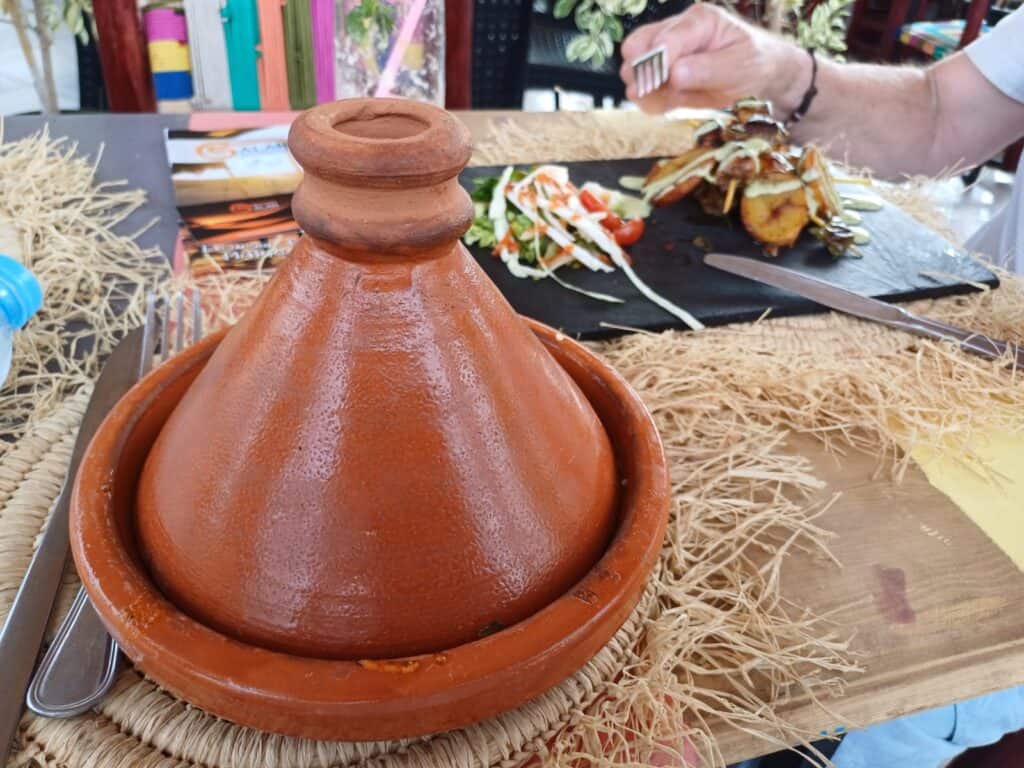
That variety is precisely why it pays not to over-plan. On paper, driving from one point to another may look straightforward. In reality, you will want to stop for walnuts sold from a roadside stall, photographs of snow-tipped ridges, or a long lunch where the tagine takes as long as it takes. This is not the destination for treating every day like a military operation, however satisfying a colour-coded itinerary may be.
The best rural stays also give you a gentler introduction to daily life. In a small town, you may wake to the bread man cycling past with warm round loaves balanced in a basket, then watch neighbours gather at the hammam or market. There is a quiet privilege in being welcomed into these ordinary scenes. Approach them with curiosity rather than entitlement, and they become the stories that stay with you.
A rural Morocco travel guide to three memorable regions
The High Atlas: valleys, walnut trees and big skies
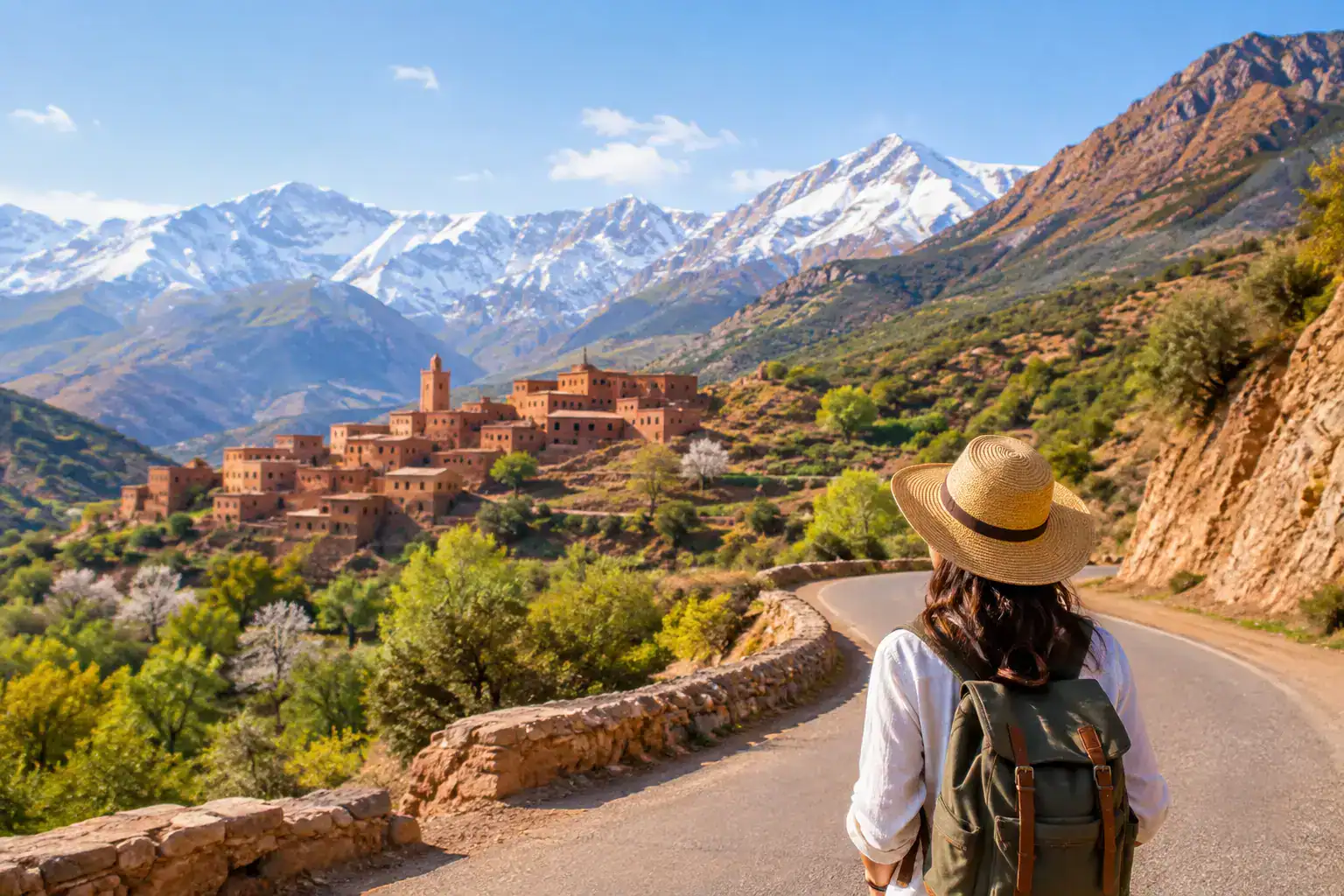
For drama, the High Atlas is difficult to beat. The roads beyond Marrakech rise through rocky foothills towards villages built in tones that almost disappear into the mountainside. The Ourika Valley is the most accessible option, though it can be busy at weekends. For a more peaceful base, look towards the Aït Bouguemez Valley, often called the Happy Valley, or the roads around Amizmiz and Asni.
This is walking country, whether you fancy a gentle ramble between villages or a more demanding guided hike. Local guides are particularly worthwhile here: they add context, help you navigate changing conditions, and make introductions that turn a pretty walk into something more meaningful. Pack layers even in warmer months. The sun can be fierce at lunch, while evenings at altitude have a decided nip.
Meals tend towards mountain comfort food: vegetable tagines, barley bread, local honey, walnuts and mint tea poured from a pleasing height. If you are invited into someone’s home, accept tea if you can and follow your host’s lead. A small gift from a local shop, perhaps fruit or pastries, is a thoughtful gesture rather than a grand performance.
The Rif: painted towns and a greener Morocco
Northern Morocco surprises travellers who expect only desert shades. The Rif Mountains are cooler, greener and often misty in the early morning, with steep slopes planted with olives, figs and cannabis. The latter is part of the region’s complex agricultural reality, but it is not an invitation to buy or carry anything illegal. Keep things simple and respectful.
Chefchaouen is the famous blue jewel and undeniably charming, especially before the day visitors arrive. Yet the pleasure deepens when you continue into the surrounding hills. Base yourself in a small guesthouse outside town, take the road towards Akchour for waterfalls and woodland walks, and linger in villages where blue paint gives way to stone, terracotta and vegetable gardens.
The Rif is ideal for travellers who like scenery with a softer edge. It is less about monumental kasbahs and more about shaded squares, goat cheese, wild herbs and the sudden sight of cloud sliding across a ridge. Roads can be narrow and winding, so this is a region for relaxed daytime driving rather than arriving after dark with the satnav feeling overly optimistic.
Meknes and the Middle Atlas: olives, vineyards and market life
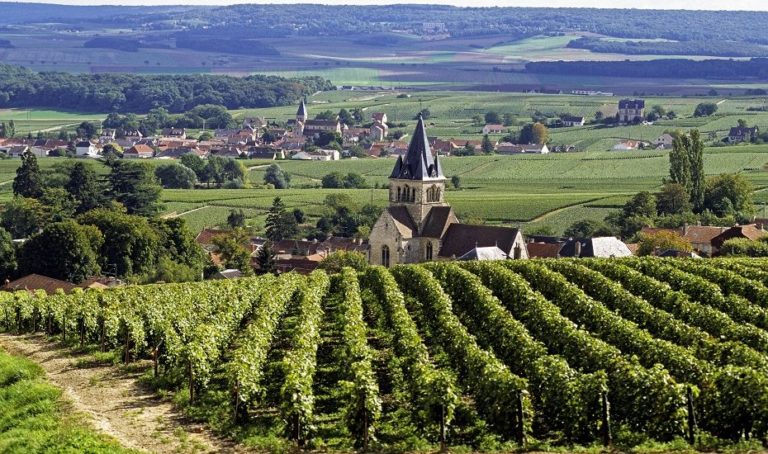
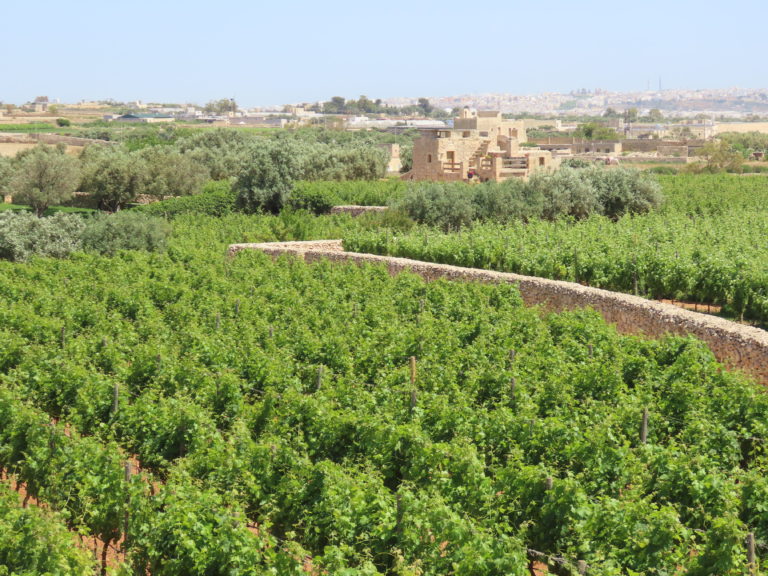
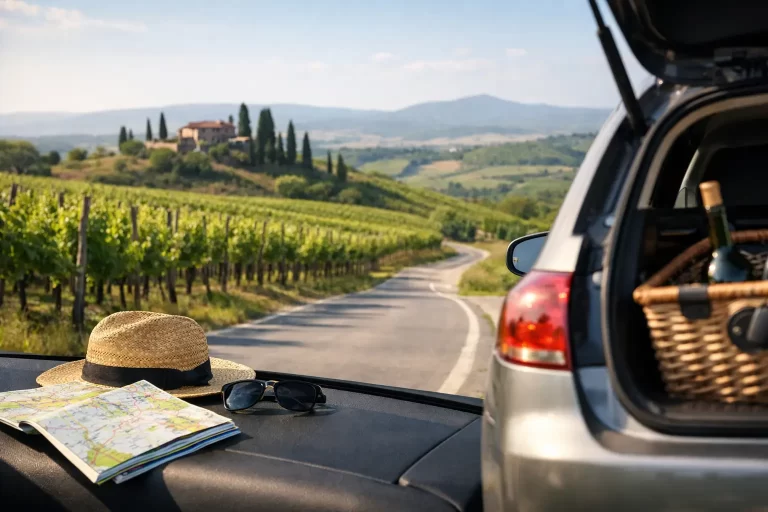
Meknes makes a fine gateway to rural northern Morocco, particularly for those who enjoy a glass of wine with their landscape. Morocco’s wine story is modest but longstanding, shaped by French influence and nourished by the fertile land around the city. Vineyards sit alongside olive groves and cereal fields, a lovely reminder that the country is far more agriculturally varied than many visitors realise.
Wine availability and tasting opportunities can be more limited than in Europe, and arrangements are worth making ahead rather than simply turning up at a gate. In conservative communities, alcohol may not be served or welcomed in public settings. Drink discreetly, never assume, and let mint tea take centre stage when that is the local custom. Frankly, it often deserves the starring role anyway.
Use Meknes as a starting point for slow excursions to Moulay Idriss, the Roman ruins of Volubilis, and smaller market towns where piles of olives, dates, spices and woven baskets transform the weekly souk into a small theatre of rural life. Go early, take cash in small denominations, and ask before photographing people or stalls.
The practical pleasures of travelling slowly
A hire car gives you the greatest freedom, especially outside the bigger cities. Major roads are generally good, but mountain routes require patience and confidence. Potholes, livestock, cyclists, pedestrians and the occasional donkey cart all deserve more attention than your podcast. Avoid driving at night where possible, particularly on unfamiliar rural roads, and leave extra time after rain or snow in the Atlas.
A campervan has obvious romance – waking to a valley view is hard to argue with – but Morocco rewards a flexible approach. Formal campsites exist in popular areas, while rural overnights need care and discretion. Ask permission when in doubt, choose well-used places rather than isolated tracks, and do not leave rubbish behind. The view is not improved by a trail of wet wipes fluttering in an almond tree.
For accommodation, rural guesthouses and small riads are usually more rewarding than anonymous hotels. Look for places that offer home cooking, a terrace, or advice on local walks. Standards vary, and rural charm can include temperamental Wi-Fi, limited heating and a rooster who believes dawn is a personal achievement. Bring a torch, a portable charger and an adaptable mood.
Cash remains useful in villages and roadside cafés, although larger towns increasingly accept cards. Keep modest notes for tips, taxis and market purchases. French is useful in many regions, while a few words of Moroccan Arabic or Tamazight will be warmly received. Even a cheerful salam alaikum, shukran and the universal language of pointing at a tagine can take you a long way.
Eating and drinking with care and curiosity
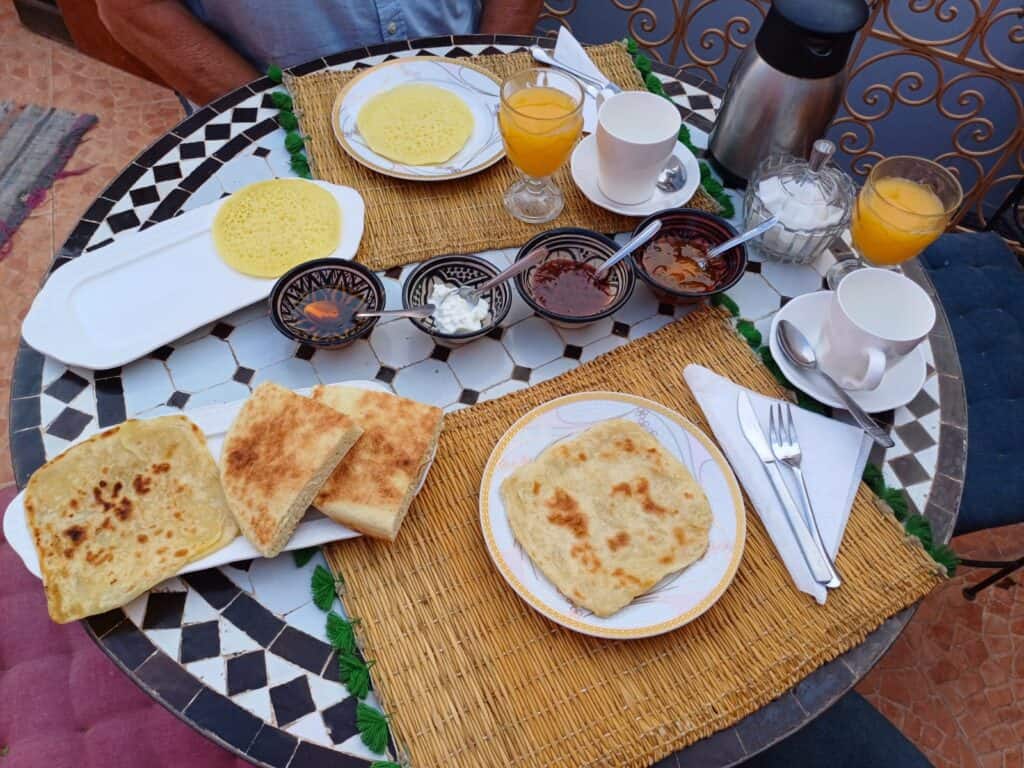
The best rural meals rarely announce themselves with polished signage. Follow the lunchtime crowd to a busy grill, a simple café or a market stall serving one dish well. Try rfissa when you find it, with shredded msemen bread, lentils and richly spiced chicken; seek out seasonal olives, goat cheese and amlou, the nutty almond-and-argan spread that can make breakfast feel unexpectedly celebratory.
Be sensible with water and food hygiene, especially if you have a sensitive stomach. Choose busy stalls, eat cooked food hot, and carry bottled or filtered water. It is not about being fearful. It is about protecting the next day’s mountain walk from becoming a rather more intimate relationship with your bathroom than anyone had planned.
Moroccan hospitality is generous, but local customs matter. Dress modestly in villages, particularly away from tourist centres. During Ramadan, be sensitive about eating and drinking publicly during daylight hours. Ask before entering a mosque, home or private garden, and always ask before taking portraits. These small courtesies cost nothing and change the quality of the welcome you receive.
Give the road room to surprise you
Leave gaps in the itinerary. A rural Morocco holiday is at its best when you can stop because a village baker has just pulled bread from the oven, because the light has turned an Atlas slope the colour of apricots, or because a café owner insists you sit for one more glass of tea. Take the slower road when it is safe to do so, listen more than you speak, and let the country set the pace.